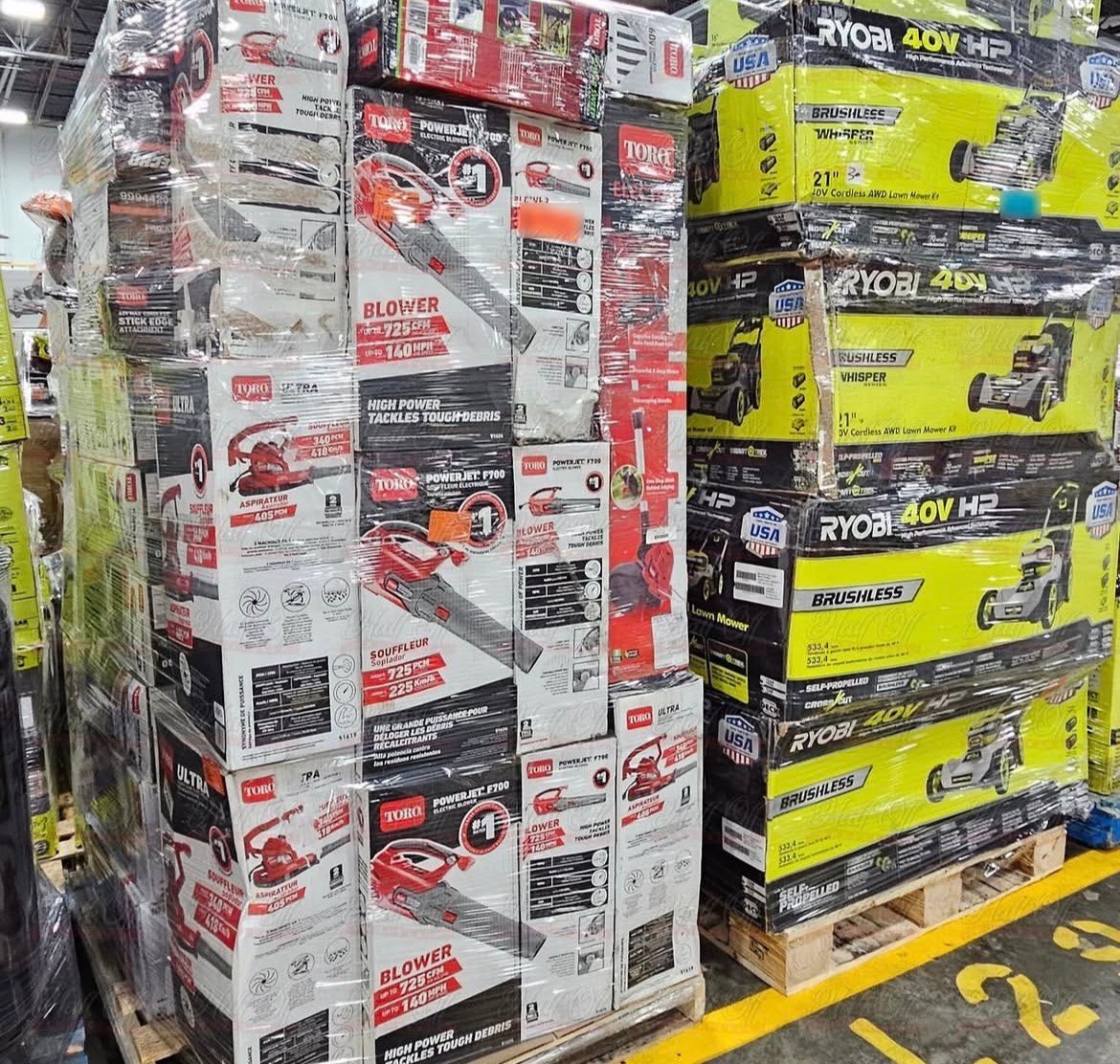
Most people think starting a business requires a big investment, a detailed business plan the size of a novel, and years of industry experience before you see a single dollar of profit.
The liquidation pallet business does not work that way.
People are starting liquidation pallet businesses every single week with $300 to $500, a spare room or garage, a smartphone, and the willingness to put in real work. No storefront. No employees. No inventory system that costs thousands of dollars per month. Just smart sourcing, efficient selling, and the compound growth that comes from reinvesting your profits into the next pallet.
If you have been thinking about how to start a liquidation pallet business but have not pulled the trigger yet because you were not sure where to begin — this guide is exactly what you need. We are going to walk through every step from zero to your first profitable sale, including what to spend your startup budget on, where to find reliable inventory, how to sell efficiently, and how to scale from a side hustle into a full-time operation.
Wholesale Pallet Depot has helped thousands of resellers across the country get their liquidation businesses off the ground. By the end of this guide, you will have everything you need to join them.
Why 2026 Is the Right Time to Start a Liquidation Pallet Business
The Market Conditions Have Never Been Better for a Wholesale Pallet Business
The timing for launching a liquidation pallet business in 2026 is genuinely strong, and here is why that is not just hype.
According to the National Retail Federation, retailers process hundreds of billions of dollars in returned and excess merchandise every single year. That number has grown consistently alongside the explosive growth of e-commerce — online purchases are returned at roughly three times the rate of in-store purchases, which means the supply of liquidation inventory keeps growing.
At the same time, platforms like eBay, Facebook Marketplace, Poshmark, and Amazon have made it easier than ever to reach buyers for virtually any product category. The infrastructure for selling liquidation inventory at scale is already built and waiting for you to use it.
The U.S. Small Business Administration reports that small product resale businesses consistently rank among the lowest-barrier legitimate income opportunities available to new entrepreneurs. Low startup costs, no product development required, no proprietary technology needed — just smart buying and efficient selling.
What Makes the Liquidation Pallet Business Model So Accessible
The liquidation pallet business works because of a simple and powerful economic reality. Major retailers cannot afford to store, reprocess, or individually resell the enormous volume of returns and surplus they generate. So they sell it in bulk at a steep discount to liquidation companies and wholesale distributors who then make it available to resellers like you.
You step in at the reseller level, purchase pallets of merchandise at 10 to 30 cents on the retail dollar, sell items individually at 30 to 60 percent of retail, and pocket the difference. The markup between what you pay and what you sell for is where your business lives — and that spread is genuinely significant when you buy from the right source at the right price.
What You Need to Start a Liquidation Pallet Business with $500
Your Complete Startup Budget Breakdown
One of the most common questions from people looking to start a liquidation pallet business is how much money they actually need. The honest answer is that $300 to $500 is enough to get started in a meaningful way — enough to buy a real pallet, have it shipped, and begin generating revenue.
Here is how a $500 startup budget breaks down realistically:
| Expense | Estimated Cost | Notes |
|---|---|---|
| First pallet purchase | $200 – $350 | Start with one mid-range pallet |
| Shipping and freight | $100 – $200 | Varies by location and pallet size |
| Shipping supplies | $30 – $50 | Boxes, tape, bubble wrap, labels |
| Selling platform fees | $0 upfront | eBay and Facebook Marketplace are free to join |
| Label printer (optional) | $30 – $50 | Saves time on shipping labels |
| Total | $360 – $650 | Adjust based on your specific pallet choice |
The most important thing to understand about this budget is that your first pallet purchase and its shipping cost represent an investment, not an expense. When you sell the inventory, you get that money back plus profit — which you then reinvest into the next pallet.
What You Do Not Need to Start a Liquidation Pallet Business
Just as important as knowing what you need is understanding what you can skip — especially on a tight startup budget:
- A business license on day one — you can sell as an individual and formalize later
- A warehouse or commercial storage space — a garage or spare room works fine to start
- Expensive inventory management software — a simple spreadsheet is enough initially
- A large social media following — eBay and Facebook Marketplace have built-in audiences
- An accountant on retainer — basic bookkeeping you can handle yourself at the start
- Multiple pallets at once — start with one and master the process before scaling
Every one of these additions can come later as your revenue grows. For now, keep your overhead at zero and your focus on learning the process efficiently with your first pallet.
How to Start a Liquidation Pallet Business — Step by Step
Step 1 — Choose Your Product Niche
Before you order your first pallet, spend time deciding which product category you want to start with. This decision matters more than most beginners realize — and the right answer is almost always the category you already know something about.
If you know clothing brands, start with an apparel pallet. If you are handy with tools, start with a power tool pallet. If you are a pet owner who knows pet products, start with a pet supply pallet. Your existing knowledge of a category gives you a significant advantage in evaluating items, researching resale values, and listing products accurately and attractively.
Here are the most beginner-friendly categories for a liquidation pallet business startup:
Clothing and Apparel — Easy to photograph, easy to ship, consistent demand across Poshmark, eBay, and Facebook Marketplace. Branded athletic wear from names like Adidas and Nike commands strong resale prices.
Power Tools — Strong consumer demand, high brand recognition, fast-moving on Facebook Marketplace and eBay. Milwaukee, Ryobi, and DeWalt sell themselves to contractors and DIYers.
Home Goods — Steady year-round sellers with broad appeal. Air fryers, kitchen appliances, storage solutions, and bedding move consistently across multiple platforms.
Pet Products — Booming industry with passionate buyers, lower reseller competition, and year-round demand. Excellent for resellers who already know the pet product space.
Sporting Goods and Footwear — Athletic shoes and sports equipment hold strong value on the secondary market, particularly in popular sizes and recognized brands.
Step 2 — Find a Trustworthy Supplier for Your Wholesale Pallet Business
Your supplier is the single most important decision in your entire liquidation pallet business. A bad supplier means bad inventory, lost money, and a demoralizing start. A great supplier means consistent quality, honest descriptions, and the foundation for a profitable and scalable operation.
When evaluating any liquidation supplier, look for these non-negotiable qualities:
- A real, working phone number that connects to a human being
- Genuine product photos — not stock imagery
- Honest condition grading with accurate estimated retail values
- Standard payment methods — no wire transfer or cryptocurrency only demands
- Verifiable customer reviews on Google and the Better Business Bureau
- Nationwide shipping with tracking information
Wholesale Pallet Depot was built to meet every one of these standards. We source directly from major retail supply chains, grade every pallet honestly, photograph our actual inventory, and ship to resellers across the country. Our team is reachable at (719) 321-6761 before you place your first order — because we want every purchase to be the right one.
Browse current liquidation pallets for sale at wholesalepalletdepot.shop/shop.
Step 3 — Choose and Purchase Your First Pallet
With your niche chosen and your supplier identified, it is time to select your first pallet. Here is the evaluation process to run through before committing:
Check the condition grade. Grade A is like-new or new in original packaging. Grade B is tested and functional with cosmetic wear. Grade C is untested as-is. Start with Grade A or B for your first purchase.
Review the estimated retail value. Look for pallets where the estimated retail value is at least 3 to 5 times your total landed cost. This gives you room to sell items at a meaningful discount to retail while still generating solid profit.
Factor in shipping. Your total cost is purchase price plus freight. Always confirm shipping costs before completing your order — never assume they are included in the listed price.
Run the profit math. Estimated Revenue = Estimated Retail Value × Your Expected Sell-Through Rate. If a pallet has $2,000 in estimated retail value and you sell at 35% of retail, that is $700 in revenue. Subtract your total landed cost and platform fees to get your estimated profit.
Start with one pallet. Do not buy multiple pallets on your first order. Buy one, work through it completely, learn from the experience, and apply those lessons to your second purchase.
Step 4 — Set Up Your Selling Platforms Before Your Pallet Arrives
One of the most common mistakes new liquidation business owners make is waiting until their pallet arrives to set up their selling accounts. Do not do this. Set everything up in advance so you can start listing the day your inventory lands.
Here are the platforms to set up before your first pallet ships:
eBay — Create your seller account at eBay Seller Center. Set up your payment method, shipping preferences, and return policy. eBay is the most powerful platform for individual item listings across virtually every product category.
Facebook Marketplace — Set up your Facebook Marketplace profile for local and shipped item listings. This platform is free for local cash transactions and excellent for larger items and fast-moving inventory.
Poshmark — If you are starting with a clothing or footwear pallet, create your Poshmark account and familiarize yourself with the platform’s listing format. Poshmark has a built-in audience of fashion-conscious buyers looking for brand-name items.
Amazon Seller Central — For brand-new sealed merchandise from overstock pallets, Amazon Seller Central gives you access to millions of active shoppers. The setup process takes a bit more time but the volume potential is significant for new merchandise.
Step 5 — Receive, Sort and Document Your Inventory
When your pallet arrives, treat the receiving process like the business procedure it is. Here is exactly what to do:
Document everything immediately. Take photos and video of the pallet before opening it and throughout the unpacking process. This protects you as a buyer and gives you authentic content for social media if you document your reselling journey.
Sort by condition and category. Separate everything into clear groups as you unpack — like-new items, good condition items, items needing cleaning or minor repair, and unsellable items. Having a clear picture of your inventory before you start listing saves significant time and prevents pricing mistakes.
Research resale values before pricing. For each product category in your pallet, search eBay completed sales to see what items are actually selling for — not just what people are listing them at. This distinction is critical for competitive, profitable pricing.
List within 24 to 48 hours. The faster your inventory goes live on selling platforms the faster you start generating revenue. Set a personal deadline to have everything listed within two days of your pallet arriving.
Step 6 — Sell, Track Your Numbers and Reinvest
Once your listings are live, focus on managing your sales efficiently and tracking your actual numbers. Here is the simple financial tracking system every new liquidation business owner needs:
Track every dollar in and out. Use a simple spreadsheet or a free tool like Google Sheets to record your pallet cost, shipping cost, individual item sales, platform fees, and shipping costs for outgoing packages. This gives you a clear picture of your actual profit on every pallet.
Calculate your real margin. Total Revenue minus Total Costs equals Actual Profit. Know this number for every pallet you buy. It will improve consistently as you get better at evaluating pallets and selling efficiently.
Set aside money for taxes. The IRS self-employment guidelines require you to report income from reselling and pay self-employment tax on your profits. Setting aside 25 to 30 percent of your profit for taxes from day one prevents a painful surprise at tax time.
Reinvest your profits. This is the most powerful habit in the liquidation pallet business. Every dollar you reinvest into your next pallet compounds your growth. Resellers who consistently reinvest scale their operations significantly faster than those who cash out every dollar of profit.
How to Grow Your Liquidation Pallet Business from $500 to $5,000 Per Month
The Scaling Framework for Your Pallet Reselling Business Plan
Getting to your first profitable pallet is a milestone. Scaling from there to a consistent monthly income requires a slightly different approach — one that focuses on systems, efficiency, and strategic reinvestment.
Here is a realistic scaling timeline for a liquidation pallet business that starts with $500:
| Month | Pallets Per Month | Est. Monthly Revenue | Est. Monthly Profit |
|---|---|---|---|
| Month 1 | 1 pallet | $400 – $700 | $100 – $300 |
| Month 2 | 2 pallets | $800 – $1,400 | $300 – $700 |
| Month 3 | 3 pallets | $1,200 – $2,100 | $600 – $1,200 |
| Month 4–6 | 4–6 pallets | $2,000 – $4,200 | $1,000 – $2,500 |
| Month 7–12 | 8–12 pallets | $4,000 – $8,400 | $2,000 – $5,000 |
These are realistic estimates based on consistent effort and smart reinvestment — not guarantees. Your actual results depend on your product categories, selling efficiency, and how much time you invest.
When to Formalize Your Liquidation Business Startup
Most resellers start selling as individuals and formalize their business structure once their income reaches a level that justifies the paperwork and costs. Here is a simple framework for when to take each step:
First $1,000 in profit — Open a separate bank account for your business income and expenses. Keeping personal and business finances separate from the start makes tax time dramatically simpler.
First $3,000 in monthly revenue — Register your business as an LLC or sole proprietorship in your state. The SBA’s business registration guide walks you through the process step by step. An LLC provides liability protection and looks more professional to wholesale suppliers as your operation grows.
First $5,000 in monthly revenue — Apply for a resale certificate in your state. This allows you to purchase inventory without paying sales tax — a meaningful cost savings as your buying volume increases.
Ongoing — Keep detailed records of all inventory purchases, sales, platform fees, shipping costs, and business expenses. These records are essential for accurate tax filing and for understanding the true profitability of your operation.
How to Source Better Inventory as Your Business Grows
As your liquidation pallet business scales, your relationship with your supplier becomes increasingly important. Here is how to level up your sourcing as your operation grows:
Communicate your needs directly. Call Wholesale Pallet Depot at (719) 321-6761 and tell our team what categories you are focusing on, what your current buying volume is, and what types of inventory perform best for your specific selling channels. This allows us to alert you when relevant new inventory arrives before it goes live on the website.
Expand your category range strategically. Once you have mastered your first product category, add a second that complements your existing knowledge and selling infrastructure. Building expertise across two or three categories significantly reduces your risk and increases your buying options.
Build relationships with multiple selling channels. As your inventory volume grows, diversifying across eBay, Facebook Marketplace, Amazon, and local flea markets ensures you always have somewhere to move merchandise quickly regardless of seasonal platform fluctuations.
Why Wholesale Pallet Depot Is the Right Partner to Start Your Liquidation Pallet Business
What wholesalepalletdepot.shop Offers Liquidation Business Startups
Starting a liquidation pallet business is significantly easier when you have a supplier you can actually trust from day one. Here is what Wholesale Pallet Depot brings to your business:
Verified, grade-sorted inventory. Every pallet we sell is inspected and graded honestly before listing. You know exactly what condition to expect before you spend a dollar — which is essential when you are building a business on tight startup margins.
Transparent pricing with no hidden fees. Our prices are clear and our descriptions are accurate. No surprise charges at checkout, no inflated retail values designed to make deals look better than they are.
Direct retail sourcing. We source from major retail supply chains which means fewer middlemen and better prices passed directly to you. This is especially important for new business owners who need to maximize every dollar of their startup budget.
Nationwide shipping with tracking. We ship to every state in the country. Your inventory arrives with full tracking information and reliable freight partners so you always know when to expect your pallet.
160+ products across every major category. From Adidas clothing and Milwaukee power tools to Apple tech, soccer boots, and general merchandise — our catalog gives new business owners a broad range of options at multiple price points.
Real customer support from real people. Call us at (719) 321-6761 before your first order. Our team will help you choose the right pallet for your budget, category preference, and selling platforms — because your success as a reseller is directly connected to ours as a supplier.
Current Inventory Available at wholesalepalletdepot.shop
Here is a look at some of our available items right now for liquidation business startups. We have so much more currently available;
Wholesale Adidas Clothing Pallets — Originally $850, now $650 Branded athletic apparel — one of the most beginner-friendly pallets for new business owners. 👉 View this pallet
Wholesale Milwaukee Power Tool Pallets — Originally $1,250, now $890 Premium tool brand with massive resale demand. Fast-moving for flea markets and Facebook Marketplace. 👉 View this pallet
Wholesale Ryobi Power Tool Pallets — Originally $1,200, now $1,050 Strong consumer brand with loyal buyer base across eBay and Facebook Marketplace. 👉 View this pallet
Soccer Boots Liquidation Pallets — Originally $1,500, now $1,100 Athletic footwear with strong value retention across resale platforms and popular sizes. 👉 View this pallet
Apple AirPods Pro (2nd Gen) Pallets — Originally $2,000, now $1,400 Premium tech inventory with verified sourcing and strong resale performance on eBay. 👉 View this pallet
Browse the full catalog at wholesalepalletdepot.shop/shop.
FAQs About How to Start a Liquidation Pallet Business
How much money do I need to start a liquidation pallet business?
You can realistically start a liquidation pallet business with $300 to $500. This covers a mid-range starter pallet, shipping to your location, and basic supplies for packaging and shipping your sold items. The key is to start with one pallet, sell it completely, and reinvest your profit into the next purchase rather than trying to scale too quickly before you have learned the process.
Do I need a business license to start a liquidation pallet business?
You do not need a business license to start selling liquidation inventory as an individual. Many successful resellers begin without any formal business structure and formalize later once their income reaches a level that justifies it. The U.S. Small Business Administration has clear guidance on when and how to register your business as your operation grows.
What is the best product category to start a liquidation pallet business with?
The best category to start with is the one you already know something about. Your existing product knowledge gives you a real advantage in evaluating items, researching resale values, and listing products accurately. For beginners with no specific expertise, clothing and home goods are the most forgiving starting categories — easy to evaluate, easy to photograph, and consistent sellers across multiple platforms.
Where should I sell my liquidation pallet inventory?
The best starting platforms for a new liquidation pallet business are eBay for individual item listings, Facebook Marketplace for local and large item sales, and Poshmark for clothing and footwear. As your business grows, Amazon Seller Central and local flea markets are excellent additions to your selling channel mix.
How long does it take to start making money from a liquidation pallet business?
Most new resellers begin generating revenue within the first week of receiving their pallet and achieve full profit realization within two to four weeks. The speed depends heavily on how quickly you list your inventory — resellers who list within 24 to 48 hours of receiving their pallet consistently outperform those who let merchandise sit unsorted for days or weeks.
How do I find a reliable supplier for my liquidation pallet business?
Look for suppliers with a verifiable phone number, real product photos, honest condition grading, genuine customer reviews, and standard accepted payment methods. Check their profile on the Better Business Bureau website and search for independent Google reviews before spending any money. Wholesale Pallet Depot meets every credibility criterion and our team at (719) 321-6761 is happy to answer every question before your first order.
Can I run a liquidation pallet business from home?
Absolutely. The majority of successful liquidation pallet business owners operate entirely from home — typically from a garage, basement, or spare room. A standard pallet occupies roughly 4 feet by 4 feet of floor space. As your operation scales you may eventually want dedicated storage space, but starting from home is completely practical and extremely common.
How do I handle taxes for a liquidation pallet business?
Set aside 25 to 30 percent of your profit for taxes from your very first sale. The IRS requires self-employed individuals to report all business income and pay self-employment tax on profits. Keep detailed records of all income and expenses from day one — a simple spreadsheet is enough to start. As your income grows, consulting a tax professional who works with small business resellers is a worthwhile investment.
What is the biggest mistake new liquidation pallet business owners make?
The single biggest mistake is buying too much inventory before mastering the selling process. Purchasing multiple pallets on your first order often leads to disorganization, slow-moving inventory, and cash flow problems that can kill a business before it gets started. Start with one pallet, sell it completely, and scale methodically. The resellers who build sustainable incomes in this business are almost always the ones who grew deliberately rather than those who went all-in before they were ready.
Is the liquidation pallet business a good long-term income opportunity?
Yes, for resellers who approach it as a real business rather than a get-rich-quick scheme. The supply of liquidation inventory is growing alongside the expansion of e-commerce returns. The resale market continues to expand with more buyers shopping secondhand than ever before. And the barrier to entry remains low enough that determined individuals with modest startup capital can build meaningful income streams. The resellers earning $5,000 to $15,000 per month from liquidation pallets in 2026 almost all started exactly where you are right now — with one pallet and a plan.
Your Liquidation Pallet Business Starts Today
You now have everything you need to go from idea to action. You know exactly what a liquidation pallet business requires to start, how to evaluate suppliers, how to choose your first pallet, how to set up your selling channels, and how to scale your operation from a few hundred dollars into a real monthly income.
The only thing standing between you and your first profitable pallet is the decision to move forward.
Wholesale Pallet Depot is stocked and ready to be your supplier. Browse our current inventory, choose the pallet that fits your budget and category preference, and place your first order today.
Your liquidation pallet business starts with one order. Make it today.
👉 Browse all liquidation pallets for sale at wholesalepalletdepot.shop
📧 Contact us: wholesalepalletdepot.shop/contact
Wholesale Pallet Depot — Your trusted national source for wholesale pallet business inventory. Verified liquidation pallets for sale, honest grading, and real customer support — shipped to your door anywhere in the country.