Two of the most popular ways to build an income selling products online in 2026 are liquidation pallet reselling and dropshipping. Both are legitimate. Both have real success stories behind them. And both are frequently misrepresented by people who have a financial interest in making one sound better than it actually is.
So this guide is going to do something different. Instead of cheerleading for one model over the other, we are going to put liquidation pallets vs dropshipping side by side using the same honest evaluation criteria — startup cost, profit margin, competition, risk, time to first sale, scalability, and long-term income potential — and let the real comparison speak for itself.
By the end you will know exactly which model fits your specific situation, your available capital, your risk tolerance, and your income goals. And if liquidation pallet reselling turns out to be the right fit, you will know exactly where to source your first pallet from Wholesale Pallet Depot and how to get started immediately.
Liquidation Pallets vs Dropshipping — Understanding Each Model Clearly
Liquidation Pallets vs Dropshipping — What Liquidation Pallet Reselling Actually Is
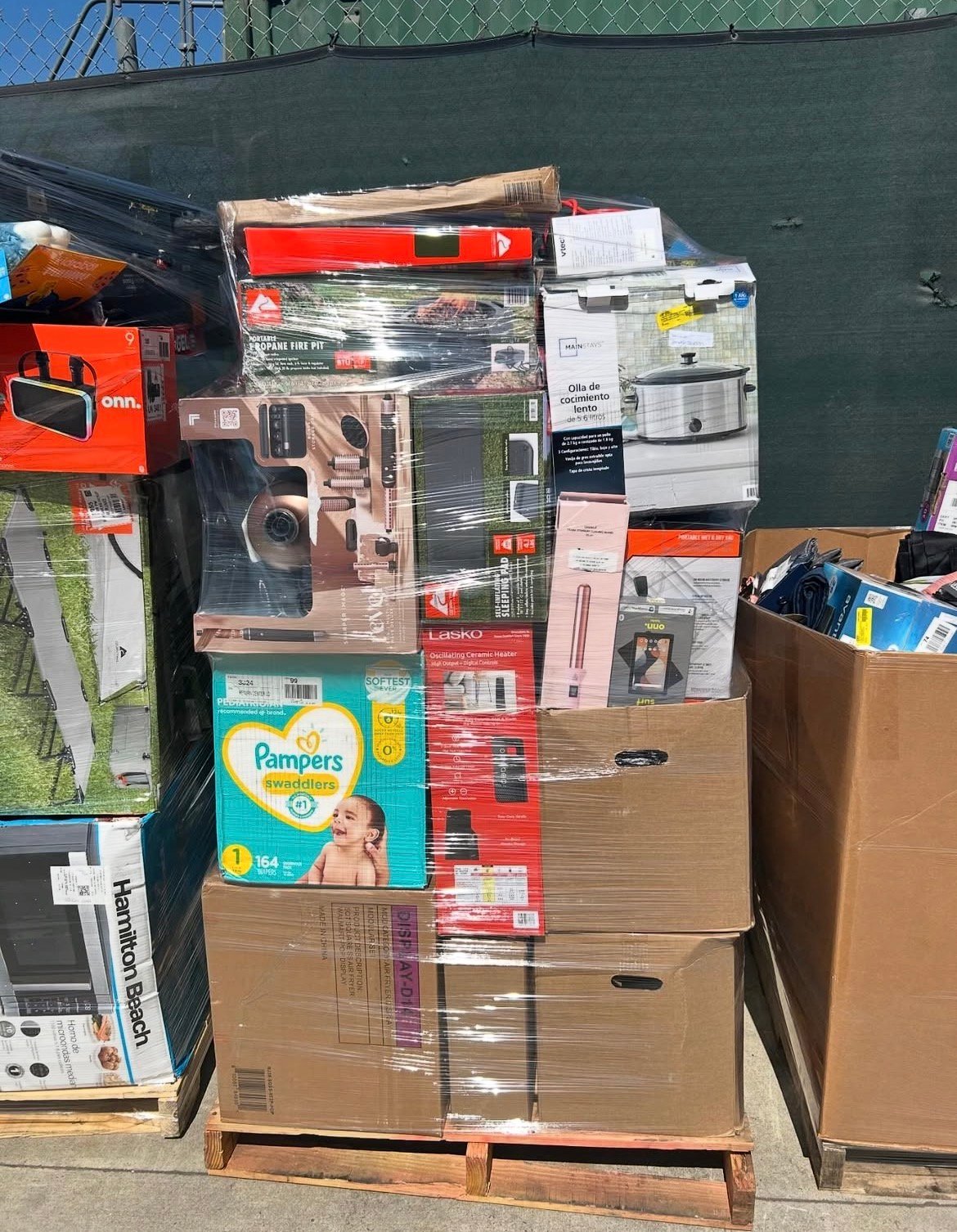
Liquidation pallet reselling is the practice of purchasing bulk lots of returned, overstocked, or surplus merchandise from major retailers at steep discounts typically 10 to 30 cents on the retail dollar — and reselling the individual items through platforms like eBay, Facebook Marketplace, Poshmark, Amazon, or at flea markets for profit.
The merchandise comes from the enormous volume of returns and excess inventory that major retailers like Walmart, Target, and Amazon generate every single week. According to the National Retail Federation, U.S. retailers process hundreds of billions of dollars in returned merchandise annually. That inventory moves through licensed liquidation channels and becomes available to resellers like you through suppliers like Wholesale Pallet Depot.
You own the physical inventory. You store it, sort it, photograph it, list it, and ship it. The profit comes from the spread between what you paid per item and what you sell it for.
Liquidation Pallets vs Dropshipping — What Dropshipping Actually Is
Dropshipping is a retail fulfillment model where you sell products you do not physically own or store. You list items in your online store — typically on Shopify, eBay, or Amazon — at a retail price. When a customer orders, you purchase the item from a supplier or manufacturer who ships it directly to your customer. Your profit is the difference between your retail price and the supplier’s wholesale price minus any fees.
You never touch the product. You never store inventory. You act as a marketing and customer service layer between the manufacturer or wholesale supplier and the end buyer.
Liquidation Pallets vs Dropshipping — The Complete Side by Side Comparison
Liquidation Pallets vs Dropshipping — Full Comparison Table
| Factor | Liquidation Pallets | Dropshipping |
|---|---|---|
| Startup Capital | $300 – $700 for first pallet | $0 – $500 (store setup, ads) |
| Inventory Risk | Yes — you own the stock | No — you never own inventory |
| Profit Margin Per Sale | 30% – 200%+ depending on item | 10% – 30% typical |
| Competition Level | Moderate — category specific | Very high — global competition |
| Time to First Sale | 24 – 72 hours after listing | Days to weeks — traffic dependent |
| Shipping Control | Full control — you ship | None — supplier ships |
| Product Quality Control | Full — you inspect every item | None — supplier quality varies |
| Returns Management | You handle directly | Complex — supplier dependent |
| Scalability | High with systems | High with paid traffic |
| Passive Income Potential | Low — requires active work | Medium — can automate more |
| Platform Dependency | Moderate — multiple channels | High — often one store |
| Income Predictability | Moderate — improves with experience | Low — highly variable |
Liquidation Pallets vs Dropshipping — Profit Margin Comparison
Liquidation Pallets vs Dropshipping — The Real Profit Numbers in 2026
Profit margin is where the liquidation pallets vs dropshipping comparison becomes most revealing — and most misunderstood.
Dropshipping profit margins in 2026:
Standard dropshipping margins run 10 to 30 percent of the selling price in most product categories. On a $30 product you might make $4 to $9 per sale before advertising costs. The critical issue is that dropshipping profitability depends heavily on paid advertising — Facebook ads, Google Shopping, TikTok ads — to drive traffic to your store. Once you subtract advertising costs from already thin margins, many dropshippers find themselves at near-zero or negative profit per sale until they find a winning product and optimize their ad spend.
Liquidation pallet reselling margins in 2026:
Liquidation pallet reselling margins are significantly wider on a per-item basis. Buying at 10 to 30 percent of retail and selling at 30 to 60 percent of retail produces gross margins of 100 to 500 percent on your cost — dramatically stronger than dropshipping margins.
Here is a direct profit comparison on a $1,000 investment:
Dropshipping — $1,000 invested in advertising:
- Ad spend: $1,000
- Revenue generated (at 3x ROAS): $3,000
- Product cost (at 65% of revenue): $1,950
- Gross profit: $1,050
- Ad spend: $1,000
- Net profit: $50 — 5% return on ad spend
Liquidation pallets — $1,000 invested in inventory:
- Pallet cost: $700
- Shipping: $175
- Total landed cost: $875
- Estimated revenue (80% sell-through, 40% of retail on $3,500 retail value): $1,120
- Platform fees (12%): $134
- Net profit: $111 — 12.7% ROI
At first glance both look modest. But the liquidation pallet scenario does not require ongoing ad spend to maintain — your eBay and Facebook Marketplace listings generate organic traffic indefinitely. The dropshipping scenario stops generating revenue the moment you stop spending on ads.
Liquidation Pallets vs Dropshipping — Competition Analysis
Liquidation Pallets vs Dropshipping — Why Competition Differs Dramatically Between Models
Competition is one of the starkest differences in the liquidation pallets vs dropshipping comparison and it heavily favors liquidation reselling for most buyers entering the market in 2026.
Dropshipping competition in 2026:
Dropshipping has been heavily promoted as a business model for over a decade, which means the most profitable niches and products are intensely saturated. When a winning product is identified — a gadget that performs well on TikTok, a trending item that converts on Facebook — dozens or hundreds of other dropshippers immediately copy the approach and compete for the same audience with the same or similar product. Margins compress rapidly, ad costs rise as more competitors bid on the same audiences, and what was a profitable product a month ago becomes a money-loser.
Liquidation pallet reselling competition in 2026:
Liquidation reselling competition exists but operates very differently. Your inventory is unique — the specific items in your pallet are not the same as the items in any other seller’s pallet. You are not competing on identical products with dozens of sellers who can undercut your price to zero because they have the same margins you do. Your Milwaukee drill listing on Facebook Marketplace competes with other Milwaukee drill listings, but each of those listings has different pricing flexibility based on what the individual seller paid for their specific pallet.
Liquidation Pallets vs Dropshipping — Speed to First Sale
Liquidation Pallets vs Dropshipping — Which Gets You Paid Faster
Dropshipping time to first sale:
Building a dropshipping store, finding a supplier, loading products, configuring payment processing, and then launching advertising typically takes one to three weeks before your first sale. Even after launch, profitability depends on optimizing your advertising to find winning creatives and audiences — a process that can take months and significant ad spend.
Liquidation pallets time to first sale:
Once your pallet arrives and you list your first items, sales can come in within hours on Facebook Marketplace and within days on eBay. There is no advertising learning curve, no creative testing, and no audience optimization required. The platforms already have the buyers — your job is simply to list accurately and price competitively.
This speed difference matters enormously for resellers who need to see cash flow quickly to validate their approach and reinvest into growth.
Liquidation Pallets vs Dropshipping — Risk Comparison
Liquidation Pallets vs Dropshipping — Which Model Carries More Risk
Both models carry risk but of fundamentally different types.
Dropshipping risks:
Platform dependency — your entire business can be disrupted if Shopify changes its terms, Facebook restricts your ad account, or your supplier runs out of stock. Supplier quality issues — you have no control over what your customer receives, which means negative reviews and returns that damage your store reputation for reasons entirely outside your control. Advertising risk — money spent on ads that do not convert is gone with no tangible asset to show for it.
Liquidation pallet reselling risks:
Inventory risk — you own physical merchandise that may not sell at your target price or timeline. Condition uncertainty — liquidation inventory can contain items in worse condition than expected. Supplier risk — an unreliable supplier can misrepresent the contents or condition of a pallet.
The key difference is that liquidation inventory risk is manageable through careful supplier selection and honest condition grading. Buying from Wholesale Pallet Depot — where every pallet is inspected, graded honestly, and described accurately — dramatically reduces the main risk in liquidation reselling. The ad spend risk in dropshipping, on the other hand, is inherent to the model and cannot be avoided without finding a winning product.
Liquidation Pallets vs Dropshipping — Scalability Comparison
Liquidation Pallets vs Dropshipping — Which Model Scales Better
Both models can scale to significant income levels but through different mechanisms.
Scaling dropshipping:
Dropshipping scales primarily through increasing advertising spend and finding winning products. A dropshipping business that is profitable at $1,000 per month in ad spend can theoretically scale to $10,000 per month by increasing ad spend ten times. if the economics hold. The challenge is that scaling ad spend while maintaining profitability is genuinely difficult. As you spend more, you reach audiences with lower purchase intent, your cost per acquisition rises, and margins thin further.
Scaling liquidation pallet reselling:
Liquidation reselling scales through increasing pallet volume, adding selling platforms, building systems, and eventually hiring help. The economics do not deteriorate as you scale your margins per pallet stay roughly consistent regardless of whether you are buying one pallet per week or ten, because your buying price and selling price are determined by real market data rather than an advertising auction.
Liquidation Pallets vs Dropshipping — Which Model Is Right for You
Liquidation Pallets vs Dropshipping — Choose Liquidation Pallets If
Liquidation pallet reselling is the better choice when:
You have $300 to $700 in starting capital and want to put it directly into inventory rather than advertising with uncertain returns. You want to see your first sale within days rather than weeks or months. You prefer to control your product quality by inspecting and verifying everything you sell before it ships. You enjoy the variety and physical process of sorting, evaluating, and listing merchandise. You want to build income without ongoing advertising spend that can disappear the moment you stop funding it.
Liquidation Pallets vs Dropshipping — Choose Dropshipping If
Dropshipping is the better choice when:
You have zero capital for inventory and need to start without any upfront product investment. You have significant digital marketing skills and experience with paid advertising on Meta or Google. You want to build a branded online store with consistent SKUs rather than variable liquidation inventory. You are comfortable with the product testing and ad optimization process that precedes dropshipping profitability. You specifically want a business that can run with minimal physical involvement in receiving, sorting, and shipping.
Liquidation Pallets vs Dropshipping — The Hybrid Strategy Worth Considering
The most sophisticated e-commerce operators in 2026 often combine both models strategically. They use liquidation pallet reselling to generate consistent, immediate cash flow from physical inventory. They use dropshipping to test new product categories without inventory risk before potentially switching to wholesale or liquidation sourcing for winning products.
This hybrid approach leverages the strengths of each model — liquidation’s immediate cash flow and strong margins, dropshipping’s zero-inventory testing capability — while mitigating the weaknesses of each.
Why Wholesale Pallet Depot Is Your Best Starting Point for Liquidation Pallets
Liquidation Pallets vs Dropshipping — What Makes wholesalepalletdepot.shop the Right Liquidation Partner
If the liquidation pallets vs dropshipping comparison has pointed you toward liquidation reselling as the right fit for your situation, Wholesale Pallet Depot gives you the most important thing a new liquidation buyer needs a supplier you can trust.
Our pallets are inspected, honestly graded, and accurately described. Our retail value estimates are independently verifiable. Our condition grades mean exactly what they say. And our team is reachable at (719) 321-6761 before every purchase to answer your specific questions.
FAQs About Liquidation Pallets vs Dropshipping
Liquidation Pallets vs Dropshipping FAQ — Which is more profitable in 2026 — liquidation pallets or dropshipping?
Liquidation pallet reselling typically generates stronger profit margins per dollar invested — 30 to 200 percent gross margins compared to 10 to 30 percent for dropshipping before advertising costs. Once advertising costs are factored into dropshipping, net margins often fall to single digits for new operators still optimizing their campaigns. Liquidation reselling generates revenue from organic platform traffic without ongoing ad spend.
Liquidation Pallets vs Dropshipping FAQ — Which is easier to start — liquidation pallets or dropshipping?
Dropshipping has a lower initial capital requirement — you can technically start with zero inventory investment. However liquidation pallet reselling generates faster first sales and more predictable early results. The ease of starting depends heavily on your existing skills — dropshipping rewards digital marketing experience while liquidation reselling rewards product knowledge and selling platform familiarity.
Liquidation Pallets vs Dropshipping FAQ — Is dropshipping still worth it in 2026?
Dropshipping remains viable in 2026 for operators with strong digital marketing skills who can identify winning products and optimize ad spend efficiently. However the model is significantly more competitive and less forgiving than it was five years ago. New entrants without existing marketing skills face a steep learning curve with real financial risk from advertising spend before finding a profitable product.
Liquidation Pallets vs Dropshipping FAQ — How much can you make per month with liquidation pallet reselling?
Liquidation pallet resellers generate income that scales with volume and efficiency. Part-time resellers typically make $500 to $2,000 per month. Consistent full-time operators reach $4,000 to $10,000 per month. Highly scaled operations with systems and staff can generate $15,000 or more per month. Our dedicated guide on scaling pallet reselling business income covers this progression in detail.
Liquidation Pallets vs Dropshipping FAQ — Do you need a website to sell liquidation pallet items?
No. The vast majority of liquidation pallet resellers sell through existing platforms — eBay, Facebook Marketplace, Poshmark, Amazon — without building their own website. These platforms provide built-in buyer traffic, payment processing, and seller tools that make a standalone website unnecessary for most resellers, particularly in the early stages.
Liquidation Pallets vs Dropshipping FAQ — What is the biggest advantage of liquidation pallets over dropshipping?
The biggest advantage of liquidation pallets over dropshipping is profit margin without advertising dependency. Liquidation resellers generate revenue from organic platform searches rather than paid advertising, which means your income does not disappear the moment you stop spending money. Once your listings are live they continue generating sales as long as the inventory is available.
Liquidation Pallets vs Dropshipping FAQ — What is the biggest advantage of dropshipping over liquidation pallets?
The biggest advantage of dropshipping over liquidation pallets is zero inventory risk. You never own physical merchandise that might not sell. This eliminates storage requirements, eliminates the risk of buying a pallet that underperforms expectations, and allows you to test product ideas without upfront investment.
Liquidation Pallets vs Dropshipping FAQ — Can I do both liquidation pallets and dropshipping at the same time?
Yes — and many experienced e-commerce operators use both models simultaneously. Liquidation reselling provides consistent cash flow from physical inventory while dropshipping allows product testing without inventory commitment. The two models complement each other when managed with clear separation between each operation’s systems and finances.
Liquidation Pallets vs Dropshipping FAQ — How do I find reliable liquidation pallets to resell?
Look for suppliers with honest condition grading, real product photos, verifiable customer reviews, and accessible customer support. Wholesale Pallet Depot meets every credibility criterion. Call our team at (719) 321-6761 before your first order to discuss which pallet fits your goals and budget.
Liquidation Pallets vs Dropshipping FAQ — Is liquidation pallet reselling a good business for beginners in 2026?
Yes — liquidation pallet reselling is one of the most accessible beginner business models available in 2026. The startup capital requirement is low, the platforms that buyers use already have established audiences, and the first sale typically comes within days of listing. Starting with a Grade A pallet from a transparent supplier like Wholesale Pallet Depot gives beginners the best possible foundation for their first liquidation experience.
The Verdict on Liquidation Pallets vs Dropshipping in 2026
For most people reading this guide the comparison is not close. Liquidation pallet reselling offers stronger margins, faster time to first sale, no advertising dependency, better quality control, and more predictable income growth — all in exchange for the physical involvement of receiving, sorting, and shipping real merchandise.
Dropshipping offers lower startup capital requirements and zero inventory risk genuine advantages for people with strong digital marketing skills who want to build a primarily online operation without handling physical products.
Know your strengths, choose the model that fits your situation honestly, and execute it with full commitment.
If liquidation pallet reselling is your answer, Wholesale Pallet Depot is ready to be your supplier.
👉 Browse all liquidation pallets for sale at wholesalepalletdepot.shop
📧 Contact us: wholesalepalletdepot.shop/contact
Wholesale Pallet Depot — Your trusted national source for liquidation pallets for sale. Verified inventory, honest grading, and real customer support — shipped to your door anywhere in the country.