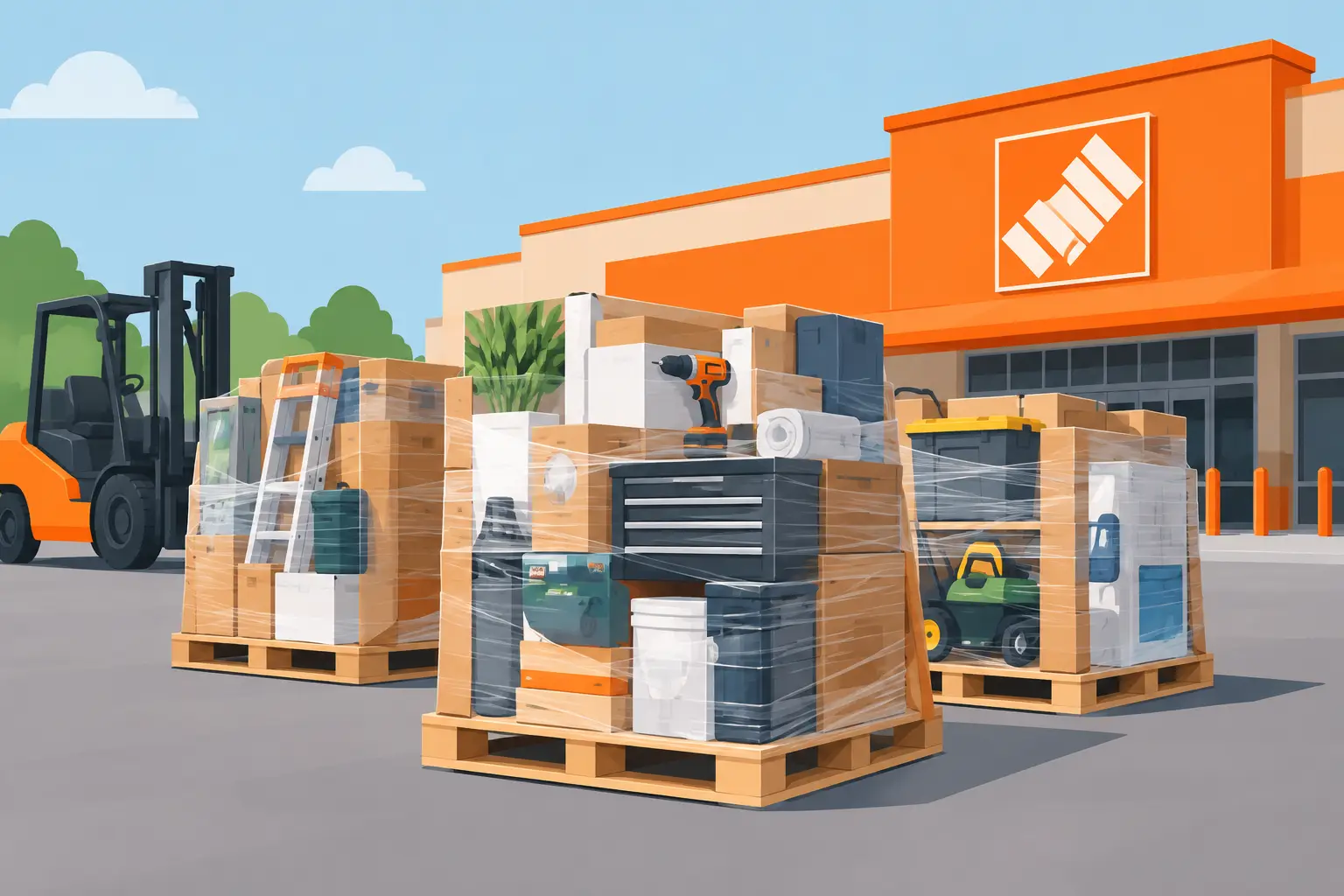
A pallet labeled Home Depot can look like an easy win: recognizable products, steady local demand, and plenty of places to resell tools and home-improvement goods. But Home Depot liquidation pallets for sale are only profitable when you know what is on the pallet, what condition it is in, and how quickly your buyers will move it. A low pallet price does not fix missing parts, damaged packaging, or inventory that cannot be priced accurately.
For resale businesses, the better approach is simple: buy visible inventory, compare the actual cost against realistic resale value, and choose categories that fit your sales channel. That means treating each pallet like inventory for a business, not a lottery ticket.
What Home Depot Liquidation Inventory Usually Includes
Retailer-origin liquidation can come from customer returns, shelf pulls, overstock, seasonal resets, discontinued products, and packaging-damaged merchandise. A Home Depot pallet may contain power equipment, hand tools, hardware, lighting, plumbing supplies, outdoor items, storage products, appliances, or mixed home-improvement goods.
The source label tells you where inventory moved through the retail channel. It does not mean every unit is new, complete, or ready for retail shelves. That distinction matters. A returned cordless tool may work perfectly but lack a charger. A boxed light fixture may be new but have a crushed carton. A grill accessory might be complete, while a larger item could need testing or cleaning before it is ready to sell.
This is why serious buyers should focus less on a retailer name and more on the pallet’s manifest, grade, photos, unit count, and condition notes. Those details tell you whether the pallet supports your resale model.
Why a Manifest Matters More Than a Big Retail Value
Some liquidation sellers advertise an eye-catching estimated retail value, then provide little evidence of what buyers are actually receiving. That number can be misleading when it is based on original retail pricing for returned, incomplete, or damaged products. Original retail is not your expected recovery.
A useful manifest identifies the products on the pallet, usually with descriptions, quantities, and retail reference values. It gives you a working inventory list before you spend money. With that information, you can check local demand, spot oversized items, identify brands your customers recognize, and estimate resale prices by condition.
For example, a manifested pallet with several recognizable tool brands, replacement parts, and sealed hardware may be easier to price than a mixed pallet of unlisted returns. You can separate items for online marketplaces, your discount store, a flea market booth, or local pickup. You can also see whether one or two higher-value items carry too much of the pallet’s projected return.
A manifest is not a guarantee that every item will sell at its listed retail price. It is a decision-making tool. The goal is not perfection. The goal is to remove avoidable surprises before inventory arrives.
Read the Grade Before You Read the Price
Condition grading should shape your bid or purchase decision. New, shelf-pull, overstock, open-box, and customer-return inventory all carry different labor requirements and resale potential.
New and overstock goods generally offer the fastest path to resale, particularly when boxes are intact and items have clear model numbers. Open-box inventory can create strong value when the product is complete and packaging is the only issue. Customer returns can produce excellent margins, but they require more work. Plan to inspect, test, clean, photograph, and sometimes bundle or part out those items.
If you sell through a local storefront or discount outlet, mixed-condition inventory may work well because shoppers expect deals and can inspect items in person. If your business depends on online sales, incomplete or untested returns can create more customer-service risk. Your best grade depends on your channel, labor capacity, and tolerance for slower-moving inventory.
How to Evaluate Home Depot Liquidation Pallets for Sale
Start with the category. A pallet full of compact hand tools, hardware, and home organization products may be easier to move than one containing bulky, freight-sensitive equipment. Larger products can bring stronger individual ticket prices, but they consume storage space and often require local delivery or pickup.
Then study the photos. Real pallet photos help you confirm that the inventory matches the description and show how products are packed. Look for visible product labels, carton condition, loose items, mixed merchandise, and signs of heavy damage. Stock images are not enough when you are buying liquidation. You need to see the actual merchandise or a clear representation of the lot you will receive.
Next, calculate your landed cost. Include the pallet price, shipping, unloading, storage, testing supplies, labor, marketplace fees, and expected markdowns. A pallet that looks inexpensive can become costly if freight is high or if half the items need extra handling.
Use conservative resale assumptions. Do not price every returned item at full retail. Estimate what each item can sell for in its actual condition, then account for products that may need to be bundled, discounted, repaired, or liquidated quickly. A practical target is a margin that leaves room for mistakes, because liquidation inventory is never identical to ordering brand-new case packs.
Match the Pallet to Your Resale Channel
The same pallet can perform very differently depending on where you sell it. Online sellers often do best with branded, shippable items that have model numbers, clear condition details, and broad demand. Tools, lighting, smaller equipment, hardware kits, and replacement components can fit this model when they are complete and easy to photograph.
Discount stores and bin-style operations can turn mixed home goods faster, especially when customers are looking for value instead of perfect packaging. Flea-market vendors may prefer practical items with simple demonstrations: hand tools, storage solutions, garden supplies, fans, faucets, or accessories. Local marketplace sellers can use pickup to avoid shipping costs on bulky products such as shelving, patio goods, or larger equipment.
Avoid buying based only on what seems popular. Buy what your operation can process and sell. If you have limited space, a pallet of compact, manifested goods may produce better returns than a larger pallet that sits for months. If you have repair knowledge, customer-return tools may create opportunity. If you do not, prioritize tested, graded, resale-ready inventory.
Common Mistakes That Cut Into Profit
The first mistake is buying a mystery pallet because the advertised retail number seems huge. Without an item-level manifest or meaningful condition information, you cannot confidently calculate resale value. You may receive a few strong products, but you may also receive a costly amount of broken, obsolete, or incomplete merchandise.
The second is overlooking freight and handling. Pallets are not small parcels. Make sure you understand delivery requirements, whether you need a liftgate, where the shipment can be unloaded, and how you will move inventory once it arrives. A warehouse dock, garage, storage unit, and retail location all create different logistics costs.
The third is failing to inspect inventory quickly. Open the pallet, reconcile it with the manifest where applicable, test electronics and equipment, separate complete items from parts or repair candidates, and photograph products while they are fresh. Delayed processing ties up cash and makes it harder to identify issues while the purchase details are still organized.
Finally, do not confuse recognizable retailer inventory with guaranteed profit. The retailer origin may help buyers trust the category, but your profit comes from disciplined sourcing, accurate pricing, and fast execution.
A Better Buying Standard for Resellers
Look for liquidation inventory that is inspected, graded, and accurately described. Real photos, clear manifests, and honest condition labels give you a better basis for deciding what to buy. They also make it easier to set prices before the shipment reaches your door.
Wholesale Pallet Depot is built around that standard: visible inventory instead of vague promises, practical condition information instead of inflated recovery claims, and pallet options that let resellers choose based on category and selling strategy. Whether you are building side income or stocking an established operation, the goal is to buy inventory you can understand before you pay for it.
The best pallet is not necessarily the one with the highest stated retail value. It is the one you can inspect, price, move, and turn back into cash with the fewest surprises. Start with the details, buy for your actual sales channel, and let disciplined inventory choices create the margin.