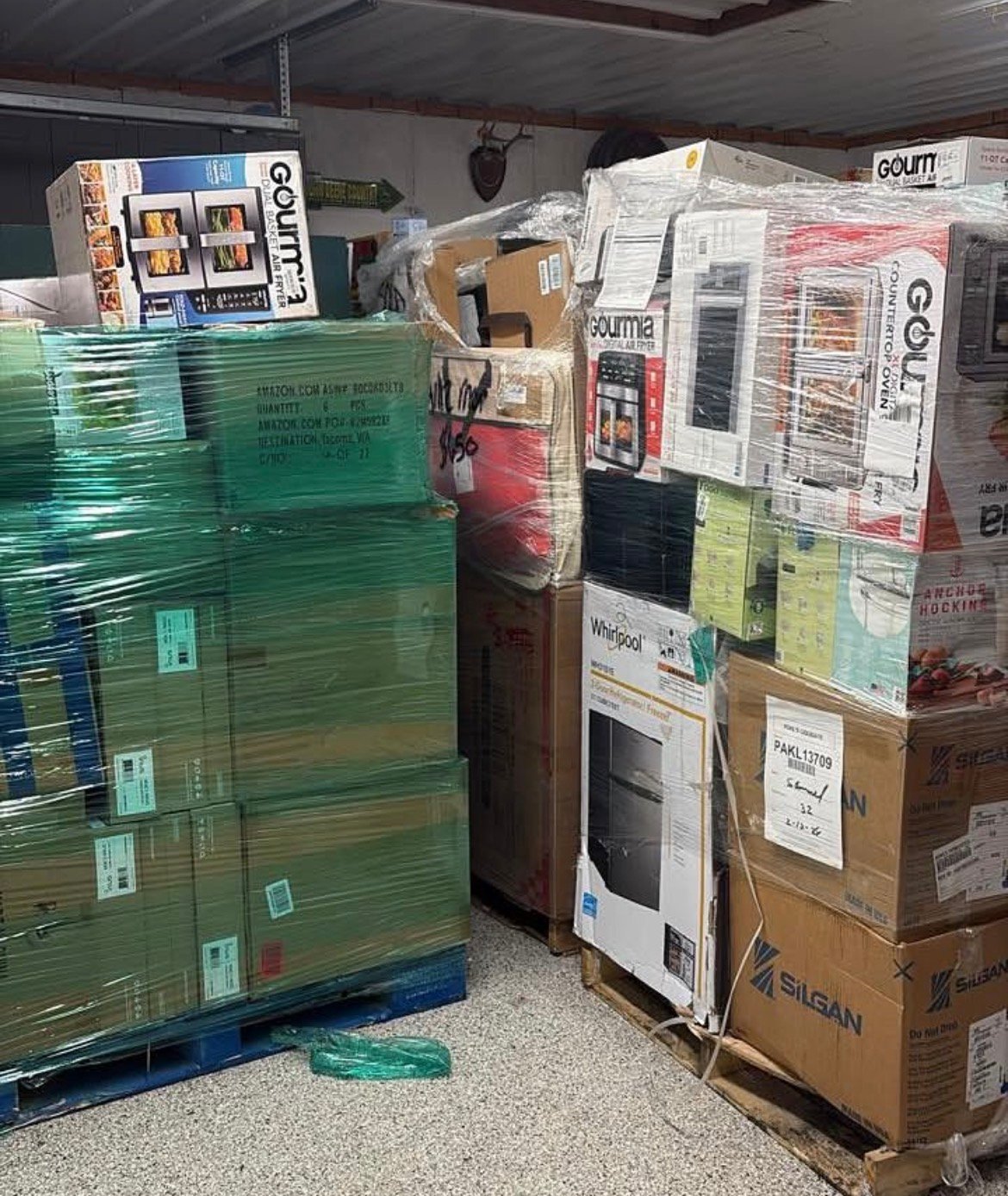
Bin stores have exploded across the country over the past couple of years, and it’s not hard to see why. Shoppers love the treasure-hunt experience of digging through bins of mixed merchandise, and for the person running it, a bin store can turn a single liquidation pallet purchase into dozens of small sales instead of one. If you’ve been watching bin store videos online and wondering whether you could actually pull this off, this guide walks through exactly what a bin store business costs to start, how the profit model works, and what your realistic first-month numbers might look like.
What Is a Bin Store Business and How Does It Work?
A bin store business is a retail concept built around large bins filled with mixed, discounted merchandise customer returns, overstock, and shelf-pulls, most of it sourced through liquidation pallets. Instead of pricing every item individually, most bin stores price by the bin, by the pound, or with a flat daily price that drops as the week goes on. A common model looks like this:
- Monday: new bins go out at $10 per item (or a set price per pound)
- Tuesday–Wednesday: price drops to $7
- Thursday–Friday: price drops to $5
- Saturday: everything left is $2 or less, sometimes even $1
This “price drops daily” structure is the backbone of most successful bin store businesses because it does two things at once: it creates urgency (shoppers want first pick at the higher price for better items), and it guarantees that inventory keeps moving instead of sitting on a shelf. By the end of the week, almost everything in that bin has sold, and a fresh pallet gets broken down and refilled for the following Monday.
Unlike traditional resale, where you photograph, list, and individually price every single item online, a bin store business skips almost all of that labor. You dump the pallet, sort out anything clearly broken or unsellable, and put the rest straight into bins. That single difference is why bin stores have become such an attractive bin store business model for people who want liquidation profits without spending hours per day on online listings.
Bin Store Business Setup Costs: What You’ll Actually Spend
This is the section everyone wants concrete numbers for, so let’s break down realistic bin store startup costs for a small to mid-size bin store business. These figures assume a modest storefront in a lower-cost commercial area, not a large-format warehouse operation.
| Startup Expense | Low-End Estimate | Higher-End Estimate |
|---|---|---|
| Commercial space lease (first month + deposit) | $1,500 | $5,000 |
| Bins, tables, and shelving | $500 | $2,000 |
| Initial liquidation pallet inventory (4–8 pallets) | $2,000 | $8,000 |
| POS system and card reader | $200 | $800 |
| Signage (interior and exterior) | $300 | $1,200 |
| Business license and resale certificate fees | $50 | $300 |
| Basic insurance (general liability) | $300 | $900 |
| Marketing and grand opening promotion | $200 | $1,000 |
| Estimated total startup cost | $5,050 | $19,200 |
A lean bin store business can realistically launch for around $5,000–$7,000 if you start in a small space, buy secondhand shelving, and keep your initial pallet order modest. On the higher end, a larger storefront with a bigger inventory buy can easily run $15,000–$20,000. Either way, the entry cost for a bin store business is significantly lower than most traditional retail concepts, which is exactly why it’s become such a popular path for first-time entrepreneurs coming out of the liquidation reselling world.
If you’ve already read our guide on how to start a liquidation pallet business from scratch with $500 or less, think of a bin store business as the next step up the same sourcing model, but scaled into a physical storefront instead of online listings.
Bin Store Business vs. Traditional Reselling: Full Comparison Table
Before committing to a storefront, it’s worth understanding how a bin store business actually compares to reselling liquidation pallets online, since the two models require very different time and money commitments.
| Factor | Bin Store Business | Online Reselling |
|---|---|---|
| Startup cost | $5,000–$20,000 | Under $1,000 |
| Time per item | Minimal — no individual listing | High — photos, descriptions, pricing per item |
| Inventory turnover | Fast — priced to sell within a week | Slower — items can sit until they find a buyer |
| Customer reach | Local foot traffic only | National/international |
| Best for | High-volume, low-touch selling | Higher-value individual items |
| Physical space needed | Yes — retail storefront | Optional — garage or spare room works |
| Staffing | Often required | Usually solo |
| Recurring overhead | Rent, utilities, staff | Minimal (shipping, platform fees) |
| Where to source inventory | wholesalepalletdepot.shop/shop | wholesalepalletdepot.shop/shop |
The clearest takeaway from this table is that a bin store business trades higher upfront cost and overhead for dramatically faster turnover and far less time spent per item. If you’re comparing which path fits you best, our post on pallet flipping for beginners is a good companion read for the online side of this comparison.
Bin Store Business Profit Breakdown: First-Month Numbers
Let’s walk through a realistic first-month scenario for a small bin store business, so you can see how the math plays out once doors open.
Assume you launch with 6 pallets purchased at an average of $700 each, for a total inventory cost of $4,200. Each pallet is manifested at roughly $6,000–$8,000 in combined retail value, which is fairly typical for general merchandise or mixed customer-return pallets.
- Total inventory cost: $4,200
- Bins filled per week: roughly 15–20 bins from 6 pallets, refreshed weekly
- Average daily customers (modest first month): 25–40
- Average spend per customer: $12–$18
- Estimated weekly revenue: $2,800–$4,200
- Estimated first-month revenue (4 weeks): $11,200–$16,800
Subtracting rent, utilities, part-time staff, and restocking additional pallets throughout the month (let’s estimate $3,500–$5,500 in combined operating costs plus reinvestment into 4–6 more pallets), a realistic first-month profit for a new bin store business often lands somewhere between $2,000 and $6,000, depending on foot traffic, location, and how efficiently bins are restocked.
It’s worth being honest here: the first month is typically the slowest, since you’re still building local awareness. Bin store business owners who track their numbers consistently tend to see revenue climb in months two and three as repeat customers and word-of-mouth kick in especially once you settle into a manifest source and pricing rhythm that works for your area.
Watching your bin store profit margins closely during these early months matters more than chasing raw revenue. A store doing high sales volume but thin margins can actually be less sustainable than a smaller store buying pallets at the right price and pricing bins to protect profit from day one.
Bin Store Business Location and Legal Requirements
Choosing the right location can make or break a bin store business, and there are a few legal boxes to check before opening your doors.
Location factors that matter:
- Affordable commercial rent — bin stores don’t need premium retail space, so strip malls and lower-traffic commercial corridors often work well
- Easy loading access for freight deliveries, since pallets typically arrive by truck
- Enough square footage for bins, walking space, and a checkout counter — most small bin stores operate comfortably in 1,000–2,500 square feet
Legal requirements typically include:
- A general business license from your city or county
- A resale certificate (sometimes called a seller’s permit) so you can purchase liquidation pallets without paying sales tax on inventory you intend to resell
- Sales tax collection and remittance, since you’re selling directly to end consumers
- General liability insurance, and in some cases business property insurance
Requirements vary by state, so it’s worth checking with your local Secretary of State or Department of Revenue office before signing a lease. Getting these fundamentals right from day one protects your bin store business from costly compliance issues down the road.
Bin Store Business Sourcing: Where to Buy Liquidation Pallets
Every bin store business lives or dies by its sourcing. Since your entire model depends on consistent pallet quality and volume, this is not the place to cut corners or gamble on unverified sellers. Finding the right liquidation pallets for bin store use is the single biggest factor separating a full bin week from an empty shelf.
Look for a supplier that offers:
- Detailed manifests so you know approximately what’s in each pallet before it arrives
- Condition grading so you’re not blindsided by damage rates
- Consistent, repeatable inventory so you can restock on a predictable schedule
- Transparent pricing without hidden freight surcharges
Wholesale Pallet Depot checks each of these boxes, publishing manifests and condition notes across its full shop catalog, which makes it a strong fit for bin store owners who need reliable, repeat inventory rather than a one-off gamble. Categories like Amazon General Merchandise Pallets and mixed customer-return loads tend to work especially well for bin store business models, since the variety keeps shoppers coming back to see what’s new each week.
Bin Store Business Pricing Strategy: How to Set Your Bin Prices
Getting your pricing structure right is one of the most important decisions in running a profitable bin store business. Most successful stores use one of these two models:
Flat price-per-item, dropping daily every item in a given bin is priced the same on day one (commonly $8–$15), then drops on a set schedule throughout the week until it hits a clearance price like $1–$2 by the weekend.
Price-per-pound customers fill a bag or bin and pay based on total weight, which works especially well for clothing, toys, and smaller household goods where individual pricing would be too time-consuming.
Whichever model you choose, the goal of your bin store business pricing strategy is the same: move inventory fast enough that you’re never sitting on stale stock, while still capturing full value from shoppers willing to pay more for first pick on Monday. Many bin store owners test both models in their first few months and land on a hybrid flat pricing for general bins, and per-pound pricing for clothing or bulk item bins.
Bin Store Business Marketing and Customer Acquisition
Because a bin store business depends entirely on local foot traffic, marketing looks very different from an online resale operation.
Effective strategies for a new bin store business include:
- Social media “restock” videos — short videos showing new pallets being unboxed and bins being filled perform extremely well on TikTok and Instagram, and directly drive foot traffic on restock days
- Local Facebook groups and community boards — bin stores tend to build loyal local followings through community group posts and events
- Grand opening promotions — offering a discounted flat rate ($5 per item, for example) for your first weekend can build initial buzz and word-of-mouth
- Consistent restock schedules — publicizing a reliable day and time for new inventory (e.g., “New bins every Monday at 10am”) trains customers to show up regularly
Word-of-mouth tends to be the single biggest growth driver for a bin store business, since the treasure-hunt shopping experience naturally encourages customers to bring friends and share finds on social media.
Bin Store Business Day-to-Day Operations: Staffing and Hours
Running the daily operations of a bin store business looks different from most retail concepts, mainly because so much of the labor happens behind the scenes before the doors even open.
A typical weekly operating rhythm looks like:
- Pallet delivery day (often mid-week) — pallets arrive by freight, get broken down, sorted, and staged
- Restock day (commonly Monday) — bins get filled with fresh inventory at the highest price point of the week
- Peak shopping days (Monday–Wednesday) — highest foot traffic as customers come for first pick
- Clearance days (Thursday–Saturday) — prices drop, and remaining inventory sells through before the next restock
Staffing needs depend heavily on your store’s size and hours, but many small bin store business owners start solo or with one part-time employee, handling sorting during off-hours and covering the register during open hours themselves. As volume grows, most owners add:
- A part-time or full-time sorter to break down pallets and stage bins
- A cashier or floor associate during peak shopping hours
- Occasional extra help on restock day, since sorting a full pallet load can take several hours
Keeping labor costs proportional to revenue is important in the early months. Many new bin store business owners intentionally keep the operation lean often just themselves and one part-time helper — until sales data confirms the store can support additional payroll. This lean approach also makes it easier to hit profitability in month one, since staffing is typically the largest recurring cost after rent.
Store hours for most bin store businesses run 6 to 7 days a week, since consistent access is part of what trains customers to check back regularly. Many owners find that Sundays or another slower day can be used for deep cleaning, restocking prep, and getting ahead on sorting the next pallet delivery.
Bin Store Business Risks and Common Mistakes
No honest guide would skip the risks. A bin store business can fail just as easily as it can succeed, and most failures come down to a handful of avoidable mistakes.
Common mistakes to avoid:
- Overpaying for a large retail space before proving the model works locally
- Buying pallets from unverified sellers without manifests, leading to inconsistent inventory quality
- Under-pricing at the start of the week, which cuts into margin before items even reach clearance pricing
- Failing to budget for ongoing restocking, which leaves shelves empty and kills repeat visits
- Skipping proper business licensing and sales tax registration, which can result in fines later
Reducing these risks starts with sourcing from a transparent, established supplier and starting lean rather than overextending on rent and inventory before you’ve validated demand in your area. Our post on liquidation pallet scams and warning signs is worth a read before you make your first bulk purchase.
Bin Store Business Product Showcase: Best Pallet Categories to Start With
If you’re building out your first round of inventory, here are categories from the Wholesale Pallet Depot shop that tend to perform especially well in a bin store business:
- Amazon General Merchandise Pallets — wide variety keeps bins interesting week to week
- Costco Liquidation Pallets — household and grocery-adjacent goods with strong recognition and trust
- Clothing Liquidation Pallets — ideal for per-pound bin pricing
- LEGO Brick Liquidation Pallets — strong repeat demand from parents and collectors
- Pet Product Liquidation Pallets — fast-moving, everyday-use category
Mixing a couple of “anchor” categories like general merchandise and clothing with a rotating specialty pallet each week is a strategy many bin store business owners use to keep customers curious about what’s coming in next.
Bin Store Business: How to Source Safely and Scale Over Time
As your bin store business grows, consistency becomes even more important than it was on day one. Look for suppliers that can support your restock schedule long-term, not just a single opening-day order.
For a broader look at retail inventory sourcing best practices, resources like Investopedia’s overview of wholesale and liquidation trade and the U.S. Small Business Administration’s guidance for retail businesses are useful starting points as you formalize your operations.
Wholesale Pallet Depot publishes manifests, condition grading, and customer ratings across its shop catalog, and maintains a published FAQ and About Us page — the kind of transparency any bin store business owner should look for before committing to a recurring supplier relationship.
FAQs About How to Start a Bin Store with Liquidation Pallets: Setup Costs and First-Month Profits
1. How much does it cost to start a bin store? A lean bin store can launch for roughly $5,000–$7,000, while a larger storefront with more inventory can run $15,000–$20,000, depending on rent, location, and initial pallet order size.
2. Where can I buy liquidation pallets for sale to stock a bin store? Look for a supplier that provides manifests and condition grading, such as Wholesale Pallet Depot, which sources directly from major retailers.
3. How much profit can a bin store make in the first month? First-month profit for a small bin store often falls between $2,000 and $6,000 after accounting for rent, staffing, and reinvestment into new pallets, though this varies by location and foot traffic.
4. Do I need a business license to open a bin store? Yes. Most cities and states require a general business license and a resale certificate before you can legally purchase liquidation pallets tax-free for resale.
5. What kind of liquidation pallets work best for a bin store? General merchandise, clothing, and household goods pallets tend to work best because they offer variety and move quickly at bin-store pricing structures.
6. How do bin stores price their items? Most bin stores use either a flat price-per-item that drops daily throughout the week, or a price-per-pound model, especially for clothing and bulk items.
7. How much space do I need to open a bin store? Many small bin stores operate successfully in 1,000–2,500 square feet, which is enough room for bins, walking space, and a checkout area.
8. Is a bin store more profitable than online reselling? Bin stores typically have higher overhead but faster inventory turnover and higher volume, while online reselling has lower overhead but requires far more time per item. Which is “more profitable” depends on your local market and how much time you can dedicate.
9. How often should I restock my bin store? Most successful bin stores restock weekly, refreshing bins with new pallets on a consistent, publicized schedule to keep customers coming back.
10. Where can I find liquidation pallets for sale near me or online? Established online suppliers like Wholesale Pallet Depot ship nationwide and publish manifests for every pallet, making it easy to source consistent inventory without relying on local availability alone.
Ready to stock your first round of bins? Browse the full selection of liquidation pallets for sale at Wholesale Pallet Depot and find the categories that fit your bin store business plan.