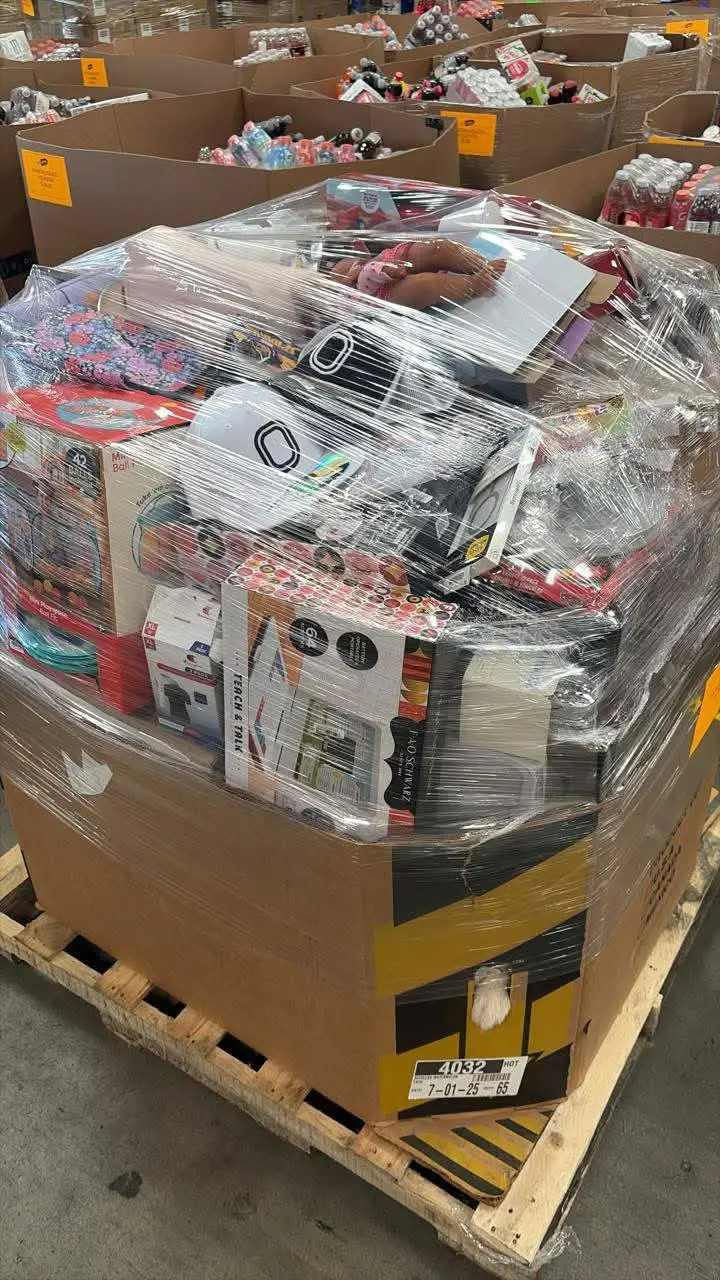
Let’s talk about something real for a second. You’ve probably seen the videos. Someone opens a giant pallet of merchandise, pulls out brand-name products worth hundreds of dollars, and walks away with a stack of cash after selling everything online or at the flea market. You watched it and thought — is this actually real? Can regular people with no special skills or connections really make consistent money doing this?
The answer is yes. Pallet flipping for beginners is one of the most legitimate and accessible side hustles and full-time income opportunities available in 2026. It doesn’t require a college degree, a business license on day one, or a massive upfront investment. What it does require is the right knowledge, a trustworthy supplier, and the willingness to put in real work.
This guide is going to give you everything you need to get started. By the time you finish reading, you’ll understand exactly what pallet flipping is, how the money actually works, what mistakes to avoid, and where to source your first pallet from a supplier you can actually trust like Wholesale Pallet Depot, one of the most reliable liquidation pallet sources in the country.
Let’s build your foundation the right way.
What Is Pallet Flipping and Why Is Everyone Talking About It in 2026?
The Simple Definition Every Beginner Needs to Know
Pallet flipping is the process of buying large pallets of discounted merchandise typically from liquidation companies, wholesale distributors, or directly from major retailers and then reselling the individual items for a profit through platforms like eBay, Facebook Marketplace, Amazon, Poshmark, or at local flea markets.
The merchandise inside these pallets comes from several sources. Major retailers like Walmart, Target, and Amazon generate billions of dollars in returned and excess inventory every single year. Rather than destroying or storing that merchandise indefinitely, they sell it in bulk through licensed liquidation channels. Wholesale distributors purchase those large truckloads, break them down into individual pallets, and make them available to buyers like you at a fraction of the original retail price.
Your job as a pallet flipper is simple in concept: buy low, sell higher, pocket the difference.
Why Pallet Flipping for Beginners Has Exploded in 2026
According to the National Retail Federation, retailers process hundreds of billions of dollars in returned merchandise annually. That volume has created a massive, consistent supply of liquidation inventory flowing through the market. which means the opportunity for resellers is bigger now than it has ever been.
At the same time, platforms like eBay, Facebook Marketplace, and Poshmark have made it easier than ever to reach buyers. You no longer need a storefront, a commercial space, or an established business reputation to start selling. A smartphone, a few good photos, and the right pricing strategy is enough to move inventory and generate real income.
The result is a growing community of resellers — from stay-at-home parents to full-time entrepreneurs — who are building real income streams through pallet flipping. And the barrier to entry has never been lower.
How Much Money Can You Actually Make Pallet Flipping?
Real Pallet Flipping Income Numbers for 2026
This is the question everyone asks first, and it deserves an honest answer rather than inflated promises.
Here is what realistic pallet flipping income looks like at different stages:
| Experience Level | Weekly Pallets Processed | Estimated Weekly Revenue | Estimated Weekly Profit |
|---|---|---|---|
| Complete Beginner (Month 1) | 1 pallet | $300 – $600 | $100 – $300 |
| Developing (Month 2–3) | 1–2 pallets | $600 – $1,200 | $300 – $700 |
| Consistent Reseller (Month 4–6) | 2–3 pallets | $1,200 – $2,500 | $700 – $1,500 |
| Scaled Operation (Month 6+) | 4+ pallets | $3,000 – $6,000+ | $1,500 – $3,000+ |
These are realistic ranges, not guarantees. Your actual results depend on the product category you choose, how efficiently you list and sell, which platforms you use, and how much time you invest. But the math is genuinely in your favor when you source from a reputable supplier at honest prices.
The Basic Math Behind Pallet Flipping Profit
Here is the simple formula every beginner needs to understand before spending a dollar:
Total Landed Cost = Purchase Price + Shipping Estimated Revenue = Estimated Retail Value × Your Sell-Through Rate Profit = Estimated Revenue − Total Landed Cost − Platform Fees
Let’s run a real example. Say you purchase a Grade B mixed merchandise pallet for $350. Shipping to your location costs $150. Your total landed cost is $500. The pallet has an estimated retail value of $2,000. You sell items at an average of 35% of retail, generating $700 in revenue. After $50 in eBay and shipping fees, your profit is $150.
That might not sound earth-shattering on one pallet. But run two pallets per week at that margin and you’re looking at $300 in weekly profit — over $1,200 per month — working part-time from home. Scale that to three or four pallets per week as you get faster and more efficient, and the numbers grow significantly.
What You Need to Start Pallet Flipping for Beginners
The Startup Essentials — What Actually Matters
One of the best things about pallet flipping for beginners is how low the startup costs are compared to most business models. Here is what you actually need to get started:
A reliable liquidation supplier. This is the single most important decision you will make. Your supplier determines the quality of your inventory, the accuracy of your product descriptions, and ultimately whether your profit margins hold up. Wholesale Pallet Depot is built specifically for resellers who need honest grading, real product photos, and consistent supply they can count on.
A place to receive and sort inventory. You don’t need a warehouse. A garage, basement, or spare room works fine when you’re starting out. A standard pallet takes up roughly 4×4 feet of floor space — manageable for most homes with a little organization.
A smartphone with a decent camera. Good product photos are one of the highest-leverage investments you can make in your reselling business. Natural light and a clean background are all you need to create listings that convert.
Selling platform accounts. Set up your eBay seller account, your Facebook Marketplace profile, and any other platforms you plan to use before your first pallet arrives. Having everything ready means you can start listing the day your inventory lands.
Basic shipping supplies. Boxes in multiple sizes, bubble wrap, packing tape, and a thermal label printer (or access to a regular printer) are the essentials. You can source these affordably from ULINE, Amazon, or your local office supply store.
A budget. Most beginners start with $300 to $700 for their first pallet including shipping. This is enough to get meaningful inventory without risking more than you can afford to learn with.
What You Do NOT Need to Start
Just as important as knowing what you need is knowing what you can skip — especially as a beginner:
- A business license (you can sell as an individual to start)
- A warehouse or commercial space
- Expensive software or inventory management systems
- A large social media following
- Previous retail or business experience
You can add all of these as your operation grows. For your first few pallets, keep it simple and focus on learning the process.
How to Choose Your First Pallet — A Beginner’s Guide at wholesalepalletdepot.shop
The Best Product Categories for Pallet Flipping for Beginners
Not all pallets are created equal for someone just starting out. Some categories are more forgiving, faster-selling, and easier to evaluate than others. Here are the best starting points for beginners:
Clothing and Apparel Clothing pallets are one of the most beginner-friendly options in the liquidation market. Items are easy to photograph, easy to ship, and sell consistently on Poshmark, eBay, and Facebook Marketplace. Branded apparel — Adidas, Nike, Under Armour — commands strong resale prices and moves quickly. Wholesale Pallet Depot carries wholesale Adidas clothing pallets that are among our most popular listings for exactly this reason.
Power Tools Power tool pallets are a gold mine for resellers who know anything about tools — and even beginners can do well here because brand recognition does most of the selling work. Milwaukee, Ryobi, DeWalt, and Black & Decker tools sell themselves on Facebook Marketplace and eBay. Buyers actively search for these brands at below-retail prices. Check out our wholesale Milwaukee power tool pallets and wholesale Ryobi power tool pallets for current availability.
Home Goods and Kitchen Items Home goods are steady, reliable sellers that don’t require technical knowledge to evaluate or list. Air fryers, coffee makers, storage solutions, bedding, and kitchen accessories move consistently year-round across multiple platforms. These are great for beginners who want predictable inventory without the complexity of electronics.
Sporting Goods and Athletic Footwear Athletic gear and footwear — particularly brand-name items — hold their value extremely well on the secondary market. Our soccer boots liquidation pallets are a strong example of how specialized footwear inventory can generate impressive margins for resellers who know their audience.
Understanding Pallet Grades Before You Buy
Every reputable liquidation supplier grades their inventory. Here is what the grades mean and how to factor them into your buying decisions:
Grade A — Like-new or new in original packaging. Predominantly overstock and shelf pull merchandise that was never purchased by a consumer. Highest quality, highest purchase price, most predictable profit margins. Ideal for beginners who want reliability over volume.
Grade B — Customer returns in good to very good condition. Items have been purchased and returned — some in perfect condition, some with light use or cosmetic wear. Lower purchase price with strong profit potential for resellers who don’t mind sorting.
Grade C — Untested, as-is merchandise sold for parts or repair value. Not recommended for beginners. The uncertainty requires experience and specific technical knowledge to navigate profitably.
Start with Grade A or Grade B pallets and work your way toward Grade C inventory as your knowledge of specific product categories deepens.
Step-by-Step — How Pallet Flipping Actually Works
H3: Step 1 — Find a Trusted Supplier for Wholesale Pallets for Resale
Your supplier is the foundation of your entire pallet flipping business. A bad supplier means bad inventory, lost money, and a discouraging experience that makes you want to quit before you’ve really started. A great supplier means consistent quality, honest descriptions, and the foundation for a scalable and profitable operation.
Wholesale Pallet Depot was built to be exactly that supplier for resellers at every level. We source directly from major retail supply chains, grade every pallet honestly, provide real product photos on every listing, and ship nationwide to your door. Our team is reachable at (719) 321-6761 to answer questions before you buy — because we want every purchase to be the right one.
Browse current liquidation pallets for sale at wholesalepalletdepot.shop/shop.
Step 2 — Choose Your Pallet and Place Your Order
Once you’ve identified a pallet that fits your budget, category preference, and estimated profit margin, placing your order is straightforward. Review the product description carefully, confirm the condition grade, check the estimated retail value against the purchase price, factor in your shipping cost, and verify that the math works before you click buy.
If you have any questions before ordering, call the Wholesale Pallet Depot team directly at (719) 321-6761. It’s always better to ask one question before your order than to deal with a mismatched expectation after.
Step 3 — Receive and Document Your Inventory
When your pallet arrives, treat the receiving process like a business procedure — because it is one. Here’s exactly what to do:
- Take photos and video of the pallet before you open it
- Document the contents as you unpack — item by item if possible
- Sort everything immediately into categories: like-new, good condition, fair condition, unsellable
- Research resale values on eBay completed sales for each item category before pricing anything
This process takes time on your first pallet. It will get significantly faster as you develop systems and familiarity with your inventory categories.
H3: Step 4 — List Your Inventory and Start Selling
This is where the real work and the real money happen. Here are the platforms that consistently perform best for pallet flipping resellers:
eBay — The most powerful platform for individual item listings across virtually every product category. eBay’s Seller Center has excellent free resources for new sellers. Research completed sales before pricing to ensure you’re listing at competitive but profitable prices.
Facebook Marketplace — The best platform for local sales, large or bulky items, and fast-moving inventory. No shipping required for local transactions, no platform fees for cash sales, and buyers are motivated. Facebook Marketplace is particularly strong for tools, furniture, home goods, and electronics.
Poshmark — The go-to platform for clothing, footwear, and accessories. Poshmark has a built-in audience of fashion-conscious buyers actively looking for brand-name items at below-retail prices. Ideal for apparel pallets from brands like Adidas and Nike.
Amazon Seller Central — Best for brand-new, sealed merchandise from overstock pallets. Amazon Seller Central gives you access to millions of active buyers, though the fee structure and condition requirements are stricter than other platforms.
Local flea markets and swap meets — Never underestimate the power of selling face to face. A well-organized flea market table can move significant inventory in a single weekend, particularly for home goods, clothing, toys, and tools.
Step 5 — Collect Your Profit and Reinvest
Once your inventory sells, track your numbers honestly. Total revenue minus total costs equals your actual profit. Set aside a portion for taxes the IRS self-employment tax guidelines are worth reviewing early so you’re not caught off guard at tax time.
Then reinvest a meaningful portion of your profit into your next pallet. This is the compound growth engine of the pallet flipping business. Resellers who consistently reinvest scale their operations faster than those who cash out every dollar of profit after each sale.
The Biggest Mistakes Beginners Make When Pallet Flipping
Mistake 1 — Buying from Unverified Sources
The liquidation industry has its share of bad actors. Resellers who buy from random Facebook listings, unverified websites, or suppliers with no traceable contact information often end up with garbage pallets — literal trash loads of unsellable merchandise dressed up with inflated retail value claims.
Always verify your supplier. Check their Better Business Bureau profile, read Google reviews, confirm they have a working phone number and physical address, and make sure they accept standard payment methods. Wholesale Pallet Depot checks every box and our team is accessible by phone at (719) 321-6761.
Mistake 2 — Not Accounting for All Costs
Too many beginners calculate profit based on purchase price alone and then wonder where their margin went. Always calculate your total landed cost — purchase price plus shipping plus platform fees plus your time — before deciding whether a pallet makes financial sense.
Mistake 3 — Buying Too Much Too Fast
Excitement is natural when you discover pallet flipping for the first time. But buying three or four pallets before you’ve learned how to efficiently process and sell one is a recipe for overwhelm, disorganization, and slow-moving inventory piling up in your garage.
Start with one pallet. Sell it completely. Then buy the next one. This linear approach builds the systems and knowledge you need to scale confidently.
Mistake 4 — Ignoring the Importance of Good Photos
Your listing photo is the first thing every potential buyer sees. Dark, blurry, cluttered photos kill sales regardless of how good the product is. Take your time with photos. Use natural light from a window, a clean neutral background, and multiple angles for higher-value items. The difference in conversion rates between a good photo and a bad one is enormous.
Mistake 5 — Giving Up After One Difficult Pallet
Not every pallet will be a home run. Some will be more challenging to sell than expected. Some categories will perform better for your specific audience and platforms than others. The resellers who build sustainable pallet flipping income are the ones who treat setbacks as learning experiences and use the information to make better buying decisions on the next pallet.
Why Wholesale Pallet Depot Is the Best Starting Point for Pallet Flipping Beginners
What Makes wholesalepalletdepot.shop Different from Other Liquidation Sources
There is no shortage of liquidation suppliers competing for your first order. Here is why Wholesale Pallet Depot is the right choice for beginners specifically:
Honest, transparent listings. Every pallet we sell comes with accurate condition grades, real product photographs, and honest estimated retail values. We don’t pad numbers to make deals look more attractive than they are. We want you to buy the right pallet for your goals because resellers who succeed come back and buy again.
Direct retail sourcing. We source our inventory directly from major retail supply chains, cutting out unnecessary middlemen and passing those savings directly to you in the form of competitive pricing.
160+ products across every major category. Whether you want to start with clothing, tools, electronics, sporting goods, or general merchandise, our catalog has options at multiple price points to match your starting budget.
Nationwide shipping. We ship pallets to resellers across the entire country. Wherever you are, your inventory comes to you with tracking information and reliable freight partners.
Real customer support. Our team answers the phone. Call us at (719) 321-6761 before you place your first order and we will help you choose the right pallet for your specific goals, budget, and selling platforms. That kind of guidance is rare in this industry and it’s something we genuinely prioritize for every new buyer.
Current Pallet Inventory at wholesalepalletdepot.shop — Available Now
Here is some of what is currently available for pallet flipping beginners. We have so much more currently available as well at good prices;
Wholesale Adidas Clothing Pallets — Originally $850, now $650 Branded athletic apparel with strong resale demand on Poshmark, eBay, and Facebook Marketplace. One of our most beginner-friendly pallets. 👉 View this pallet
Wholesale Milwaukee Power Tool Pallets — Originally $1,250, now $890 Premium tool brand with massive resale demand. Fast-moving inventory for flea markets and Facebook Marketplace. 👉 View this pallet
Wholesale Ryobi Power Tool Pallets — Originally $1,200, now $1,050 Strong consumer brand with loyal buyer base. Consistently top-selling on eBay and Facebook Marketplace. 👉 View this pallet
Soccer Boots Liquidation Pallets — Originally $1,500, now $1,100 Athletic footwear with strong value retention across resale platforms and popular sizes. 👉 View this pallet
Apple AirPods Pro (2nd Gen) Pallets — Originally $2,000, now $1,400 Premium tech with instant buyer recognition. Strong resale performance for experienced resellers. 👉 View this pallet
New pallets arrive regularly. Check wholesalepalletdepot.shop/shop often for fresh inventory.
FAQs About Pallet Flipping for Beginners
What exactly is pallet flipping for beginners?
Pallet flipping for beginners is the process of purchasing liquidation pallets — large quantities of returned, overstock, or surplus merchandise from major retailers — at wholesale prices and reselling the individual items for profit through platforms like eBay, Facebook Marketplace, Poshmark, or at local flea markets. It requires no special license to start, minimal upfront investment, and can be operated from home. Wholesale Pallet Depot is a trusted nationwide supplier that makes it easy for first-time buyers to get started with verified, grade-sorted inventory.
How much money do I need to start pallet flipping?
Most beginners start with a budget of $300 to $700 for their first pallet including shipping. This is enough to get meaningful inventory to work with without taking on significant financial risk while you learn the process. As you develop experience and your selling systems improve, you can scale your investment and your returns simultaneously.
What is the best product category for pallet flipping beginners?
Clothing and apparel, home goods, and power tools are consistently the three most beginner-friendly categories in the pallet flipping business. Clothing is easy to photograph and ship, home goods sell steadily year-round, and branded power tools practically sell themselves due to strong consumer demand. All three categories are available at wholesalepalletdepot.shop.
H3: Where is the best place to sell pallet flipping inventory?
The best selling platforms for pallet flipping in 2026 are eBay for individual item listings, Facebook Marketplace for local and large item sales, Poshmark for clothing and footwear, and Amazon for brand-new sealed merchandise. Local flea markets are also a strong channel for high-volume, fast-moving inventory sales.
How long does it take to make a profit from a liquidation pallet?
Most resellers begin generating revenue within the first week of receiving their pallet, with full profit realization typically taking two to four weeks depending on the product category and selling platforms used. The fastest way to accelerate this timeline is to list your inventory within 24 to 48 hours of your pallet arriving.
Is pallet flipping a legitimate business in 2026?
Absolutely. Pallet flipping is a completely legitimate reselling business model that has been operating for decades. The U.S. Small Business Administration recognizes reselling as a standard small business activity. As your income grows you will want to formalize your operation with a business license and proper tax reporting, but there is nothing preventing you from starting as an individual seller and building from there.
What is the difference between pallet flipping and dropshipping?
Pallet flipping involves purchasing physical inventory upfront, receiving it, sorting it, and reselling items individually. Dropshipping involves listing products you don’t physically own and having a supplier ship directly to your customers. Pallet flipping gives you more control over product quality and faster profit potential per item, while dropshipping requires less upfront capital but typically generates thinner margins and more competition. Most serious resellers find pallet flipping to be significantly more profitable.
Can I do pallet flipping from home without a warehouse?
Yes. The vast majority of beginner pallet flippers operate entirely from home — typically from a garage, basement, or spare room. A standard pallet occupies roughly 4 feet by 4 feet of floor space. As your operation scales you may eventually want dedicated storage space, but starting from home is completely practical and very common among successful resellers.
How do I know if a liquidation pallet supplier is trustworthy?
A trustworthy liquidation supplier will have a verifiable physical address, a working customer service phone number, genuine customer reviews on Google and the Better Business Bureau, real product photos on their listings, honest condition grading, and transparent pricing with no hidden fees. Wholesale Pallet Depot meets every one of these criteria. Call us at (719) 321-6761 before your first order — we’re happy to answer every question you have.
How often does Wholesale Pallet Depot get new inventory?
New pallets arrive regularly as our retail partners move fresh surplus and returns inventory through the supply chain. We update our listings at wholesalepalletdepot.shop/shop as new stock becomes available. We recommend checking back frequently or calling our team at (719) 321-6761 to ask about upcoming inventory in specific product categories you’re interested in.
What should I do first when my pallet arrives?
The first thing to do when your pallet arrives is document everything — take photos and video before and during unpacking. Then sort your inventory by condition and category immediately. Research resale values for each item type using eBay’s completed sales filter before pricing anything. Finally, list your inventory as quickly as possible — ideally within 24 to 48 hours — so you start generating sales and cash flow immediately.
Ready to Start Pallet Flipping? Here Is Your Next Step
You now have everything you need to go from curious to confident. You understand what pallet flipping for beginners actually involves, how the profit math works, what mistakes to avoid, and how to choose a supplier you can trust to build your business on.
The only step left is the one that separates people who build real income from people who stay on the sideline watching others do it.
Take action today. Browse the current inventory at Wholesale Pallet Depot, pick a pallet that fits your budget and interests, and place your first order. Our team is standing by at (719) 321-6761 to help you choose the right pallet for your specific goals.
Pallet flipping for beginners starts with one pallet and one decision to move forward. Make yours today.
👉 Browse all liquidation pallets for sale at wholesalepalletdepot.shop
📞 Call us: (719) 321-6761 📧 Contact us: wholesalepalletdepot.shop/contact
Wholesale Pallet Depot — Your trusted national source for wholesale pallets for resale. Verified inventory, honest grading, and real customer support — shipped to your door anywhere in the country.