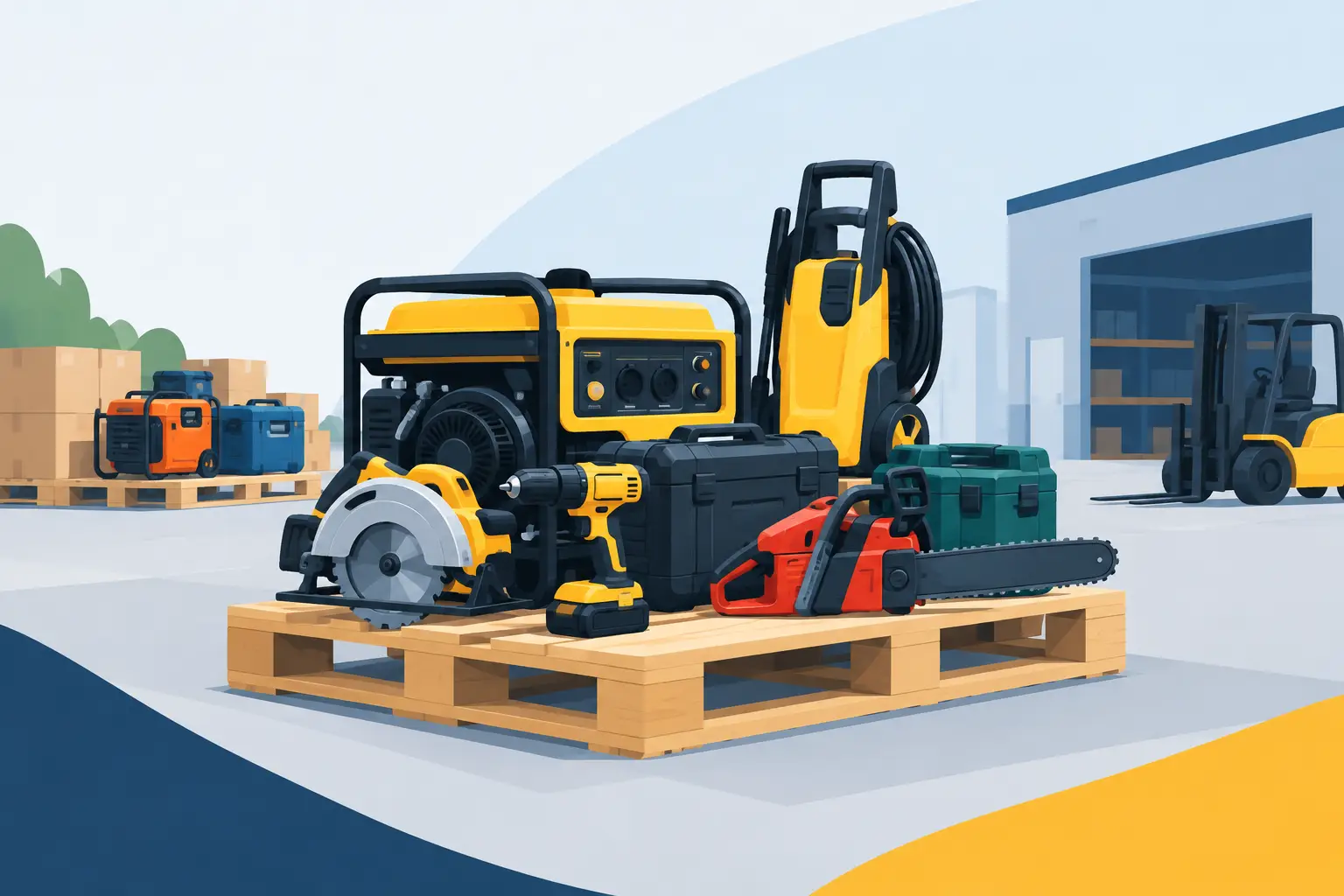
A pressure washer that starts on the first pull, a boxed cordless drill kit, a clean shop vacuum, a working generator – these are the kinds of items that can move fast for a reseller. But power equipment liquidation pallets for sale are not all built the same. One pallet may offer practical, resale-ready tools and outdoor equipment. Another may contain incomplete returns, untested units, and accessories that have little value on their own.
That is why serious buyers should treat this category like an inventory decision, not a gamble. The right pallet gives you visibility into what you are buying, the condition you can expect, and the sales channels that fit the merchandise. The wrong one can tie up cash in repairs, disposal, and products that never make it to a listing.
Why Power Equipment Is a Strong Resale Category
Power equipment earns attention because it solves immediate problems. Homeowners need drills for repairs, trimmers for overgrown yards, fans for garages, vacuums for cleanup, and pressure washers for seasonal work. Contractors, landlords, campers, and DIY buyers also shop this category with a purpose. That practical demand can make equipment easier to sell than trend-driven products with a narrow audience.
The category also gives resellers several ways to create value. A complete, working item can be sold locally at a competitive price. New-in-box units can be listed online. Accessories, replacement batteries, chargers, hoses, and attachments may sell separately when they are identified correctly. Even equipment with cosmetic wear can appeal to buyers who care more about function than retail packaging.
Still, higher ticket prices do not automatically mean higher margins. Gas-powered equipment may require more inspection, storage, and local-only sales. Battery-powered tools depend heavily on whether batteries and chargers are included. Oversized equipment can be expensive to ship. Profit comes from matching the pallet to your operating model, not from relying on a large estimated retail figure.
What You May Find in Power Equipment Liquidation Pallets for Sale
A power equipment pallet can include a wide range of merchandise, depending on the retailer source, season, and grade. Common inventory includes cordless drills, saws, sanders, impact drivers, shop vacuums, air compressors, pressure washers, leaf blowers, hedge trimmers, chainsaws, fans, work lights, generators, inverters, and battery or charging systems.
Some pallets lean heavily toward home improvement tools. Others may include lawn and garden equipment, camping power products, or mixed utility goods. Retailer returns can also include products that were opened but barely used, while overstock pallets may contain boxed items with little or no consumer handling. Those differences matter more than the category label alone.
A manifested pallet tells you what is actually inside before you commit. Look for item descriptions, model numbers, quantities, stated condition, and an honest retail estimate. Product photos should support the description and show the pallet or representative inventory clearly. If a seller cannot tell you what products are present, what grade they are, or whether key components are included, you are being asked to absorb all of the risk.
Start With the Condition Grade, Not the Retail Value
Retail value gets attention because it is easy to compare against a pallet price. It should never be the first number you use to make a buying decision. Manufacturer retail pricing is not the same as current resale value, especially for open-box products, discontinued models, or items that need testing.
Start with the condition grade. New or overstock inventory may have the fastest path to resale, particularly when cartons are intact and model information is visible. Shelf pulls can offer strong value but may have packaging wear or clearance stickers. Customer returns need more caution because the reason for return is often unknown. Some returned items are unused. Others are missing accessories, damaged, or nonfunctional.
A grade is useful only when it is explained clearly. Ask yourself whether the description distinguishes between new, open-box, customer return, salvage, and untested inventory. Broad labels such as “mixed condition” are not enough when your margin depends on a tool being complete and functional.
At Wholesale Pallet Depot, the buying standard is straightforward: choose inspected, graded, and accurately described inventory so you can price for the real condition in front of you. A lower retail estimate that reflects the actual pallet is far more useful than an inflated number designed to make a deal look irresistible.
Read the Manifest Like a Buyer, Not a Browser
A manifest is where the pallet starts becoming a business calculation. Do not just scan for familiar brands or the biggest individual price. Review the complete mix and identify what can realistically be sold through your channels.
First, check quantities. Ten cordless tools may look attractive, but the value changes if they are all tool-only units without batteries. Next, search model numbers and compare the current market for complete versus incomplete products. A missing charger can turn a quick sale into a slow-moving repair project.
Then separate likely sales into three groups: ready to sell, sellable after light cleanup or testing, and parts or recovery inventory. Your offer price should leave enough room for every group. A pallet does not need every item to be perfect, but the profitable items must carry the cost of the weaker ones.
Be realistic about where each product will move. Compact drills, work lights, and blowers can work well for online and local sales. Heavy compressors, large generators, and fuel-powered lawn equipment often make more sense for pickup, flea markets, discount stores, or regional delivery. Shipping a bulky item can erase a good margin quickly.
Calculate Your Real Landed Cost Before Ordering
The pallet price is only the beginning. Your landed cost includes the inventory, shipping, applicable taxes, unloading needs, testing supplies, replacement parts, marketplace fees, payment processing, storage, and the cost of unsellable units. Ignoring those expenses is how a pallet that looked cheap becomes expensive.
Use conservative resale pricing. If a new tool sells at retail for $200, an open-box version may not sell for $180 after fees and buyer expectations. Check completed local and online sales where possible, then price based on condition, completeness, brand recognition, and your selling speed.
A simple target is to estimate the revenue from the items you can confidently sell, subtract every expected cost, and leave a cushion for surprises. That cushion matters most with return-heavy pallets. If the numbers only work when every item functions perfectly, the deal is too tight.
Inspect and Organize the Pallet Fast
Once your shipment arrives, speed matters. Inventory that sits untested loses momentum, especially when seasonal products are involved. Photograph the pallet at delivery, compare it against the manifest, and flag visible discrepancies immediately. Keep packaging, model labels, and accessories together while you process each item.
Test equipment safely and within your capability. Confirm power, charging, basic operation, controls, and included parts. Do not represent an item as tested if it has not been tested. If a product is untested, say so clearly in your listing and price it accordingly. Honest condition notes reduce returns, protect your seller reputation, and attract buyers who know what they are purchasing.
For products that need minor work, decide quickly whether repair is worth it. Replacing a low-cost battery, hose, or handle may improve resale value. Spending hours diagnosing a low-margin unit usually does not. Your time is part of the cost.
Choose Pallets That Fit Your Sales Channel
There is no single best power equipment pallet. The best choice depends on how you sell. An e-commerce seller may prefer smaller, shippable tools with clear model numbers and stronger brand demand. A local reseller may do well with pressure washers, lawn equipment, compressors, and generators that buyers want to inspect in person. A discount store operator may prioritize a broad mix of lower-priced, ready-to-use equipment.
Newer resellers often benefit from smaller, clearly manifested pallets before moving into larger mixed loads. That approach lets you learn testing procedures, customer demand, storage needs, and actual recovery rates without committing too much capital. Established operators can scale with volume, but they still need the same discipline around grading and documentation.
The opportunity is real, but the profitable move is not buying the biggest pallet available. It is buying inventory you can understand, process, and sell with confidence. Choose power equipment with clear condition details, real photos, and item-level visibility, then put your capital behind products your customers already need.