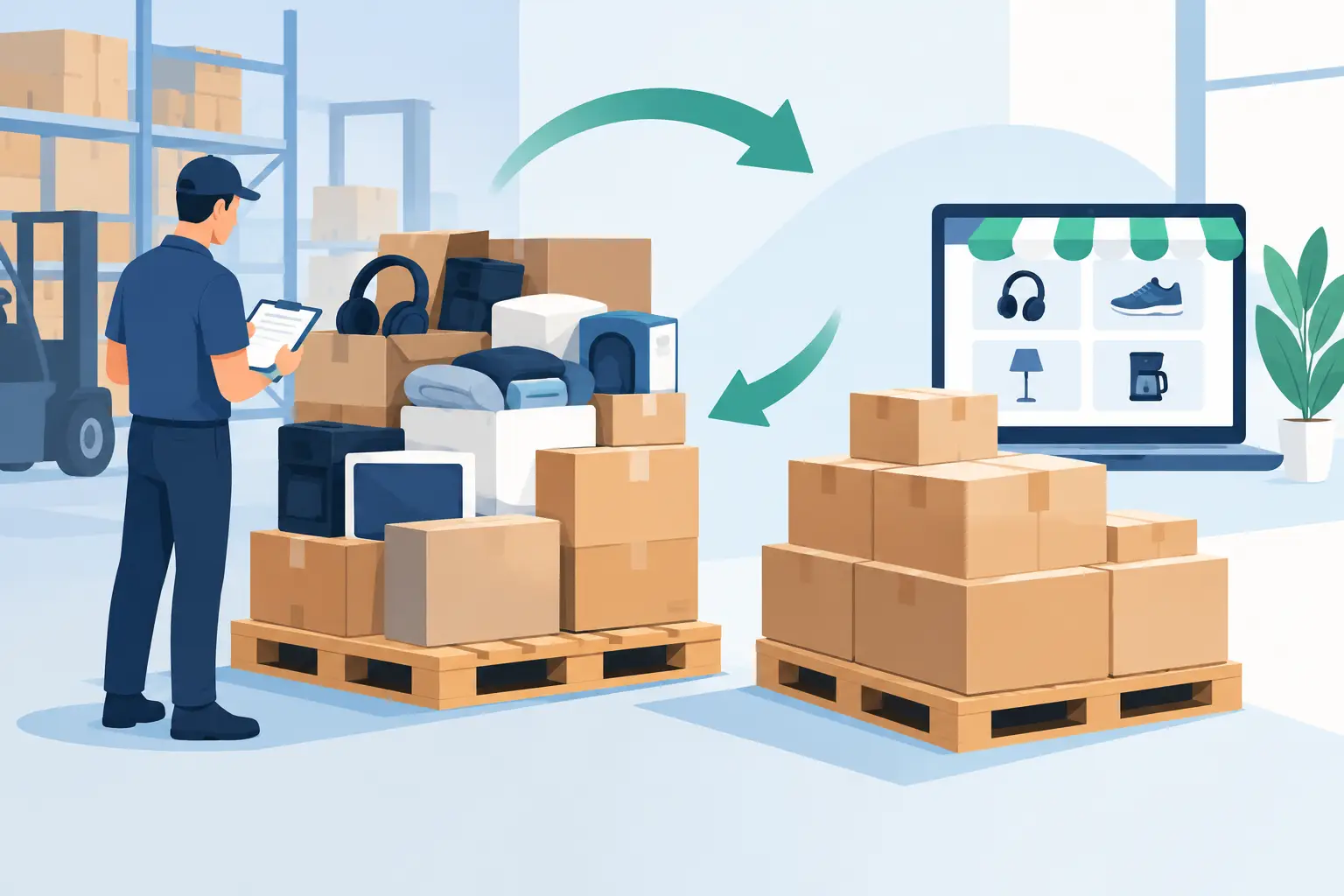
A pallet marked “customer returns” can hold fast-selling branded goods, open-box merchandise, and inventory that turns into cash quickly. It can also hold missing parts, damaged packaging, and products that are not worth repairing. That is why retail return pallets should never be purchased on hype alone. The profit is not in buying a pallet with the biggest claimed retail value. It is in buying inventory you understand well enough to resell.
For a reseller, a return pallet is not a lottery ticket. It is a buying decision. The best buyers know what is on the pallet, what condition it is in, where it will be sold, and how much labor is required before the first listing goes live.
What Are Retail Return Pallets?
Retail return pallets are bulk lots of merchandise returned by customers to major retailers. A return may be as simple as a buyer changing their mind, receiving the wrong color, or opening a box and deciding the item is not a fit. Other products may have cosmetic damage, missing accessories, functional defects, or signs of use.
Retailers process massive volumes of returns. Testing, repackaging, individually listing, and restocking every item often costs more than moving that inventory in bulk. That is where liquidation enters the picture. The merchandise is sorted into pallets by category, condition, retailer source, or a combination of those factors, then sold to resellers.
A pallet may contain electronics, apparel, shoes, home goods, tools, camping gear, auto parts, books, or mixed general merchandise. The category matters, but condition and visibility matter just as much. A pallet of recognizable products is not automatically profitable if the inventory is poorly graded or impossible to verify.
The Manifest Is Your Buying Advantage
A manifest is the document that turns liquidation from guesswork into an informed purchase. It should give you meaningful item-level information such as product descriptions, quantities, model numbers or UPCs when available, and stated retail values. It may also identify the condition or grade assigned to the lot.
Before you buy, use the manifest to answer a few practical questions. Can you identify the highest-value items? Are the products suited to your sales channel? Is the inventory concentrated in a category you know how to sell? Are there enough sellable units to justify the pallet price, shipping cost, and time required to process it?
Do not treat total estimated retail value as expected revenue. Retail value is the price a new item may carry in a store, not what a returned item will bring in your business. A smart recovery estimate accounts for condition, marketplace fees, local demand, testing time, packaging, and likely markdowns.
For example, an open-box power tool with a verified battery, charger, and working condition may sell well through a local storefront or online marketplace. The same tool with no charger, visible wear, and an untested motor needs a much lower resale assumption. The manifest tells you what could be there. Your pricing model determines whether it is worth buying.
Grades Matter More Than the Label on the Pallet
Condition labels are not interchangeable. A retailer return, shelf pull, overstock lot, and salvage pallet can all include recognizable merchandise, but the work and risk behind each one are very different.
Overstock and shelf-pull inventory is generally the most straightforward for resellers. These goods may be new, excess inventory, discontinued merchandise, or products removed from retail shelves. Packaging may show wear, but the items are often closer to retail-ready condition.
Customer returns cover a wider range. Some items are unused and complete. Others have been opened, assembled, tested, worn, or returned because a component is missing. This category can produce strong margins, especially for sellers who can test, clean, bundle, or accurately describe open-box goods. It also requires more discipline than buying new overstock.
Salvage inventory belongs in a separate risk category. It may include damaged, incomplete, heavily used, or nonfunctional items. Salvage can make sense for parts sellers, repair businesses, recyclers, or experienced operators with a clear recovery process. It is not the right first pallet for someone hoping to list everything as new.
The key is to buy the grade that matches your operation. If you need inventory you can photograph and list this week, choose a clearly described lot with strong item visibility. If you have repair capacity, storage space, and staff to process returns, a lower grade may offer more upside. Lower cost does not always mean better value.
How to Price a Return Pallet Before You Order
Start with realistic resale value, not a retailer’s original price. Check what comparable items are actually moving for in the condition you expect to receive. Then reduce that number for uncertainty. This protects your margin when products arrive with worn boxes, missing manuals, incomplete accessory sets, or condition issues that limit where they can be sold.
Next, subtract every cost tied to getting the pallet from arrival to sale. That includes the purchase price, freight, marketplace fees, payment processing, packing materials, labor, storage, returns, and disposal. Many first-time buyers only compare the pallet cost against the retail-value figure. That is how a pallet that looks profitable on paper becomes dead inventory in a garage or stockroom.
Your sales channel should drive your buying decision. Branded footwear and apparel can move through live selling, pop-up events, local shops, and online listings. Tools, home goods, and auto parts may perform better through local pickup, classified platforms, or a discount store where buyers can inspect the product. Smaller accessories can be bundled, while bulky goods require enough margin to cover storage and shipping.
A good pallet gives you multiple ways to recover your investment. High-demand items should cover a meaningful share of the cost. Mid-value products should be easy to list or sell in person. Lower-value items should have a defined outlet, whether that is bundle sales, clearance bins, flea markets, or parts recovery. If the only path to profit requires every item to sell at full price, the deal is too tight.
What to Check Before Buying Retail Return Pallets
Real photos are one of the clearest signs that you are looking at a serious wholesale offer. Photos let you assess carton condition, product mix, packaging wear, visible brands, and whether the pallet shown matches the inventory description. Stock images do not tell you what you are actually buying.
Read the condition language carefully. Terms such as new, open box, untested, used, damaged, incomplete, and salvage have different resale implications. If a seller cannot explain the grade, provide product details, or show the inventory, you are being asked to accept unnecessary risk.
Also confirm the practical details before checkout: pallet dimensions, estimated weight, shipping method, delivery requirements, and whether you have the space and equipment to receive it. A freight shipment needs a plan. If your location does not have a loading dock, arrange for liftgate delivery or choose a commercial receiving option that works for your business.
At Wholesale Pallet Depot, the focus is on inspected, graded, and accurately described inventory with real photos and detailed manifests. That visibility helps buyers make decisions based on the merchandise in front of them, not inflated claims or mystery-pallet promises.
Processing the Pallet Is Where Margins Are Protected
Your work is not finished when the freight arrives. Process the pallet quickly, ideally by recording each item as it is unpacked. Match products to the manifest, test what can be tested, separate complete items from incomplete ones, and identify any products that need cleaning, repair, or parts recovery.
Create simple condition categories for your own operation, such as retail-ready, open box, used and working, incomplete, and parts or disposal. This prevents a common resale mistake: letting questionable items pile up with inventory that is ready to sell. The faster you sort, the faster you can price and publish your best products.
Accuracy builds repeat business. Describe condition honestly, photograph flaws, and include what is or is not included. A buyer who receives exactly what your listing promised is more likely to return than one who feels surprised by an open-box item. The same principle that protects you when buying liquidation protects your reputation when reselling it.
Retail return pallets can be a practical inventory source for sellers who buy with proof, not promises. Choose a category you can move, read the manifest line by line, respect the grade, and leave room for the costs nobody sees in a retail-value headline. When the pallet arrives, move quickly and sell honestly. That is how liquidation becomes a repeatable business instead of a one-time gamble.