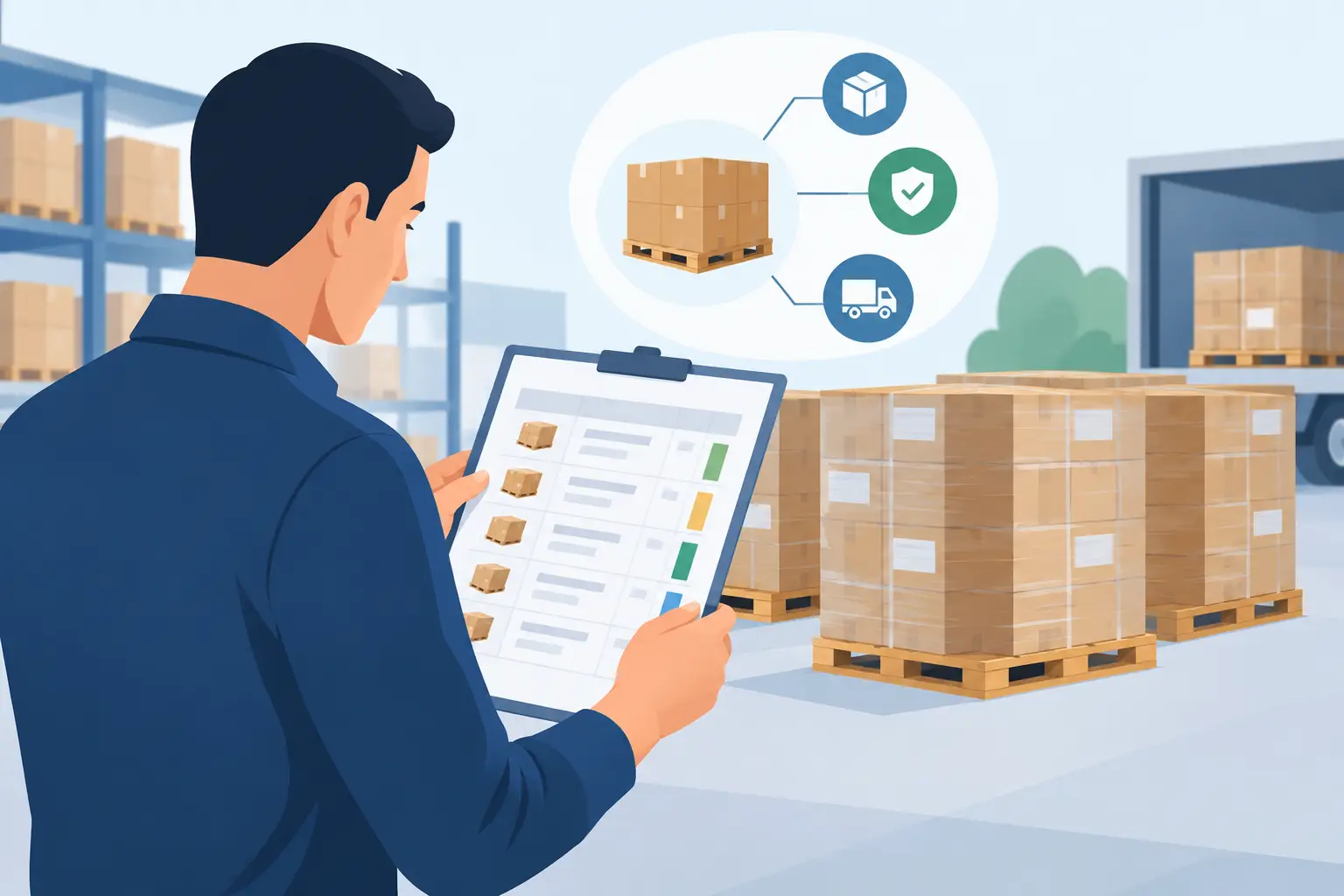
A pallet can look profitable on paper and still be the wrong buy if you do not know how to read pallet manifests. The manifest is where a liquidation purchase stops being a guess and becomes a business decision. It tells you what is supposed to be in the load, how many units you are buying, what those items retail for, and often what condition they are in. Your job is to turn that information into a realistic resale plan before you place an order.
A manifest is not a promise that every unit will sell at MSRP or even that every item will be perfect. It is a buying tool. Read it carefully, compare it to the pallet photos and grade description, and use conservative resale assumptions. That is how serious resellers avoid surprise losses and choose inventory they can move.
Start With the Manifest Basics
Most pallet manifests are spreadsheets or itemized product lists. They commonly include a product name, SKU or UPC, quantity, listed retail price, extended retail value, and sometimes a condition code. Some also identify the retailer source, product category, brand, model number, size, color, or package details.
The first figure many buyers notice is total retail value. It is useful, but it should never be your only reason to buy. A pallet with a $10,000 listed retail value may contain slow-moving products, incomplete items, customer returns, or goods with retail prices that no longer reflect the current market. Think of listed retail as a reference point, not your expected revenue.
Instead, begin with the items. Scan the highest-value products and the products with the highest quantities. Those lines usually have the greatest effect on whether the pallet works for your business. Ten recognizable power tools can be easier to sell than 200 generic accessories, even if the accessories create a larger total retail number.
Know What Each Column Actually Means
Product descriptions can be abbreviated, especially on large manifests. A line that says “Bluetooth Speaker, Black” does not tell you whether the unit is new, open-box, tested, missing a charger, or ready for retail display. Look for a separate condition column and then compare that information with the overall pallet grade.
Quantity means the number of units assigned to that line item. Confirm whether the quantity is one complete item, one case pack, or one component. A manifest may show 12 units of an item, but the description may refer to replacement parts rather than 12 full retail-ready products.
The unit retail price is typically the original or reference retail value per unit. The extended retail is that price multiplied by the listed quantity. Check the math when you can. A small error in a high-quantity line can materially change the total value shown at the bottom of the manifest.
SKUs, UPCs, model numbers, and brand names are especially valuable because they let you identify the exact item. Generic descriptions are harder to price accurately. When a pallet includes identifiable, in-demand brands and models, you have a better foundation for estimating sales across your own channels.
How to Read Pallet Manifests for Condition
Condition is where many liquidation buyers either protect their margin or lose it. A product’s retail price means little if it is damaged, incomplete, locked, obsolete, or unsuitable for resale. Read the condition notes before you calculate potential revenue.
Common liquidation grades may include new, overstock, shelf pulls, open-box, customer returns, untested returns, salvage, or mixed condition. Definitions can vary by supplier, so rely on the grade description attached to the actual listing rather than assuming every seller uses the same standards.
New and overstock inventory generally offers the most predictable resale path. The packaging may have light wear, but the product should be unused. Shelf pulls can also be strong inventory, though you should expect sticker residue, clearance labels, damaged boxes, or discontinued packaging.
Open-box and customer-return pallets require more work. Some units may be fully functional and easy to resell after inspection. Others may be missing accessories, show signs of use, or need testing. Those pallets can produce strong margins for sellers with the time, product knowledge, and labor process to sort, test, clean, and list items individually.
Untested returns and salvage inventory carry more risk. They may be right for repair shops, parts sellers, flea-market operators, or experienced liquidation buyers who price for failure. They are not the best place to start if you need inventory that can be listed quickly with minimal processing.
Do not treat a pallet-level grade as a substitute for item-level reality. A mixed pallet may contain excellent products alongside lower-value or damaged units. Product photos, condition notes, and the manifest should tell a consistent story. If the listing describes inspected, graded inventory but the photos or manifest leave major questions unanswered, price that uncertainty into your decision or choose a clearer lot.
Separate Retail Value From Resale Value
The most common manifest mistake is assuming you can sell everything at the listed retail price. Retail value is a benchmark. Your actual resale value depends on demand, item condition, platform fees, shipping costs, competition, seasonality, and how quickly you need the inventory to move.
Start by identifying products you recognize and products with current demand. Branded footwear, current electronics, tools, camping gear, auto parts, and household essentials may move well when the price is right. But even popular categories have trade-offs. Electronics can bring higher selling prices but may require more testing. Apparel can be easy to ship but may have size-specific demand. Large home goods can sell locally but may take up valuable storage space.
Use a conservative recovery estimate rather than one blanket percentage for the entire pallet. New, recognizable merchandise may support a stronger expected recovery rate than mixed returns. Low-value goods, unbranded accessories, damaged packaging, or items with missing parts deserve a lower estimate.
For example, a pallet with a listed retail value of $6,000 does not automatically create $6,000 in sales. If your realistic recovery rate is 35 percent, your projected gross sales are closer to $2,100. From that number, subtract the pallet cost, shipping, marketplace fees, payment processing, labor, supplies, returns, and any inventory you expect to liquidate at a discount.
That calculation is less exciting than chasing a large retail figure, but it is how you protect cash flow. A lower-retail pallet with fast-selling, clearly identified goods can be a better business purchase than a high-retail mixed load that sits in storage for months.
Check the Product Mix, Not Just the Total
A profitable manifest usually has a product mix that matches your sales channels. Before buying, ask whether you can realistically sell the goods through your store, online marketplace, live sale, flea market booth, pop-up event, or local pickup operation.
Look for concentration risk. If 70 percent of the pallet’s value comes from one item, your profit depends heavily on that item selling at your projected price. That can be acceptable when it is a proven product you understand. It is riskier when the item is seasonal, oversized, highly competitive, or difficult to test.
Also look for excessive duplicates. Thirty units of the same shoe may be excellent if the size range is broad and the brand is in demand. Thirty units in one unpopular size can be slow inventory. The same rule applies to replacement parts, phone accessories, books, and small household goods. Quantity creates opportunity only when there is enough buyer demand.
Pay attention to items that create extra work. Products with batteries, fragile components, personal-use restrictions, recalled items, complex setup requirements, or missing proprietary accessories may take longer to process. A good manifest lets you spot those issues before your money is committed.
Compare the Manifest With Photos and Pallet Details
A detailed manifest should not exist in isolation. Review it alongside real pallet photos, the stated grade, pallet dimensions, weight, and shipping terms. Photos can reveal crushed boxes, loose merchandise, mixed packaging, oversized items, or a condition level that needs closer scrutiny.
If the manifest says the pallet contains premium branded merchandise but the images only show generic outer cartons, you may need more detail before buying. If the images show retail-ready packaging and the manifest identifies clear models and quantities, you have a much stronger basis for pricing the lot.
Shipping deserves the same attention as the merchandise. A pallet that appears profitable before freight can become a weak buy after delivery costs, liftgate service, residential fees, or limited-access charges. Include your landed cost, not just the pallet price, in every calculation.
Build a Simple Manifest Buying Process
Use the same process for every pallet so you are not buying based on excitement. First, confirm the category, retailer source if provided, and overall condition grade. Next, identify the top-value items, the highest-quantity items, and anything that looks difficult to resell.
Then estimate realistic selling prices using the condition you will actually receive, not the condition you hope to receive. Set aside a portion of the pallet value for damaged, incomplete, slow-moving, or unsellable units. Finally, subtract all costs and decide the maximum price you can pay while preserving your target margin.
For first-time buyers, clearly manifested inventory is usually the smarter starting point. It gives you item-level visibility, helps you plan listings before delivery, and reduces the costly surprises common with mystery pallets. Wholesale Pallet Depot focuses on inspected, graded, accurately described inventory because resellers need facts they can price, not inflated promises they have to sort out later.
The best pallet is not the one with the biggest retail number. It is the one whose manifest gives you enough clarity to buy with confidence, process efficiently, and turn inventory into sales on terms that work for your business.