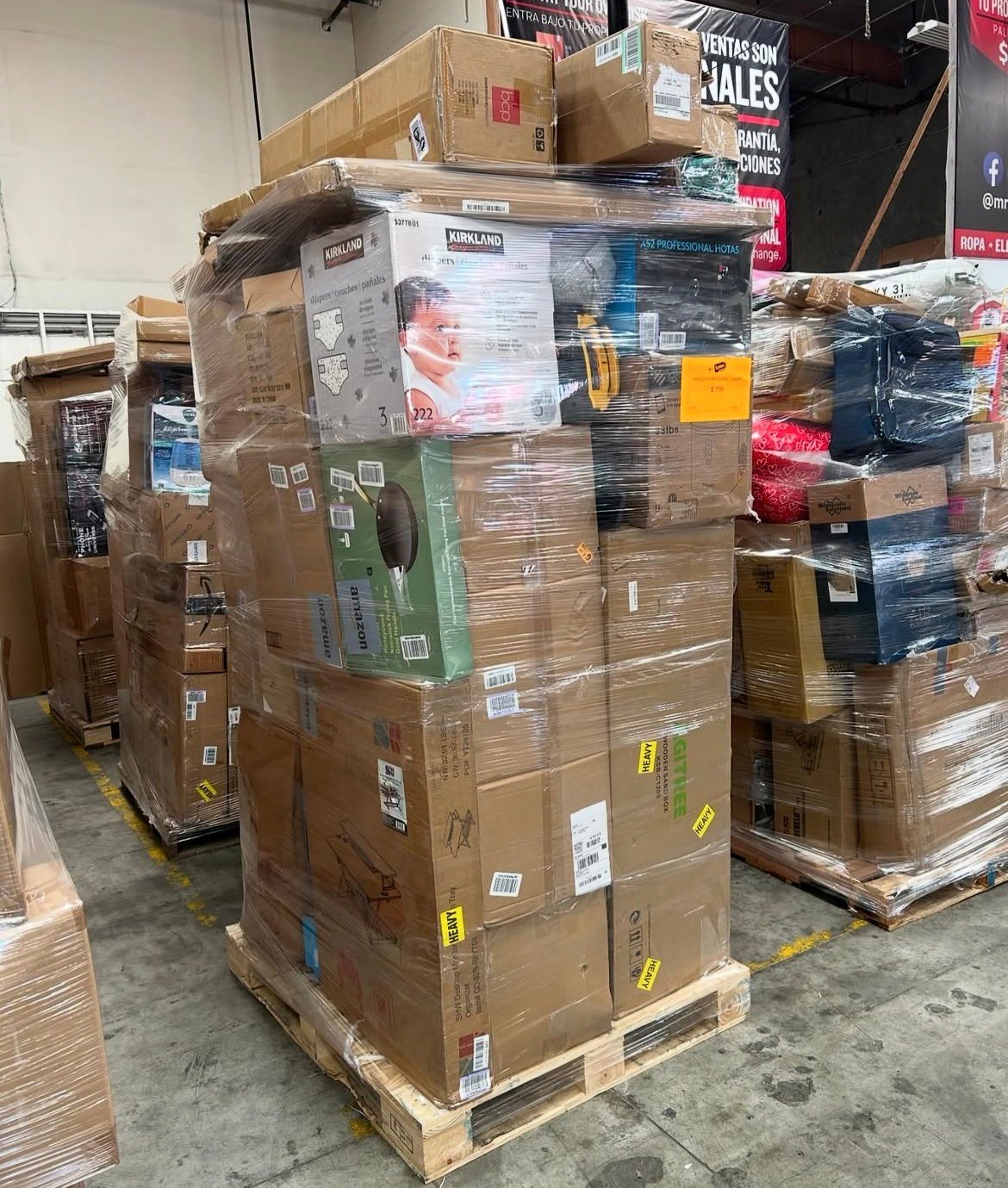
Pricing is where most liquidation pallet resellers lose money without even knowing it. Not because they price too low and leave margin on the table although that happens constantly. And not because they price too high and let inventory sit for weeks without selling although that happens just as often. The real problem is that most resellers price without a system. They look at an item, make a gut guess, type in a number, and move on. Sometimes it works. Often it does not. And without a consistent, research-based pricing approach, there is no way to know whether your current prices are optimized or whether you are consistently leaving 20 to 40 percent of your potential revenue unclaimed.
Learning how to price liquidation items correctly using real market data rather than intuition is one of the highest-leverage skills in the entire liquidation pallet business. It does not require expensive tools or hours of research. It requires a repeatable system applied consistently to every item you list, and the discipline to use real selling data rather than your instincts as your primary pricing reference.
This guide gives you the complete system for how to price liquidation items in 2026 the research process, the platform-specific adjustments, the condition-based pricing framework, the bundle and lot pricing strategies, the markdown system for slow-moving inventory, and the specific habits that separate resellers who extract maximum value from every pallet from those who consistently leave money behind. We will also show you how sourcing from Wholesale Pallet Depot gives you the margin room that makes smart pricing genuinely profitable rather than just theoretically correct.
How to Price Liquidation Items — Why Most Resellers Get Pricing Wrong
How to Price Liquidation Items — The Two Most Common Pricing Mistakes
Understanding what not to do is the first step toward building a better pricing system. The two most common pricing mistakes among liquidation pallet resellers are almost exactly opposite errors and many resellers oscillate between both without recognizing either one as a problem.
Mistake 1 — Pricing based on what you paid rather than what the market will pay. This is the most common beginner pricing error. A reseller pays $500 for a pallet with an estimated retail value of $2,500, divides that by the number of items, and prices everything at 3 times their per-item cost. The problem is that the market does not care what you paid it only cares about what the item is worth to a buyer today. Some items in that pallet are worth 80 percent of retail. Others are worth 15 percent. Pricing everything at the same multiplier of your cost destroys value on high-demand items and overprices low-demand items simultaneously.
Mistake 2 — Pricing based on what other sellers are asking rather than what buyers are paying. Searching eBay and pricing based on the highest active listing you find is a version of this mistake. Buyers are not paying those prices those listings are sitting unsold. The only relevant data point for pricing is what items have actually sold for in recent completed transactions.
How to Price Liquidation Items — Why Market Data Is Your Only Reliable Reference
The fundamental principle behind every effective liquidation item pricing strategy is this: the market tells you what items are worth, and your job is to find that data before you set a price rather than after you have listed at the wrong number.
According to eBay’s Seller Center, sellers who research completed sales data before pricing their listings generate measurably higher average selling prices and faster sell-through rates than those who price based on intuition or active listing comparisons. The data is clear research-based pricing outperforms guesswork pricing consistently and significantly.
How to Price Liquidation Items — The Core Research Process
How to Price Liquidation Items — Using eBay Completed Sales as Your Primary Data Source
eBay’s completed and sold listings filter is the single most powerful free pricing research tool available to any liquidation reseller. Here is exactly how to use it effectively for every item you need to price.
Step 1 — Search for your specific item. Type the brand name, model number, and key specifications into the eBay search bar. Be specific — “Milwaukee M18 18V drill driver” returns more useful data than “Milwaukee drill.”
Step 2 — Filter for sold listings. On the left sidebar under “Show only” check the box for “Sold Items.” This changes the results from what people are asking to what buyers are actually paying.
Step 3 — Filter for matching condition. If your item is used, filter for used sold listings. If it is new in box, filter for new. Comparing your used item to new sold listings produces a systematically inflated price estimate that will result in your item sitting unsold.
Step 4 — Look at the last 30 to 60 sold listings. Do not cherry-pick the highest sold price or average just the last few sales. Look at the realistic range across the last month or two of completed transactions and identify where the majority of sales are clustering.
Step 5 — Identify your target price point. The price where the majority of comparable items are selling — not the outlier high or low — is your market price anchor. Price your item competitively within that range based on your specific condition and listing quality.
How to Price Liquidation Items — Platform-Specific Research Tools
eBay completed sales is your primary research tool but other platforms offer additional data worth consulting for specific categories.
Poshmark sold listings. For clothing and footwear, searching your brand and item on Poshmark and filtering for sold listings gives you fashion-specific market data that often differs meaningfully from eBay’s more generalist audience pricing.
Facebook Marketplace recent posts. For tools and large items you intend to sell locally, browsing recent Facebook Marketplace listings in your geographic area gives you a sense of local market pricing which can differ from national eBay pricing for the same items.
Amazon active listings. For new sealed merchandise you are considering listing on Amazon, active listing prices tell you what you are competing against and set a ceiling for your pricing.
How to Price Liquidation Items — The Condition-Based Pricing Framework
How to Price Liquidation Items — Pricing by Grade and Condition
One of the most important elements of knowing how to price liquidation items is adjusting your price accurately based on the specific condition of each individual item not the overall grade of the pallet it came from.
Here is a reliable starting framework for condition-based pricing adjustments:
| Condition | Description | Pricing Guideline |
|---|---|---|
| New in box | Sealed original packaging, never opened | 50% – 70% of retail |
| Like new | Open box, no visible use, all accessories included | 40% – 60% of retail |
| Excellent used | Light use, minimal wear, fully functional | 30% – 50% of retail |
| Good used | Visible wear, fully functional, may have minor cosmetic issues | 20% – 40% of retail |
| Fair | Heavy wear, functional, significant cosmetic issues | 10% – 25% of retail |
| For parts | Non-functional, sold for components only | 5% – 15% of retail |
These are starting guidelines — actual prices for your specific items should always be confirmed against recent eBay sold listings for that condition level in your category.
How to Price Liquidation Items — Why Accurate Condition Disclosure Protects Your Prices
Accurately describing your item’s condition in your listing does not lower your sale price — it protects it. Buyers who receive exactly what was described leave positive feedback, do not open disputes, and do not request returns. Buyers who receive something worse than described do all three.
Beyond the buyer relationship argument, accurate condition descriptions actually allow you to price confidently at the higher end of the range for your condition tier. A listing that clearly describes condition with specific details — “cosmetic scuff on right side, does not affect function” — builds more buyer confidence than a vague “good condition” description and typically converts at better prices.
How to Price Liquidation Items — Platform-Specific Pricing Adjustments
How to Price Liquidation Items — Adjusting Your Prices for Each Selling Channel
The same item should not be priced identically across every platform because fee structures, buyer expectations, and competitive dynamics differ significantly. Here is how to price liquidation items for each major platform:
eBay pricing adjustment. Add 13 to 15 percent to your target net price to cover eBay’s final value fee. If your target net on a drill is $60, your eBay listing price should be approximately $69 to $70. Also factor in your shipping cost — either build it into the item price for free shipping or charge separately and confirm your combined total remains competitive against similar listings.
Facebook Marketplace pricing adjustment. Because there are no fees for local cash transactions, you can price at or slightly below eBay prices and still net more after fees. However Facebook Marketplace buyers expect to negotiate, so price 10 to 20 percent above your actual target to leave room for a counter-offer that still hits your number.
Poshmark pricing adjustment. Poshmark’s 20 percent fee is the highest of any major reselling platform. Add 25 percent to your target net price to ensure you hit your number after fees. For a clothing item where your target net is $20, your Poshmark listing price should be $25.
Flea market pricing adjustment. Price flea market items at 50 to 70 percent of recent eBay sold prices for comparable items. The zero-fee structure more than compensates for the lower selling price compared to online channels, and flea market buyers expect visible discounts from what they could find online.
How to Price Liquidation Items — Bundle and Lot Pricing Strategy
How to Price Liquidation Items — When to Bundle and How to Price Bundles
Bundling multiple items together for sale as a single lot is one of the most underused pricing strategies in liquidation pallet reselling. Done correctly, bundling increases your average transaction value, moves slow inventory faster, and reduces the per-item listing and shipping time significantly.
When bundling makes sense:
Low individual value items that would each require the same listing and shipping effort for $3 to $8 in revenue are ideal bundle candidates. Instead of listing 10 individual phone cases at $4 each for $40 total revenue across 10 transactions, bundle them as a lot of 10 for $25 and generate that revenue in one transaction with one shipping label.
Items that naturally belong together and complement each other benefit from bundling because buyers see additional value in the combination. A power tool with its compatible battery and charger is worth more as a bundle than the three items priced individually because the buyer gets a complete, immediately usable setup.
Category-specific lots appeal to resellers who buy in small quantities to diversify their own inventory. A “5 piece women’s athletic wear lot” attracts clothing resellers who want variety without buying individual items.
How to Price Liquidation Items — How to Calculate Bundle Pricing
The goal of bundle pricing is to offer the buyer a genuine discount from individual item pricing while still generating better economics for you than individual sales would produce after accounting for the time and cost of multiple transactions.
Bundle pricing formula:
Sum of individual item prices × 0.75 to 0.85 = Your bundle price
A bundle of five items priced at $10, $8, $6, $5, and $4 individually totals $33. Multiply by 0.80 and your bundle price is approximately $26 a genuine buyer discount while you save four listing fees, four separate shipping transactions, and significant time.
How to Price Liquidation Items — Managing Slow-Moving Inventory With Strategic Markdowns
How to Price Liquidation Items — When and How to Reduce Prices on Unsold Items
No pricing system is perfect for every item in every pallet. Some items will sit longer than expected regardless of how well you research and price initially. Having a systematic markdown approach prevents unsold inventory from accumulating indefinitely and keeps your cash cycling back into new pallets.
The 30-60-90 day markdown system:
Day 1 to 30. List at your research-based market price. Give the listing time to gather views, watchers, and organic interest before making any adjustments.
Day 31 to 60. If the item has watchers but no sales, reduce by 10 to 15 percent. If it has no watchers and very few views, the issue is likely title optimization or photos rather than price fix those before reducing price.
Day 61 to 90. Reduce by an additional 15 to 20 percent from the Day 31 price. At this point you are typically at 60 to 70 percent of your original listing price.
Day 91 and beyond. If still unsold, consider one of three options: move to a different platform, include in a bundle lot, or mark down aggressively to 50 percent of original listing price for a quick clearance sale that recovers partial value and frees up storage space.
How to Price Liquidation Items — Relist, Revise, or Redirect
Before marking down a slow item, ask which of the three R’s applies:
Relist. Sometimes items simply need fresh visibility. Delisting and relisting resets the item’s position in platform search results and can generate a new wave of views without any price change.
Revise. If views are low, the problem is usually the title or photos rather than the price. Adding missing keywords to the title or improving photos can dramatically increase views without touching the price.
Redirect. If an item has been on eBay for 60 days without selling, try Facebook Marketplace or Mercari before marking down. Different platforms reach different buyers and an item that sits on eBay may sell within hours on Facebook Marketplace to a local buyer who was not searching eBay at all.
How to Price Liquidation Items — Category Specific Pricing Guides
How to Price Liquidation Items — Power Tool Pricing Reference
Power tools are one of the most valuable categories in liquidation reselling and pricing them correctly has an outsized impact on your total pallet profit. Here is a category-specific reference for how to price liquidation items in the tools category:
| Tool Condition | Pricing Guide | Research Source |
|---|---|---|
| New in box with accessories | 55% – 70% of retail | eBay sold — new filter |
| Open box tested working | 40% – 55% of retail | eBay sold — open box filter |
| Used working with minor wear | 30% – 45% of retail | eBay sold — used filter |
| Used working with heavy wear | 20% – 35% of retail | eBay sold — used filter |
| For parts only | 10% – 20% of retail | eBay sold — parts filter |
Our wholesale Milwaukee power tool pallets and wholesale Ryobi power tool pallets deliver inventory that consistently hits the working condition tier — giving you a reliable pricing framework before your pallet even arrives.
How to Price Liquidation Items — Clothing and Footwear Pricing Reference
Branded clothing pricing varies significantly by brand tier and condition. Here is a practical reference for how to price liquidation items in the apparel category:
| Brand Tier | New With Tags | Good Used | Moderate Wear |
|---|---|---|---|
| Tier 1 (Nike, Adidas, Lululemon) | 40% – 60% of retail | 25% – 40% of retail | 15% – 25% of retail |
| Tier 2 (Tommy, Ralph Lauren, Columbia) | 30% – 50% of retail | 20% – 35% of retail | 10% – 20% of retail |
| Private label (Cat & Jack, A New Day) | 25% – 40% of retail | 15% – 25% of retail | 8% – 15% of retail |
Our wholesale Adidas clothing pallets fall firmly in the Tier 1 bracket, giving you the strongest pricing leverage in the clothing category.
Why Wholesale Pallet Depot Gives You the Margin Room for Smart Pricing
How to Price Liquidation Items — How Honest Sourcing Creates Pricing Flexibility at wholesalepalletdepot.shop
Everything in this pricing guide assumes you bought your inventory at a price that leaves enough margin to price competitively and still generate meaningful profit. That assumption only holds when you source from a supplier with honest estimated retail values and accurate condition grading.
Wholesale Pallet Depot provides transparent retail value estimates on every listing that you can independently verify before purchasing. Our condition grades accurately reflect the actual condition of merchandise you will receive. This transparency is what allows you to run your pre-purchase ROI calculation with realistic inputs and it is the foundation that makes the pricing system in this guide actually work rather than just theoretically sound.
Call our team at (719) 321-6761 before your next purchase to discuss specific pallet pricing and what realistic sell prices look like for the categories you are sourcing.
FAQs About How to Price Liquidation Items
How to Price Liquidation Items FAQ — What is the best way to research prices for liquidation items?
The best way to research how to price liquidation items is to search eBay’s completed and sold listings for your specific item filtered by matching condition. This shows you actual buyer-paid prices rather than what sellers are asking, which is the only relevant data point for setting a competitive price.
How to Price Liquidation Items FAQ — Should I price liquidation items at retail value?
No. Liquidation items should always be priced below retail to reflect their condition and to provide the buyer with a genuine value incentive for purchasing secondhand. Depending on condition, liquidation items typically sell for 20 to 70 percent of original retail value. New sealed overstock commands the highest percentage of retail while heavily used Grade C items command the lowest.
How to Price Liquidation Items FAQ — How do I price items from a liquidation pallet that I cannot find comparable sold listings for?
For items with no direct comparable sold listings, use these fallback approaches: find the closest comparable item by brand and category, estimate based on current retail price using a 40 to 60 percent discount as a starting point, or list at a test price and monitor views and watchers for the first week to gauge whether your price is attracting interest.
How to Price Liquidation Items FAQ — Is it better to price high and negotiate or price at target from the start?
Both approaches work depending on the platform. On eBay with Best Offer enabled, pricing 15 to 20 percent above target and accepting offers is a proven strategy that consistently generates strong average selling prices. On Poshmark, pricing similarly high and negotiating is standard practice. On Facebook Marketplace, expect negotiation and price accordingly. On flea markets, always price above your target to allow for in-person negotiation.
How to Price Liquidation Items FAQ — How often should I reduce prices on unsold liquidation items?
Follow the 30-60-90 day markdown system hold at your original price for 30 days, reduce by 10 to 15 percent at day 31, reduce an additional 15 to 20 percent at day 61, and make a final clearance decision at day 91. Before marking down, always try relisting for fresh visibility or redirecting to a different platform.
How to Price Liquidation Items FAQ — Should I offer free shipping when pricing liquidation items?
Free shipping listings perform better in eBay search rankings and convert at higher rates because buyers prefer the certainty of a total all-in price. If you offer free shipping, build your shipping cost into the item price rather than absorbing it. For heavy items where shipping cost is $15 or more, charging separately often produces better economics and clearer buyer expectations.
How to Price Liquidation Items FAQ — How do I price liquidation items in bundles?
Price bundles at 75 to 85 percent of the sum of individual item prices. This gives the buyer a genuine discount incentive while generating better economics for you than multiple individual transactions would produce after accounting for multiple listing fees, shipping transactions, and time investment.
How to Price Liquidation Items FAQ — What is the biggest pricing mistake liquidation resellers make?
The biggest pricing mistake is using active listing prices on eBay rather than sold listing prices as your reference point. Active listings show what sellers are asking not what buyers are paying. Sellers asking high prices for items that never sell are not useful pricing data. Only completed sold transactions reflect real market value.
How to Price Liquidation Items FAQ — How do I price electronics from a liquidation pallet?
Electronics require the most careful pricing research because value is closely tied to specific model generation, storage capacity, carrier lock status, battery health, and included accessories. Always research the specific model number on eBay completed sales filtered by your exact condition and specifications. A slight difference in storage capacity or carrier lock status can produce a 20 to 30 percent price difference for otherwise identical devices.
How to Price Liquidation Items FAQ — Where can I buy liquidation pallets with honest retail value estimates for accurate pricing?
Wholesale Pallet Depot provides independently verifiable estimated retail values on every listing, honest condition grading, and real product photos giving you the accurate inputs your pre-purchase pricing and ROI calculations depend on. Browse current inventory at wholesalepalletdepot.shop/shop or call our team at (719) 321-6761.
Price Smarter Starting With Your Next Pallet
Pricing is not guesswork it is a skill built on real market data applied through a consistent, repeatable system. The resellers generating maximum profit from their liquidation pallet inventory in 2026 are not doing anything mysterious. They research every item before pricing it, adjust for platform and condition, bundle strategically, and markdown systematically when items sit too long.
Apply this system to your next pallet and measure the difference in your total pallet revenue. The result will make this the last guide on liquidation pricing you ever need to read.
Wholesale Pallet Depot provides the honest sourcing and accurate retail value estimates that make smart pricing possible from day one.
👉 Browse all liquidation pallets for sale at wholesalepalletdepot.shop
📧 Contact us: wholesalepalletdepot.shop/contact
Wholesale Pallet Depot — Your trusted national source for liquidation pallets for sale. Verified inventory, honest grading, and real customer support — shipped to your door anywhere in the country.