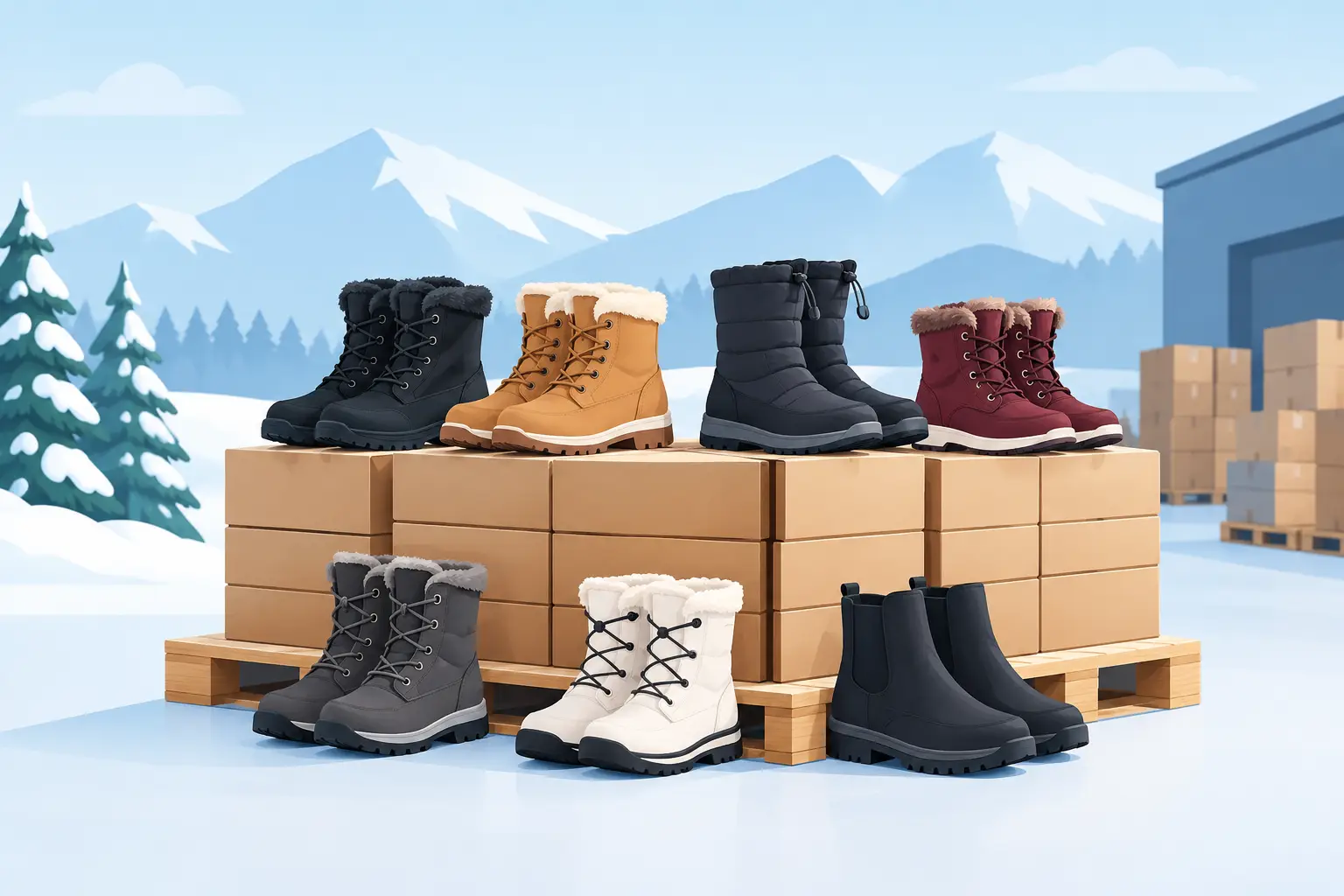
Cold weather creates a short but high-value selling window. The right winter footwear pallets for sale can put boots, insulated shoes, slippers, and weather-ready styles in front of customers when they need them most. The wrong pallet can leave you with mismatched sizes, worn-out returns, and inventory that has to be marked down before the season is over.
For resellers, winter footwear is not a category to buy on vague promises. It is a category to buy with a manifest, clear condition grades, real product photos, and a resale plan before the pallet arrives.
Why Winter Footwear Can Produce Fast Turnover
Winter footwear solves an immediate problem. Customers need snow boots for a trip, work boots for wet conditions, warm slippers for holiday gifting, or insulated shoes when temperatures drop. That urgency can make footwear easier to move than trend-driven apparel, especially through local stores, online marketplaces, flea markets, and social selling.
Boots also have a useful price range for resale. A clean pair of branded hiking boots, work boots, rain boots, or insulated winter boots may support a stronger ticket price than a basic T-shirt or accessory. Even lower-priced slippers and casual cold-weather shoes can create dependable volume when they are clean, complete, and priced correctly.
Seasonality is the trade-off. Demand rises early in the fall, accelerates with the first serious weather, and can slow quickly after winter clearance begins. Buyers in northern states may sell cold-weather footwear for a longer period, while sellers in warmer regions may need to focus on rain boots, work boots, fashion boots, and online shipping to reach broader demand.
What to Look for in Winter Footwear Pallets for Sale
A pallet labeled “winter footwear” is not automatically a smart buy. The product mix and condition determine whether it is inventory or a cleanup project. Start by looking past the estimated retail value and asking what you can realistically sell, where you will sell it, and how much work each pair requires.
A Manifest You Can Price From
A detailed manifest gives you a working view of what you are buying. It should identify products by brand, style, size, quantity, and condition whenever available. This lets you separate higher-value pairs from volume sellers and estimate resale pricing before you commit your cash.
A manifest also reveals size concentration. A pallet full of common adult sizes may move faster than one overloaded with extreme sizes, single shoes, or a narrow mix of kids’ sizes. There is nothing wrong with a specialized size run if you have the right customer base. But you should know that is what you are buying before the shipment is on the way.
Avoid treating estimated retail value as expected revenue. Retail pricing is a reference point, not your sales total. Your actual return depends on condition, brand recognition, local demand, selling fees, shipping costs, and how quickly you need to move the inventory.
Condition Grades That Mean Something
Footwear condition needs closer attention than many hard-goods categories. A box can be missing without hurting sales much. A missing insole, heavy sole wear, odor, cracked material, or separated seam can turn a pair of boots into a loss.
New and shelf-pull footwear often gives resellers the cleanest path to quick listing and sale. These pairs may have damaged boxes, retail stickers, or minor handling marks, but the footwear itself is generally in saleable shape. Customer-return footwear can offer lower acquisition costs, but it needs a more conservative buying approach. Returns may include tried-on merchandise, incomplete pairs, cosmetic wear, or defects that take time to identify.
Buy based on the grade you can handle. If your operation has staff to inspect, clean, pair, photograph, and bundle inventory, returns can be workable. If you need stock that can move to your sales floor or online listings quickly, prioritize clearly described new, overstock, or shelf-pull grades.
Real Photos, Not Stock-Image Promises
Photos help verify the type of merchandise, the apparent condition, and the depth of the pallet. They can show whether boots are bagged, boxed, loose, paired, or visibly mixed with unrelated products. They cannot replace a manifest, but they should support it.
Be cautious when a seller offers only generic catalog images, broad claims about “premium brands,” or a dramatic retail value with no item-level evidence. Mystery pallets can look inexpensive until labor, disposal, and markdowns erase the savings. Transparent inventory is usually the better purchase because it lets you make a decision with facts instead of hope.
Build Your Resale Plan Before You Buy
The best pallet is not always the one with the highest stated value. It is the pallet that fits your selling channel and your available cash flow.
A discount store may do well with mixed winter boots, slippers, and kids’ footwear priced for fast walk-in sales. An online seller may prefer a smaller selection of recognizable brands, cleaner conditions, and styles that are simple to measure and ship. Flea-market vendors often benefit from visible value: sturdy work boots, rain boots, fashionable boots, and family-size assortments that customers can try on immediately.
Before ordering, set three numbers: your maximum pallet cost, your target average sale price per pair, and the percentage of inventory you expect may need to be discounted or liquidated. This keeps you from overpaying based on retail value that may never be realized.
For example, a pallet with 80 pairs is not automatically better than one with 45. If the 80-pair load includes many worn returns or difficult sizes, the lower-priced pallet can consume more labor and deliver less profit. A 45-pair shelf-pull pallet with clean, current styles may create a better margin because more units are ready to sell on day one.
Inspect Quickly When the Pallet Arrives
Your profit protection continues after delivery. Receive the pallet promptly and compare the shipment with the manifest while the details are fresh. Sort each pair into sell-now, clean-and-list, bundle, and unsellable categories.
Check that both shoes are present and match in size, color, and style. Inspect soles, laces, zippers, closures, insoles, waterproof materials, and seams. For boots, look closely at the areas that often fail under use: heel wear, toe creasing, sole separation, and lining damage. Photograph exceptions as you work, especially when an item differs materially from its described condition.
Speed matters here. Winter inventory loses leverage as the season progresses. Get your best pairs measured, photographed, and listed first. Put practical styles at the front of the store, in your first marketplace listings, or in your live-sale lineup. Save slower, lower-value pairs for bundle deals rather than allowing them to take up premium selling space.
Price for Movement, Not Fantasy
A strong resale price is one that covers your cost and gets the item sold within your intended timeline. Research comparable sold prices where you sell, then account for marketplace fees, shipping supplies, labor, and expected discounts. A pair with a $120 retail tag may be a $35 local sale, a $50 online sale, or a $20 clearance item depending on condition and demand.
Use tiered pricing when the pallet mix supports it. Keep clean branded boots and new-in-box pairs at the top of your range. Price shelf pulls competitively. Move unboxed basics, slippers, and less recognizable styles at accessible price points. Pairs with minor cosmetic issues should be disclosed plainly and priced to clear, not hidden behind optimistic descriptions.
Honest condition descriptions protect repeat business. Customers will accept a damaged box or a small scuff when they see it before purchasing. They will not forgive a missing insole or worn sole described as “like new.” The same transparency you expect from a liquidation supplier should be the standard you bring to your own buyers.
Buy the Pallet You Can Actually Sell
Winter footwear rewards prepared resellers, not speculative buyers. Choose inventory with visible product details, understandable grades, accurate manifests, and photos that match the lot. Wholesale Pallet Depot helps buyers avoid the guesswork by focusing on inspected, graded, accurately described inventory built for real resale decisions.
When cold weather demand arrives, your advantage is not simply having more boots. It is having stock you can identify, price, list, and sell with confidence before the season moves on.