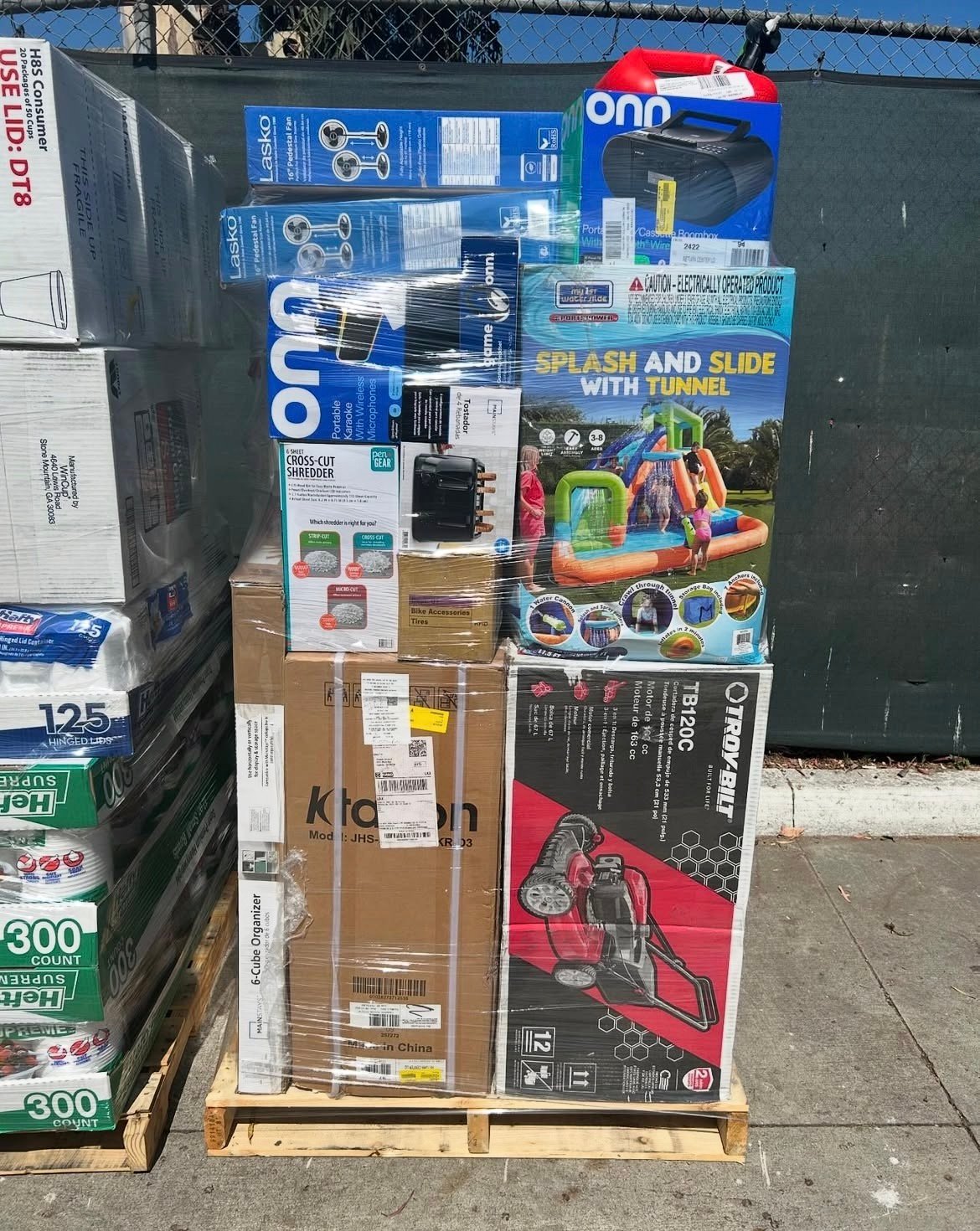
There is a reselling channel that generates some of the most consistent weekly income in the liquidation pallet business and it is one that gets almost no attention in the online reseller community because it is not glamorous, it does not photograph well for social media, and it does not fit the narrative of building a faceless online empire from your couch.
Flea markets and swap meets remain one of the most powerful selling channels for liquidation pallet resellers in 2026 particularly for categories like tools, home goods, clothing, and general merchandise that move slowly online but sell in minutes face to face when priced right. No platform fees. No waiting for shipping. No photographing 200 individual items before you see a single dollar. Just real buyers, real cash, and real inventory moving in real time.
This guide gives you everything you need to start selling flea market liquidation pallets profitably in 2026. How to choose the right flea market, what inventory to bring, how to set up a booth that attracts buyers, how to price for flea market sales specifically, how to manage your cash flow from weekly sales, and how to source the right liquidation pallets from Wholesale Pallet Depot to keep your booth consistently stocked with merchandise that flea market buyers actually want.
Why Flea Market Liquidation Pallets Are More Profitable Than Most Resellers Realize
Flea Market Liquidation Pallets — The Advantages Most Online Resellers Overlook
The liquidation pallet reselling community spends enormous amounts of time discussing eBay strategies, Facebook Marketplace tactics, and Amazon seller optimization. Flea markets rarely come up — which is exactly why flea market liquidation pallets represent a genuine competitive opportunity for resellers who discover this channel.
According to the National Flea Market Association, there are over 1,100 flea markets operating across the United States, collectively attracting more than 150 million shoppers annually. That is a massive, consistent buyer base specifically looking for discounted merchandise exactly what you have when you buy liquidation pallets for sale and bring them to a flea market setting.
Here is what makes flea market liquidation pallets specifically attractive compared to online reselling:
Zero platform fees on cash transactions. eBay takes 12 to 13 percent of every sale. Poshmark takes 20 percent on sales over $15. Amazon takes 8 to 15 percent depending on category. At a flea market with a cash-paying customer, every dollar of your sale price goes directly into your pocket minus only your booth rental cost.
No photography required. Listing 200 items from a liquidation pallet online requires 200 sets of photos, 200 individual listings, and hours of your time before you see a single sale. At a flea market, you lay everything out on a table and let buyers self-select. Your entire pallet can be available for purchase in an afternoon of setup rather than days of individual listing work.
Immediate cash flow. Online sales generate revenue gradually as items sell over days or weeks. Flea market sales generate cash the same day you set up your booth sometimes the same hour. For resellers managing tight cash flow between pallet purchases, this immediacy is genuinely valuable.
Bulk and lot sales to other resellers. Flea markets attract a significant number of other resellers and small retailers who buy in lots rather than individually. A fellow reseller who buys 20 items from your booth in one transaction saves you the time of listing, managing, and shipping those 20 individual items online.
No returns, no shipping disputes. When a buyer purchases something from your flea market booth and walks away with it in hand, there is no return window, no shipping dispute, and no item-not-as-described claim to manage. The transaction is complete when they pay.
Flea Market Liquidation Pallets — Choosing the Right Flea Market for Your Inventory
Flea Market Liquidation Pallets — Not All Flea Markets Are Created Equal
The flea market you choose to sell at has a larger impact on your results than almost any other decision in your flea market reselling strategy. Different flea markets attract fundamentally different buyer demographics, which means the same inventory that sells out in two hours at one market might sit untouched all day at another.
Here is how to evaluate a flea market before committing to a booth rental:
Visit as a shopper first. Spend a Saturday morning walking through any flea market you are considering as a vendor. Watch which booths attract the most traffic. See what is selling and at what prices. Talk to existing vendors about their experience and typical sales volume. This reconnaissance investment saves you from expensive booth rental mistakes.
Match the market to your inventory. Different markets attract different buyer types. Here is a general guide:
| Flea Market Type | Best Inventory | Typical Buyer |
|---|---|---|
| Working-class neighborhood market | Tools, household items, clothing | Value-conscious everyday shoppers |
| Suburban market | Home goods, toys, electronics | Families, middle-income buyers |
| Antique and collectibles market | Vintage items, unique finds | Collectors, decorators |
| Rural or outdoor market | Outdoor gear, sporting goods, tools | DIYers, outdoor enthusiasts |
| Indoor year-round market | All categories | Consistent repeat shoppers |
Assess the foot traffic honestly. A flea market with 200 visitors per day will produce very different sales results than one with 2,000. Ask vendors about typical attendance or observe the parking lot at peak hours before committing.
Check booth rental costs. Booth rental costs range from $20 to $100 or more per day depending on the market size, location, and booth size. Factor this cost into your break-even calculation before deciding which market works for your margins.
Flea Market Liquidation Pallets — What Inventory Sells Best at Flea Markets
Flea Market Liquidation Pallets — The Categories That Move Fastest Face to Face
Not all liquidation inventory sells equally well at flea markets. The categories that perform best in online selling are not always the same categories that perform best in person and understanding this distinction is one of the most important flea market liquidation pallets insights for any reseller.
Power tools — the single strongest flea market category for liquidation pallets. Tools from brands like Milwaukee, DeWalt, and Ryobi sell extremely fast at flea markets because buyers can see them, handle them, and test them before purchasing. Buyers who would hesitate to buy a used tool online are comfortable buying the same tool in person after holding it and watching it power on. Our wholesale Milwaukee power tool pallets and wholesale Ryobi power tool pallets consistently rank among our most flea-market-effective inventory for exactly this reason.
Home goods and household items are strong consistent sellers because flea market buyers typically shop for items they need for their homes, not abstract investments in secondhand value. Cookware, small appliances, storage containers, decorative items, and bed linens all move reliably at flea markets when priced at genuine discounts from retail.
Clothing and footwear sell well at flea markets, particularly children’s clothing which parents buy in volume for rapidly growing kids who outgrow clothing faster than they can wear it out. Branded athletic wear from recognized names also moves quickly when priced at visible discounts.
Sporting goods and outdoor equipment perform strongly at flea markets because buyers can evaluate size, weight, and condition in person something particularly important for fitness equipment and outdoor gear where fit and function are closely evaluated before purchase.
Toys and games sell exceptionally well during morning hours at family-attended flea markets, particularly during the holiday shopping months of October through December.
Flea Market Liquidation Pallets — Categories That Perform Better Online Than at Flea Markets
Not everything from a liquidation pallet belongs at your flea market booth. These categories generally perform better through online channels and should be redirected to eBay or Facebook Marketplace rather than your flea market table:
High-value electronics. Items like iPhones, tablets, and premium headphones attract sophisticated buyers who want detailed verification of specifications and condition that is harder to provide efficiently in a flea market setting. These items also carry higher theft risk in an open-booth environment.
Collectibles and niche items. Items with strong value that only a specific type of buyer will appreciate are better sold through platforms that reach buyers who are specifically searching for those things rather than at a general flea market where most shoppers will walk past.
Clothing in very small or very large sizes. The size distribution of your market’s typical shopper limits what you can sell. Extreme sizes that have a smaller buyer pool at your specific market are better listed online where the entire national buyer pool can find them.
Flea Market Liquidation Pallets — Setting Up Your Booth for Maximum Sales
Flea Market Liquidation Pallets — The Booth Setup Principles That Drive Traffic and Sales
Your booth setup directly determines how many buyers stop, browse, and purchase. A poorly arranged booth with disorganized merchandise loses potential sales to adjacent booths with cleaner, more inviting presentations every single time.
Make items visible from a distance. Buyers walking through a flea market are making approach-or-bypass decisions from 10 to 20 feet away. Items that are clearly visible and obviously desirable from a distance generate significantly more traffic than items that require the buyer to approach and dig through a pile to understand what you are selling.
Use vertical space. A flat table covered in items blends into every other flat table in the market. A booth with a pegboard or grid panel behind the table that displays hanging items at eye level particularly tools, sporting goods, and accessories stands out from every flat-table competitor around you.
Price every single item visibly. Buyers at flea markets frequently avoid asking for prices because they do not want to feel committed to purchasing after initiating a conversation. A clearly visible price tag on every item removes that friction entirely and generates significantly more self-directed purchase decisions without requiring any interaction from you.
Group by category. Tools together. Clothing together. Home goods together. Buyers who are looking for something specific walk faster through a flea market when they can see category organization from a distance. A buyer specifically shopping for tools will stop at your booth if they can see tools clearly from the aisle — they will walk past if tools are mixed indiscriminately with clothing and home goods.
Create a deal section. A clearly labeled bargain bin or deal table priced at $1, $2, or $5 generates consistent traffic and impulse purchases. Buyers who stop for the bargain items frequently browse your full booth and discover higher-priced items they want.
Flea Market Liquidation Pallets — Essential Equipment for Your Booth
| Equipment | Purpose | Approximate Cost |
|---|---|---|
| Folding tables (6 or 8 foot) | Primary display surface | $40 – $70 each |
| Canopy or pop-up tent | Weather protection for outdoor markets | $80 – $200 |
| Wire grid panels or pegboard | Vertical display for tools and accessories | $30 – $60 per panel |
| Price tag gun or stickers | Visible individual item pricing | $15 – $25 |
| Cash box or apron with pockets | Cash management | $20 – $40 |
| Square or Venmo QR code | Accept digital payments | Free |
| Folding rack for clothing | Organized clothing display | $30 – $60 |
| Extension cord and power strip | Demo electronics and tools | $15 – $25 |
Flea Market Liquidation Pallets — Pricing Strategy for Maximum Profit
Flea Market Liquidation Pallets — How to Price for Flea Market Buyers Specifically
Flea market pricing is different from online pricing in important ways. Flea market buyers expect to negotiate, they make faster decisions based on visible price versus perceived value, and they respond strongly to round numbers and obvious discounts from retail.
Start 20 to 30 percent above your minimum acceptable price. This leaves negotiation room without sacrificing your actual profit target. A buyer who negotiates from $25 to $20 feels like they won while you are still above your minimum. A buyer who pays your first asking price without negotiating is a bonus.
Use round numbers. $10, $15, $20, $25 — buyers respond better to clean round numbers than to $9.99 or $14.50 pricing that feels more like retail store psychology than flea market value psychology. Simple round numbers also make change-making significantly faster during busy periods.
Research completed eBay sales before pricing. Even for flea market sales, knowing what identical items are actually selling for online gives you a pricing anchor. Price your flea market items at 50 to 70 percent of recent eBay completed sale prices — buyers get a genuine deal, and you generate a stronger margin than you would achieve through online selling once you factor in the zero platform fees.
Bundle strategically. “3 for $10” or “any 2 for $15” deals move inventory faster and increase your average transaction value simultaneously. Buyers who were going to buy one item at $6 will often buy three at $10 if the bundle offer is visible and clearly communicated.
Flea Market Liquidation Pallets — Your Break-Even Calculation Before Every Market Day
Before packing your booth for a market day, run this simple calculation to confirm the day will be profitable:
Total Cost = Booth rental + Fuel + Pallet cost portion allocated to this batch of inventory
Break-even revenue = Total Cost ÷ (1 − your average discount to retail)
Target revenue = Break-even revenue × 1.5 (your target 50% profit margin above costs)
Knowing your break-even number before you set up means you know exactly when you have covered your costs and how much of the remaining day’s sales is pure profit.
Flea Market Liquidation Pallets — Managing Your Cash Flow and Tracking
Flea Market Liquidation Pallets — Simple Systems for Flea Market Financial Tracking
Cash-heavy businesses like flea market selling require simple but consistent tracking to understand your actual profit rather than just feeling like you made money.
Count your starting float. Begin every market day with a known starting amount of cash — typically $50 to $100 in small bills for making change. Record this exact amount before the market opens.
Keep a running tally. Use a simple notebook or the notes app on your phone to record each sale as it happens item category, sale price, payment method. This takes 15 seconds per transaction and gives you a complete sales record by end of day.
Reconcile at the end of every day. Final cash minus starting float equals revenue from cash sales. Add any digital payment revenue. Subtract your booth rental and any other day-of expenses. The result is your net profit for the day.
Track which items sold and which did not. Items that did not sell at your flea market should be redirected to online channels with accurate pricing based on what flea market buyers were willing to pay — useful market intelligence for your online pricing decisions.
Why Wholesale Pallet Depot Is the Right Source for Flea Market Liquidation Pallets
Flea Market Liquidation Pallets — What Makes wholesalepalletdepot.shop the Right Supplier for Flea Market Resellers
Flea market resellers have specific inventory needs that differ from pure online resellers. You need merchandise that presents well in person, appeals to a broad walk-in buyer demographic, and is priced for the margins that flea market pricing allows. Wholesale Pallet Depot carries exactly the categories that consistently perform best in flea market environments.
Our wholesale Milwaukee power tool pallets, wholesale Ryobi power tool pallets, and wholesale Adidas clothing pallets are among our most popular inventory categories specifically because of their strong flea market performance. Buyers at flea markets recognize these brand names, trust the quality, and purchase quickly when they see prices that represent genuine discounts from retail.
Call our team at (719) 321-6761 to discuss which current inventory works best for your specific flea market and buyer demographic before placing your order.
FAQs About Flea Market Liquidation Pallets
Flea Market Liquidation Pallets FAQ — Is selling liquidation pallets at flea markets actually profitable?
https://wholesalepalletdepot.shop/shop/Yes, flea market liquidation pallets can be highly profitable specifically because there are no platform fees on cash transactions, no photography or listing time required before selling, and immediate cash flow the same day you set up your booth. The key variables are choosing the right flea market for your inventory, pricing strategically for the buyer demographic, and sourcing the right product categories that perform well face to face.
Flea Market Liquidation Pallets FAQ — What types of liquidation inventory sell best at flea markets?
Power tools, home goods, clothing, sporting goods, and toys consistently perform best at flea markets because buyers can evaluate these items in person before purchasing. Tools in particular sell extremely fast face to face because buyers can handle and test them directly, removing the uncertainty that slows online tool sales.
Flea Market Liquidation Pallets FAQ — How much does it cost to rent a flea market booth?
Booth rental costs vary by market size, location, and booth size. Typical costs range from $20 to $100 or more per day. Indoor year-round markets may offer weekly or monthly rates that provide better economics for consistent vendors. Always factor booth rental into your break-even calculation before each market day.
Flea Market Liquidation Pallets FAQ — How do I find a good flea market to sell liquidation pallets?
Visit markets as a shopper before committing as a vendor. Search Google Maps for flea markets near you and read reviews to understand foot traffic and buyer demographics. Ask existing vendors about their experience and typical sales volume. Match the market’s buyer profile to your inventory categories before signing up for a booth.
Flea Market Liquidation Pallets FAQ — How should I price liquidation items at a flea market?
Price flea market items at 50 to 70 percent of recent eBay completed sale prices for comparable items. Start 20 to 30 percent above your minimum acceptable price to leave negotiation room. Use round numbers for cleaner transactions and create bundle deals to increase average transaction value.
Flea Market Liquidation Pallets FAQ — Do I need to collect sales tax at a flea market?
Sales tax requirements for flea market vendors vary by state. Most states do require sales tax collection on taxable retail sales made at flea markets. Check your specific state’s revenue department website for guidance or consult a tax professional. Our dedicated guide on reseller tax tips covers this in more detail.
Flea Market Liquidation Pallets FAQ — What equipment do I need for my first flea market booth?
The essentials are folding tables, a canopy or tent for outdoor markets, price tags for every item, a cash box with starting change, and a way to accept digital payments like Square or Venmo. Vertical display panels for tools and accessories and a clothing rack significantly improve your booth’s visual appeal and sales results.
Flea Market Liquidation Pallets FAQ — How many pallets of inventory should I bring to a flea market?
Start with one pallet worth of sorted, priced inventory for your first market day. This gives you enough merchandise variety to test which categories perform best with your specific market’s buyer demographic without overwhelming your booth setup. Scale up once you understand your market’s typical sales volume.
Flea Market Liquidation Pallets FAQ — Can I sell unsold flea market inventory online after the market?
Absolutely and this is one of the strongest aspects of combining flea market and online selling. Items that sell at the flea market clear your inventory quickly for cash. Items that do not sell get redirected to eBay or Facebook Marketplace where a national buyer pool can find them. Your flea market day essentially filters your inventory into fast-cash items and slower online items simultaneously.
Flea Market Liquidation Pallets FAQ — Where can I buy liquidation pallets for flea market reselling?
Wholesale Pallet Depot carries the power tools, clothing, sporting goods, and general merchandise categories that consistently perform best in flea market environments. Browse current inventory at wholesalepalletdepot.shop/shop or call our team at (719) 321-6761 to discuss which pallets work best for your specific flea market and buyer demographic.
Start Selling Flea Market Liquidation Pallets This Weekend
The flea market channel is one of the most immediately accessible and genuinely profitable paths to reselling income from liquidation pallets and it is available to you this weekend, not after weeks of setting up online accounts, building feedback, and waiting for algorithm-driven traffic.
Wholesale Pallet Depot is ready to supply the inventory that makes your flea market booth consistently stocked and consistently profitable. Browse our current catalog and place your first order today.
👉 Browse all liquidation pallets for sale at wholesalepalletdepot.shop
Contact us: wholesalepalletdepot.shop/contact
Wholesale Pallet Depot — Your trusted national source for liquidation pallets for sale. Verified inventory, honest grading, and real customer support — shipped to your door anywhere in the country.