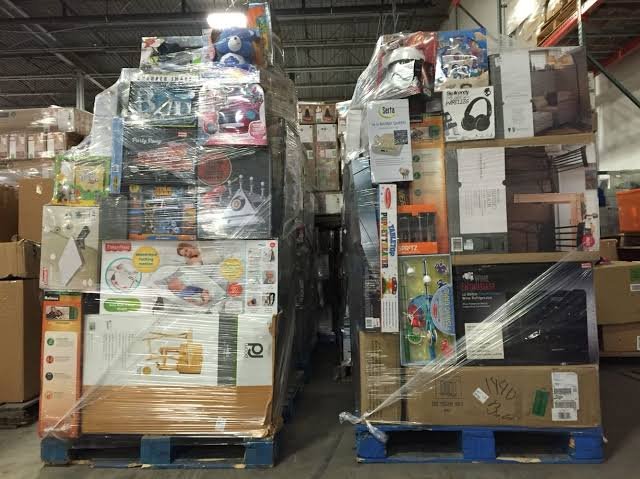
One of the most underrated challenges in the liquidation pallet business is also one of the most practical — where do you actually put all this stuff?
A full liquidation pallet takes up significant physical space. Once you unpack it you have hundreds of individual items spread across multiple categories, conditions, and sizes that all need to be sorted, stored, photographed, listed, and eventually packed and shipped. Do that process without a system and your home quickly starts to look less like a living space and more like a warehouse with nowhere comfortable to sit.
But here is what most guides on this topic miss. The goal of learning how to store liquidation inventory at home is not just tidiness, it is efficiency. A well-organized reselling operation at home moves inventory from arrival to listed faster, ships orders more accurately, and generates significantly better cash flow than the same inventory sitting in disorganized piles waiting for the reseller to find time to figure out where everything is.
This guide gives you a complete, practical framework for how to store liquidation inventory at home in 2026 from the moment your pallet arrives to the moment the last item ships. We will cover space planning, storage systems, organization methods by product category, photography setup, shipping station design, and the specific tools that make home-based reselling genuinely efficient at scale. We will also show you how Wholesale Pallet Depot supports your operation with the reliable, consistently sized inventory that makes home storage planning significantly easier.
Why Learning to Store Liquidation Inventory at Home Changes Your Business
Store Liquidation Inventory at Home — The Direct Connection Between Organization and Profit
There is a direct, measurable connection between how well you store liquidation inventory at home and how much money your reselling operation generates. This is not obvious until you think through the mechanics, but once you do the logic is undeniable.
Every hour you spend searching for a specific item in a disorganized pile is an hour you are not listing new inventory. Every time you ship the wrong item because your storage system did not keep similar products clearly separated, you pay a return shipping cost and potentially receive negative feedback that hurts your platform visibility. Every item that gets damaged in storage because it was not stored correctly cannot be sold at full value.
According to the U.S. Small Business Administration, efficient inventory management is one of the key factors that determines whether a product-based small business generates consistent profit or struggles with cash flow problems despite having genuine sales activity. Liquidation pallet reselling is no exception — the resellers who run efficient home-based operations consistently outperform those with the same inventory volume but less organized systems.
Store Liquidation Inventory at Home — What You Need Before Your First Pallet Arrives
The most important time to set up your storage system is before your first pallet arrives not after. A pallet that arrives when you have no system in place typically gets unpacked in a rush, sorted loosely at best, and ends up creating a disorganized situation that takes significantly more time to address retroactively than it would have taken to prevent with a simple setup done in advance.
Here is the minimum setup you need ready before your first pallet from Wholesale Pallet Depot arrives:
A dedicated sorting area. A clear floor space of at least 8 by 10 feet where you can spread out the pallet contents and sort items without needing to move things repeatedly.
Basic shelving. At least two to four shelf units to keep sorted inventory off the floor and organized by category. Wire shelving units from your local home improvement store work well and typically cost $30 to $60 each.
Labeled bins or boxes. Clear plastic storage bins in three sizes — small for accessories and small items, medium for clothing and soft goods, large for home goods and larger items. Labeling by category from day one prevents the disorganized mixing that kills efficiency.
A smartphone with a good camera. This is your photography tool, your research tool for pricing, and your communication tool with buyers. Make sure it is charged and ready.
A shipping station area. Even a small table in a corner with your boxes, tape, bubble wrap, and scale creates a dedicated fulfillment zone that makes shipping dramatically faster and more accurate.
Store Liquidation Inventory at Home — Space Planning for Different Home Environments
Store Liquidation Inventory at Home — Making a Garage Work for Liquidation Reselling
A garage is the most common and generally the most effective home environment for storing liquidation inventory. It provides natural separation between your living space and your working space, can handle heavier items without concern for floor damage, and typically has enough square footage to accommodate meaningful inventory volume without feeling cramped.
Here is how to maximize a standard two-car garage for liquidation reselling:
Zone 1 — Receiving and sorting area. Keep one parking bay clear for unpacking and sorting incoming pallets. This is your initial processing area and it needs to be clear when a new pallet arrives — not filled with overflow from the previous one.
Zone 2 — Active inventory storage. Line the walls with heavy-duty wire shelving units — the kind rated for 200 to 300 pounds per shelf. Organize shelves by category with clear labels visible from the sorting area. Place fastest-moving categories closest to your shipping station.
Zone 3 — Shipping station. Dedicate a corner or wall section to your packing and shipping area. A folding table, a shelf above it with your supplies, and your scale and label printer within arm’s reach. Everything you need for fulfillment in one organized spot.
Zone 4 — Long-term storage. Items that are listed and priced but not yet sold can be stored on higher shelves or in a designated overflow section. Keep this clearly separated from unlisted inventory to avoid confusion about what has and has not been photographed and listed.
Store Liquidation Inventory at Home — Using a Spare Room Effectively
A spare bedroom converted to a reselling workspace is the second most common setup for home-based liquidation resellers. The main advantages are climate control, security, and proximity to your computer for listing. The main limitations are floor space and the need to be more thoughtful about weight distribution on residential flooring.
Maximize vertical space. Floor space in a spare room is limited, which means going vertical is essential. Stack shelving units two to three units high where ceiling height allows and use the full height of each unit rather than leaving top shelves empty.
Use door space. Over-the-door organizers, mounted pegboards, and wall-mounted bins on the back of the door provide additional storage for small items, accessories, and shipping supplies without consuming floor space.
Separate unlisted from listed inventory clearly. In a small space this distinction becomes even more important. Use a different shelf section, a different bin color, or a simple label system (green sticker for listed, red sticker for unlisted) to keep track of where each item is in your selling process.
Store Liquidation Inventory at Home — Basement Storage Considerations
Basements offer substantial square footage but come with specific considerations for liquidation inventory storage.
Control moisture carefully. Electronics, clothing, books, and many other common liquidation categories are sensitive to humidity. A dehumidifier running consistently is essential for basement inventory storage to prevent damage and mold growth that would render merchandise unsellable.
Protect against flooding risk. Store nothing valuable directly on the floor in a basement. Even a small amount of water can destroy an entire pallet’s worth of inventory. Pallets, shelving units, and raised platforms keep your merchandise safely above floor level.
Ensure adequate lighting. Photography in a basement requires thoughtful lighting setup since natural light is limited or absent. LED shop lights mounted to the ceiling or portable LED panels for your photography area solve this problem affordably.
Store Liquidation Inventory at Home — Category Specific Storage Solutions
Store Liquidation Inventory at Home — Clothing and Apparel Organization
Clothing is one of the most volume-intensive categories in liquidation reselling and also one of the most important to organize correctly since size, brand, and condition all directly affect pricing and listing accuracy.
Hanging vs folding. Hang items that photograph better on hangers — jackets, dresses, button-down shirts. Fold items that do not photograph well on hangers or that are too numerous to hang individually — t-shirts, shorts, underwear, socks.
Sort by size first, then category. A buyer searching for a men’s large Nike shirt needs you to find that item quickly and accurately when they purchase it. Sorting by size makes fulfillment faster and reduces wrong-item shipping errors.
Use garment bags for higher-value items. Branded athletic wear, designer pieces, and premium apparel that might take longer to sell should be stored in garment bags to protect them from dust and handling damage during the storage period.
Steamer proximity matters. Store your steamer near your clothing inventory so steaming wrinkled items before photography is convenient rather than an extra errand. Items that are steamed before photography consistently sell faster and at better prices.
Store Liquidation Inventory at Home — Electronics Storage
Electronics require the most careful storage conditions of any common liquidation category. Damage from improper storage directly reduces the resale value of items that were otherwise perfectly sellable.
Anti-static protection for sensitive electronics. Small electronics, circuit boards, and devices with exposed connectors should be stored in anti-static bags or anti-static bubble wrap rather than standard packaging materials.
Temperature stability. Electronics perform best and are least likely to develop issues when stored in a consistent, moderate temperature environment. Extreme heat or cold can affect battery performance and component integrity over time.
Cable and accessory management. Keep cables, chargers, and accessories with their corresponding devices rather than in a general accessories bin. A zip-lock bag labeled with the device name and attached to or stored immediately adjacent to the device prevents the maddening situation of having a device without its charger or a charger without its device when a buyer purchases.
Test before storing. Every electronic item should be tested for basic functionality before being placed in storage. Items that do not work belong in a separate repair or parts bin, not in your sellable inventory storage, where they will eventually get mixed with functional items and cause listing errors.
Store Liquidation Inventory at Home — Power Tools Storage
Power tools are heavy, bulky, and have multiple components that need to stay together for the item to be sellable at full value.
Heavy-duty shelving is non-negotiable. Standard plastic shelving will eventually fail under the weight of multiple power tools. Invest in steel wire or metal shelving rated for the load before your first tool pallet arrives.
Keep batteries charged. Cordless tool batteries self-discharge over time. Store batteries with a maintenance charge every 30 to 60 days to ensure they are ready to demonstrate and test when a buyer wants to verify function before purchasing locally.
Group by brand. Milwaukee tools together, Ryobi tools together, DeWalt tools together. This makes pricing research faster and creates a more professional appearance when buyers see your inventory during local pickup.
Store Liquidation Inventory at Home — Your Photography Setup
Store Liquidation Inventory at Home — Building a Photography Station That Sells More Inventory
Your photography setup is one of the highest-leverage investments in your home reselling operation. Listings with excellent photos sell faster and at better prices than identical items with poor photos — consistently and measurably.
The essential photography station components:
A clean white or light grey backdrop — foam board from a dollar store works perfectly and costs $1 to $2 per sheet. A bright, consistent light source — a $30 to $50 ring light or two LED shop lights positioned at 45-degree angles. A stable surface at a comfortable working height — a table at standing or sitting height depending on your preference.
Natural light setup alternative. If your storage space has a window with indirect natural light, positioning your photography area near that window eliminates the need for artificial lighting during daytime shooting hours. Avoid direct sunlight which creates harsh shadows and overexposed spots.
Consistent background. Shoot every item against the same background so your listings have a consistent, professional appearance across your entire selling profile. Buyers who browse your store on eBay or Poshmark are more likely to trust a seller whose listings look cohesive and professionally presented.
Store Liquidation Inventory at Home — Your Shipping Station
Store Liquidation Inventory at Home — Building a Fulfillment Area That Processes Orders Fast
The faster you can pack and ship a sold item, the faster your buyer leaves positive feedback, and the faster that positive feedback improves your platform visibility for future sales. A well-designed shipping station turns order fulfillment from a time-consuming chore into a fast, systematic process.
The essential shipping station components:
A thermal label printer — the Rollo or Dymo 4XL both work excellently and cost $50 to $150. Labels print instantly with no ink costs and peel off cleanly. A shipping scale accurate to at least 0.1 ounces for accurate postage calculation. Boxes in four or five sizes covering the range of what you typically ship. Bubble wrap, packing peanuts, or kraft paper for protection. A tape gun loaded and ready. Clear staging area for packing in progress.
Ship daily. Process and ship every sold order within 24 hours of sale whenever possible. Same-day or next-day shipping generates top-rated seller status on eBay and similarly strong metrics on other platforms — which directly improves your listing visibility and sales volume.
Why Wholesale Pallet Depot Makes Home-Based Reselling More Manageable
Store Liquidation Inventory at Home — How Consistent Pallet Sizing Helps Your Storage Planning
One of the practical challenges of home-based liquidation reselling is that inconsistent pallet sizes make space planning difficult. If every pallet you receive is a different size, weight, and product mix, organizing your receiving area and planning your storage capacity becomes genuinely complicated.
Wholesale Pallet Depot provides accurate pallet descriptions, consistent sizing within product categories, and honest estimated item counts on every listing which means you can plan your storage space for an incoming pallet before it arrives rather than discovering its actual scope when the truck shows up.
Call our team at (719) 321-6761 before ordering any pallet to ask specific questions about dimensions, item count, and category breakdown. This information helps you set up the right storage zones and ensure your space is ready before delivery day.
Store Liquidation Inventory at Home — Some Current Inventory Available at wholesalepalletdepot.shop
Wholesale Adidas Clothing Pallets — Originally $850, now $650 Ideal for clothing resellers with a sorted hanging and folding storage system in place. 👉 View this pallet
Wholesale Milwaukee Power Tool Pallets — Originally $1,250, now $890 Heavy-duty shelving essential — fast-moving inventory for garage-based tool resellers. 👉 View this pallet
Wholesale Ryobi Power Tool Pallets — Originally $1,200, now $1,050 Brand-grouped storage works best for this category — strong Facebook Marketplace performer. 👉 View this pallet
Soccer Boots Liquidation Pallets — Originally $1,500, now $1,100 Size-sorted storage essential — athletic footwear with strong resale demand. 👉 View this pallet
Browse the full catalog at wholesalepalletdepot.shop/shop.
FAQs About How to Store Liquidation Inventory at Home
Store Liquidation Inventory at Home FAQ — How much space do I need to store a liquidation pallet at home?
A standard liquidation pallet occupies roughly 4 feet by 4 feet of floor space when intact. Once unpacked and sorted, the same inventory typically requires 30 to 50 square feet of organized shelving space depending on the product category and item count. A spare bedroom, garage section, or basement area of at least 100 to 150 square feet provides comfortable working room for one to two pallets worth of active inventory.
Store Liquidation Inventory at Home FAQ — What shelving is best for storing liquidation inventory at home?
Heavy-duty wire shelving units — the kind rated for 200 to 300 pounds per shelf — are the best general-purpose solution for most liquidation inventory categories. They are affordable at $30 to $60 per unit, easy to assemble without tools, adjustable for different item heights, and allow air circulation which helps prevent moisture buildup.
Store Liquidation Inventory at Home FAQ — How do I organize liquidation inventory so I can find things quickly?
Sort inventory by category first, then by subcategory such as brand or size. Label every shelf section and every storage bin clearly. Keep listed inventory separated from unlisted inventory using a consistent visual system such as colored stickers or different shelf zones. These habits reduce the time spent searching for specific items during order fulfillment dramatically.
Store Liquidation Inventory at Home FAQ — What is the best way to store clothing from a liquidation pallet at home?
Hang items that photograph better on hangers and sort hanging items by size and gender. Fold lower-value or high-volume items and store in labeled bins sorted by size. Use garment bags for higher-value branded pieces. Keep your steamer adjacent to your clothing storage so steaming before photography is convenient rather than an afterthought.
Store Liquidation Inventory at Home FAQ — How should I protect electronics in home storage?
Store electronics in a consistent temperature environment away from humidity extremes. Use anti-static protection for sensitive components. Keep cables, chargers, and accessories with their corresponding devices in labeled zip-lock bags. Charge battery-powered items every 30 to 60 days during extended storage periods.
Store Liquidation Inventory at Home FAQ — Do I need a dedicated photography area to store liquidation inventory at home effectively?
Yes — a dedicated photography area, even a small one, dramatically improves both your listing quality and your listing speed. A clean backdrop, consistent lighting, and a stable surface at working height allow you to photograph inventory quickly and consistently without setting up and tearing down a photography area each time you need to list new items.
Store Liquidation Inventory at Home FAQ — How do I manage inventory that has been listed but not yet sold?
Keep listed inventory in a clearly designated storage zone separated from unlisted inventory. Use a visual marking system — a green sticker for listed, red for unlisted — so you can identify the status of any item at a glance. This separation prevents accidentally re-photographing listed items and ensures you can locate sold items quickly when orders come in.
Store Liquidation Inventory at Home FAQ — What is the most important piece of equipment for a home reseller shipping station?
A thermal label printer is the single most impactful piece of shipping equipment for a home-based liquidation reseller. It eliminates the need to tape paper labels, prints instantly with no ink cost, and significantly speeds up the packing and shipping process compared to printing on a standard inkjet or laser printer.
Store Liquidation Inventory at Home FAQ — How many pallets can I realistically store at home?
This depends entirely on your available space and how efficiently you sell and turn over inventory. Most home-based resellers in a garage or spare room can comfortably manage one to three pallets worth of active inventory at a time. Beyond that, inventory management becomes significantly more complex and most resellers begin evaluating supplemental storage options like a small commercial storage unit.
Store Liquidation Inventory at Home FAQ — Where can I buy verified liquidation pallets to stock my home reselling operation?
Wholesale Pallet Depot offers consistently described, honestly graded liquidation pallets with accurate item counts and category information that makes home storage planning practical rather than guesswork. Browse current inventory at wholesalepalletdepot.shop/shop or call our team at (719) 321-6761 before ordering to discuss sizing and category details for any pallet you are considering.
Build Your Home Reselling Operation the Right Way
The difference between a home-based liquidation reselling operation that generates consistent income and one that feels perpetually chaotic often comes down to one thing — organization. A well-planned storage system, a dedicated photography area, and an efficient shipping station transform your home into a genuinely productive business environment rather than a cluttered space that makes reselling feel harder than it needs to be.
Set your systems up before your first pallet arrives and refine them with every subsequent delivery. The investment in organization pays returns in every sale you make faster, every item you ship correctly the first time, and every hour you save not searching for things that should have been easy to find.
Wholesale Pallet Depot is ready to supply your home reselling operation with verified, consistently described inventory you can plan around.
👉 Browse all liquidation pallets for sale at wholesalepalletdepot.shop
📧 Contact us: wholesalepalletdepot.shop/contact
Wholesale Pallet Depot — Your trusted national source for liquidation pallets for sale. Verified inventory, honest grading, and real customer support — shipped to your door anywhere in the country.