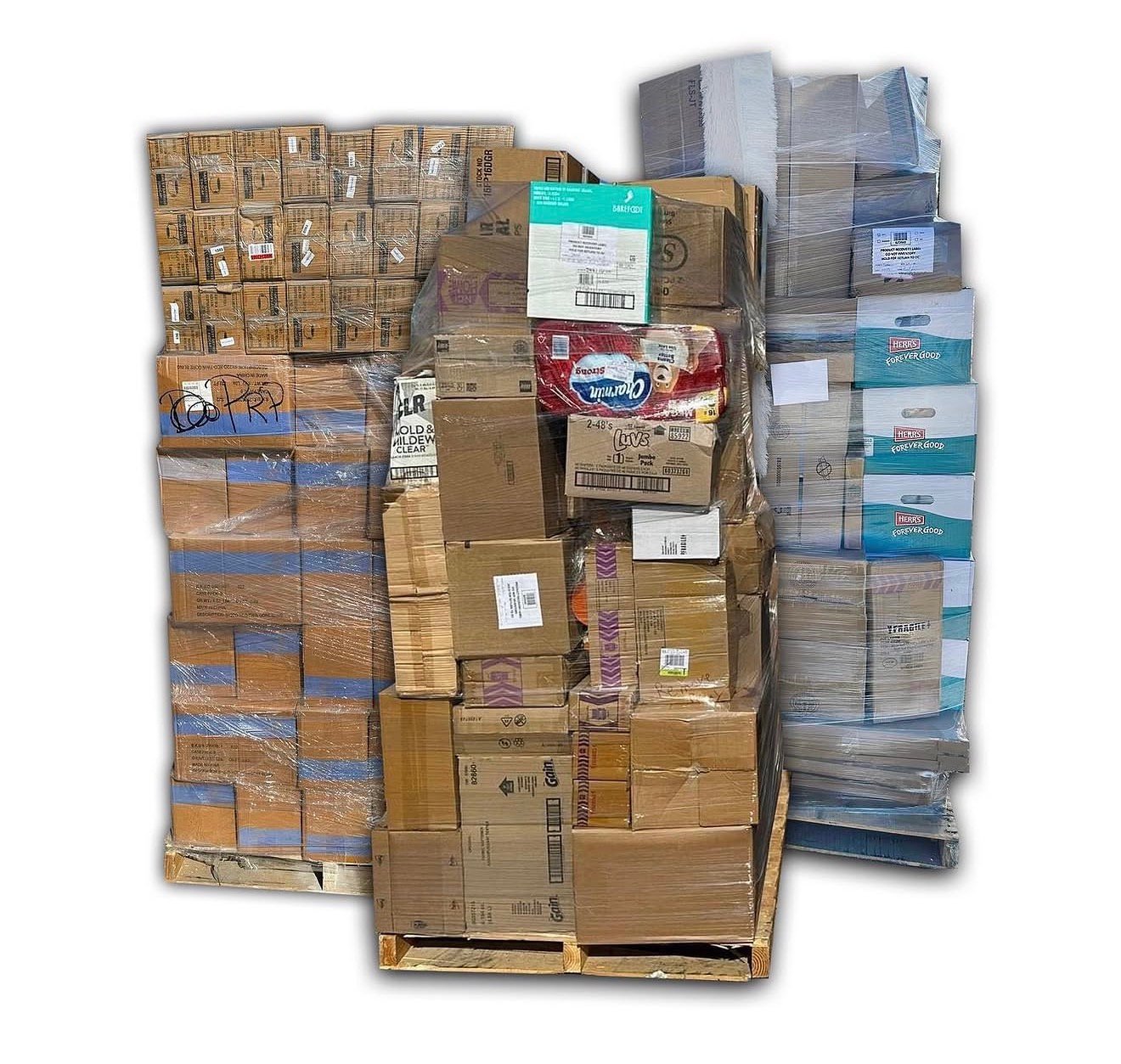
If you’re trying to build a resale business, you’ve probably typed “wholesale vs liquidation” into Google more than once, hoping someone would just give you a straight answer. Most articles online dance around the topic without actually telling you which one puts more money in your pocket. This guide breaks the wholesale vs liquidation question down in plain English, with real numbers, a full comparison table, and an honest look at the risks and rewards of each model.
By the end, you’ll know exactly which path fits your budget, your goals, and your risk tolerance and where to find inventory for either one.
Wholesale vs Liquidation: What Do These Terms Actually Mean?
Before comparing profit potential, it’s worth clearing up the confusion, because a lot of sellers use these words interchangeably when they’re actually two very different sourcing models.
Wholesale means buying brand-new products directly from a manufacturer or authorized distributor at a bulk discount, then reselling them at or near retail price. Think of a boutique buying 200 identical phone cases from a supplier at $2 each to resell at $10 each. The product is new, the condition is guaranteed, and the margin is predictable but modest.
Liquidation means buying surplus inventory customer returns, overstock, shelf-pulls, or closeout merchandise usually sold in bulk pallets or truckloads at a steep discount from retailers, distributors, or liquidation marketplaces. The catch: liquidation inventory is a mixed bag. Some items are brand new, some are lightly used, and some may be damaged or missing parts. That uncertainty is exactly why liquidation pallets sell for a fraction of retail value.
In short, wholesale is a “known quantity at a known price,” while liquidation is “unknown quantity at a bargain price.” That single difference explains almost every other distinction in this guide.
Wholesale vs Liquidation: Where Does the Inventory Actually Come From?
Understanding sourcing helps explain why the pricing and risk profiles are so different in the wholesale vs liquidation comparison.
Wholesale sourcing typically comes from:
- Manufacturers selling directly in bulk
- Authorized regional distributors
- Trade shows and B2B wholesale marketplaces
- Import/export wholesalers
Liquidation sourcing typically comes from:
- Big-box retailers offloading returned or excess stock
- Amazon and other e-commerce platforms clearing warehouse overflow
- Department stores liquidating end-of-season inventory
- Liquidation pallet suppliers like Wholesale Pallet Depot, which partners directly with major retailers to source pallets of customer returns, overstock, and shelf-pulls
This is one of the biggest differences buyers overlook when weighing wholesale vs liquidation: wholesale suppliers guarantee what you’re getting, while liquidation suppliers guarantee a price — and reputable ones like wholesalepalletdepot.shop will also give you manifests, condition grading, and support so you’re not buying completely blind.
Wholesale vs Liquidation: Full Comparison Table
Here’s the wholesale vs liquidation breakdown side by side, so you can see exactly how the two models stack up.
| Factor | Wholesale | Liquidation |
|---|---|---|
| Product condition | New, uniform | Mixed — new, open-box, used, damaged |
| Cost per unit | Moderate discount (20–50% off retail) | Steep discount (60–90% off retail) |
| Predictability | High — you know exactly what you get | Lower — inventory varies by pallet/manifest |
| Minimum order size | Often flexible, smaller case packs | Usually sold by the pallet or truckload |
| Profit margin per unit | Lower, but consistent | Higher potential, but variable |
| Risk level | Low to moderate | Moderate to high |
| Time investment | Lower (list and ship) | Higher (sort, inspect, grade, photograph) |
| Best for | Steady, scalable retail businesses | Resellers who can sort, list, and move volume fast |
| Typical resale channels | Retail storefronts, online stores | eBay, Facebook Marketplace, flea markets, bin stores, Amazon |
| Where to buy | Manufacturers, distributors | wholesalepalletdepot.shop/shop |
Looking at this table, you can see the wholesale vs liquidation decision really comes down to whether you value predictability (wholesale) or margin potential and low upfront cost (liquidation).
Wholesale vs Liquidation: The Real Profit Breakdown
This is the section everyone actually wants: real numbers. Let’s compare hypothetical but realistic scenarios so you can see how the wholesale vs liquidation math plays out.
Wholesale Example
Say you buy 100 units of a mid-range kitchen gadget wholesale at $6 each ($600 total). You list them at $15 each on your online store.
- Total cost: $600
- Total revenue (if all 100 sell): $1,500
- Gross profit: $900
- Margin: 60%
- Risk: Low, since every unit is new and sellable
Wholesale profit is steady and easy to forecast, but it requires you to keep reordering and your margin ceiling is capped by what the manufacturer charges.
Liquidation Example
Now say you buy an Amazon General Merchandise pallet for $950, manifested at $1,100 retail value, containing roughly 40–60 mixed items — electronics, home goods, and small appliances.
- Total cost: $950
- Assume conservatively that 70% of items are fully sellable at 40–50% of original retail price, 20% need minor discounting due to cosmetic wear, and 10% are unsellable or parts-only
- Estimated resale revenue: $1,800–$2,400
- Gross profit: $850–$1,450
- Margin: roughly 90–150%, before factoring in your time to sort and list
The wholesale vs liquidation profit gap comes down to this: liquidation has a higher profit ceiling per dollar invested, but it also has a wider range of outcomes. A great pallet can double your money. A bad manifest can leave you barely breaking even. That’s why sourcing from a transparent supplier that provides manifests and grading — like Wholesale Pallet Depot — matters so much for consistency.
Wholesale vs Liquidation: Which One Actually Makes More Money?
If we’re being honest, liquidation tends to offer a higher percentage return on investment, because you’re buying at 60–90 cents on the dollar of retail value instead of wholesale’s more modest 20–50% discount. That said, “more money” depends on three things:
- Your time. Wholesale is faster to flip since items are uniform and ready to list. Liquidation requires sorting, testing, photographing, and pricing individually.
- Your capital. Liquidation pallets often require a larger single purchase (typically $300–$2,500+ per pallet), while wholesale can sometimes be scaled in smaller increments.
- Your sales channels. Liquidation goods tend to move fastest on marketplaces like eBay, Facebook Marketplace, and local bin stores, while wholesale goods do well in a branded storefront or subscription model.
For resellers who want to maximize margin and don’t mind the extra sorting work, liquidation usually wins the wholesale vs liquidation money question. For business owners who want predictable, brandable inventory with lower time investment, wholesale is the safer long-term play.
Wholesale vs Liquidation: Weighing the Risks
Every wholesale vs liquidation comparison needs an honest risk section, because profit potential means nothing if you don’t understand what can go wrong.
Wholesale risks:
- Lower margins mean you need volume to make real money
- Requires ongoing relationships with suppliers or distributors
- Market saturation if everyone sources from the same wholesaler
Liquidation risks:
- Manifests aren’t always 100% accurate, so some items may not match the listed condition
- Requires storage space to sort and stage inventory
- Shipping costs on freight/pallet orders can be significant if not budgeted for
- Some categories carry higher return/defect rates (electronics, for example)
You can significantly reduce liquidation risk by buying from an established source that provides detailed manifests, condition notes, and responsive customer support — which is exactly why so many resellers stick with a trusted supplier like wholesalepalletdepot.shop instead of gambling on unknown sellers.
Wholesale vs Liquidation: Which Should Beginners Choose?
If you’re brand new to reselling, the wholesale vs liquidation decision often comes down to your comfort with uncertainty and your available time.
Choose wholesale if:
- You want predictable inventory and consistent margins
- You’re building a branded storefront
- You don’t have much time to sort and inspect
Choose liquidation if:
- You want the highest potential ROI per dollar spent
- You’re comfortable sorting, testing, and grading inventory
- You have some storage space and time to dedicate to listing
Many successful resellers actually start with liquidation pallets because the entry cost is lower than most wholesale minimum order quantities, and the learning curve teaches you product research, pricing, and platform selection quickly. Our guide on how to inspect a liquidation pallet before you buy is a great next step if you go this route.
Wholesale vs Liquidation: Popular Pallet Categories to Explore
If you decide liquidation is the better fit, here’s a quick showcase of categories currently available in the Wholesale Pallet Depot shop to help you get started:
- Amazon General Merchandise Pallets — mixed general merchandise, great for beginners wanting variety
- Costco Liquidation Pallets — bulk household and grocery-adjacent goods
- Laptop Liquidation Pallets — higher price point, higher resale value per unit
- Apple AirPods Max Pallets — strong resale demand in electronics
- LEGO Brick Liquidation Pallets — steady collector and family demand
For deeper category breakdowns, check out our related posts on Nike liquidation pallets, Home Depot liquidation pallets, and Apple product liquidation pallets.
Wholesale vs Liquidation: Which Model Scales Better Over Time?
Profit on your first pallet or first case order is one thing building a business you can actually scale is another. This is where the wholesale vs liquidation conversation shifts from “which is more profitable today” to “which one grows with me.”
Wholesale scales through repetition. Once you find a product that sells, you can reorder the exact same item over and over, refine your listing, build reviews, and eventually negotiate better unit pricing as your order volume grows. The downside is that scaling wholesale usually means scaling your upfront capital requirements at the same rate — doubling your sales often means doubling your inventory spend.
Liquidation scales through diversification and sourcing relationships. Instead of reordering the same SKU, experienced liquidation resellers scale by increasing the number of pallets or truckloads they buy per month, and by specializing in categories they’ve learned sell fast — electronics, tools, apparel, or general merchandise, for example. Because liquidation cost-per-unit is already so low, reinvesting profits into more pallets tends to compound faster than wholesale reordering, especially once a seller has systems in place for sorting, photographing, and listing efficiently.
A common pattern among resellers is to start with liquidation to build capital quickly with a small budget, then use those profits to add wholesale products for categories where they want long-term, repeatable inventory. Thinking about wholesale vs liquidation as an “either/or” decision isn’t necessary — many six and seven-figure resale businesses use both models side by side.
Wholesale vs Liquidation: Logistics, Storage, and Shipping Considerations
An often-overlooked part of the wholesale vs liquidation decision is the operational side: what does it actually take to receive, store, and ship this inventory?
Wholesale logistics tend to be straightforward. Products typically arrive in uniform boxes or cases, are easy to shelve, and require minimal handling before listing since condition and packaging are consistent.
Liquidation logistics require more planning:
- Pallets typically ship via freight and may require a loading dock, forklift, or pallet jack to unload, though many buyers simply have them delivered curbside and break them down by hand
- You’ll need dedicated space to sort inventory into “sellable now,” “needs cleaning/repair,” and “parts only” piles
- Photographing and listing individual items takes considerably more time than listing a single wholesale SKU across 50 units
None of this makes liquidation a bad choice — it simply means your workspace and time management matter more. Many resellers start liquidation out of a garage or spare room and scale into a small warehouse once volume increases. If you’re planning your first pallet purchase, it’s worth reading our step-by-step pallet inspection checklist so you know how to organize and evaluate inventory as soon as it arrives.
Wholesale vs Liquidation: Tax and Bookkeeping Differences
Taxes rarely make it into a wholesale vs liquidation comparison, but they matter once you’re running this as an actual business rather than a hobby.
With wholesale, cost of goods sold (COGS) is simple to track since you’re paying a fixed, known price per unit. Your bookkeeping mirrors a traditional retail model: purchase price, resale price, margin.
With liquidation, COGS tracking is slightly more nuanced because a single pallet purchase covers dozens of different items at varying resale values. Most resellers track this by allocating the total pallet cost proportionally across the estimated resale value of each item category, which your accountant or bookkeeping software can typically help automate.
In both models, keeping receipts, manifests, and sales records organized from day one will save you significant time (and stress) at tax season and a manifest from a transparent supplier doubles as useful documentation for exactly this purpose.
Wholesale vs Liquidation: A Realistic Reseller Scenario
To bring the wholesale vs liquidation comparison to life, imagine two new resellers starting with the same $1,000 budget.
Reseller A goes wholesale. They find a supplier selling phone accessories at $4 per unit and buy 250 units for $1,000. They list each at $12 on their online store. After selling through their inventory over six to eight weeks, they’ve made roughly $2,000 in revenue and $1,000 in profit — a 100% return, spread evenly and predictably across every unit.
Reseller B goes liquidation. They buy a general merchandise pallet for $1,000, manifested at roughly $1,900 retail value. After sorting, they find the pallet breaks down into about 65% easily sellable items, 25% items needing a lower price due to cosmetic wear, and 10% unsellable stock. Selling through marketplaces over four to six weeks, they generate somewhere between $1,600 and $2,200 in revenue, landing a profit of roughly $600 to $1,200 — a wider range, but with a higher ceiling than the wholesale outcome.
Neither path is “wrong.” Reseller A trades ceiling for predictability. Reseller B trades predictability for a shot at a bigger payout, provided they’re willing to put in the sorting and listing work. This is the real, practical heart of the wholesale vs liquidation question — it’s less about which model is objectively better, and more about which tradeoffs fit how you want to run your business.
Wholesale vs Liquidation: How to Source Safely
Whichever side of the wholesale vs liquidation debate you land on, sourcing from a reputable supplier is the single biggest factor in your success. Look for:
- Transparent manifests or condition grading
- Verifiable business information and contact details
- Reviews or ratings from previous buyers
- Clear shipping and return policies
Wholesale Pallet Depot checks each of these boxes, publishing manifests, condition notes, and customer ratings across its full shop catalog, and maintaining a published FAQ and About Us page so buyers know exactly who they’re working with — something you should look for with any liquidation or wholesale supplier before you buy.
For a broader look at industry pricing norms, resources like Investopedia’s overview of wholesale trade and the U.S. Small Business Administration’s guidance on sourcing inventory are useful starting points for new sellers researching the space.
FAQs About Wholesale vs Liquidation: What Is the Real Difference and Which One Makes More Money?
1. What is the main difference between wholesale and liquidation? Wholesale is new inventory bought in bulk directly from manufacturers or distributors at a moderate discount. Liquidation is surplus, returned, or overstock inventory sold at a steep discount, usually with mixed condition.
2. Which is more profitable, wholesale or liquidation? Liquidation typically offers a higher percentage return on investment because the discount off retail value is much steeper, but it requires more time for sorting, testing, and listing individual items.
3. Is liquidation pallet buying good for beginners? Yes. Liquidation pallets are one of the most accessible entry points into reselling because the upfront cost per pallet is often lower than typical wholesale minimum order requirements, and it teaches core reselling skills quickly.
4. How do I know what’s actually inside a liquidation pallet? Reputable suppliers provide a manifest listing item types, quantities, and estimated retail value. Always buy from a supplier that discloses this information, such as Wholesale Pallet Depot.
5. Do I need a business license to buy wholesale or liquidation pallets? Requirements vary by state and supplier. Some wholesalers require a resale certificate, while many liquidation pallet sellers allow purchases without one, though having proper business registration is recommended as you scale.
6. What’s the biggest risk with liquidation pallets? The biggest risk is inventory variability — some items may be damaged, missing parts, or not match the manifest exactly. Buying from a transparent, reviewed supplier significantly reduces this risk.
7. Can I make a full-time income from liquidation pallets? Many resellers do build full-time or significant side income from liquidation pallets, especially once they specialize in categories with strong resale demand and reliable sourcing.
8. What platforms are best for reselling liquidation items? eBay, Facebook Marketplace, Amazon, local bin stores, and flea markets are among the most common channels resellers use to move liquidation inventory quickly.
9. Is wholesale less risky than liquidation? Generally yes, since wholesale inventory is new and uniform, but the tradeoff is a lower profit margin per unit and typically higher minimum order requirements.
10. Where can I buy liquidation pallets online safely? Look for suppliers with published manifests, verifiable contact information, and customer reviews. Wholesale Pallet Depot is a national supplier that partners directly with major retailers and publishes manifests, ratings, and support details for every pallet listed.
Ready to see the difference for yourself? Browse the full selection of liquidation pallets for sale at Wholesale Pallet Depot and find the category that fits your reselling goals.