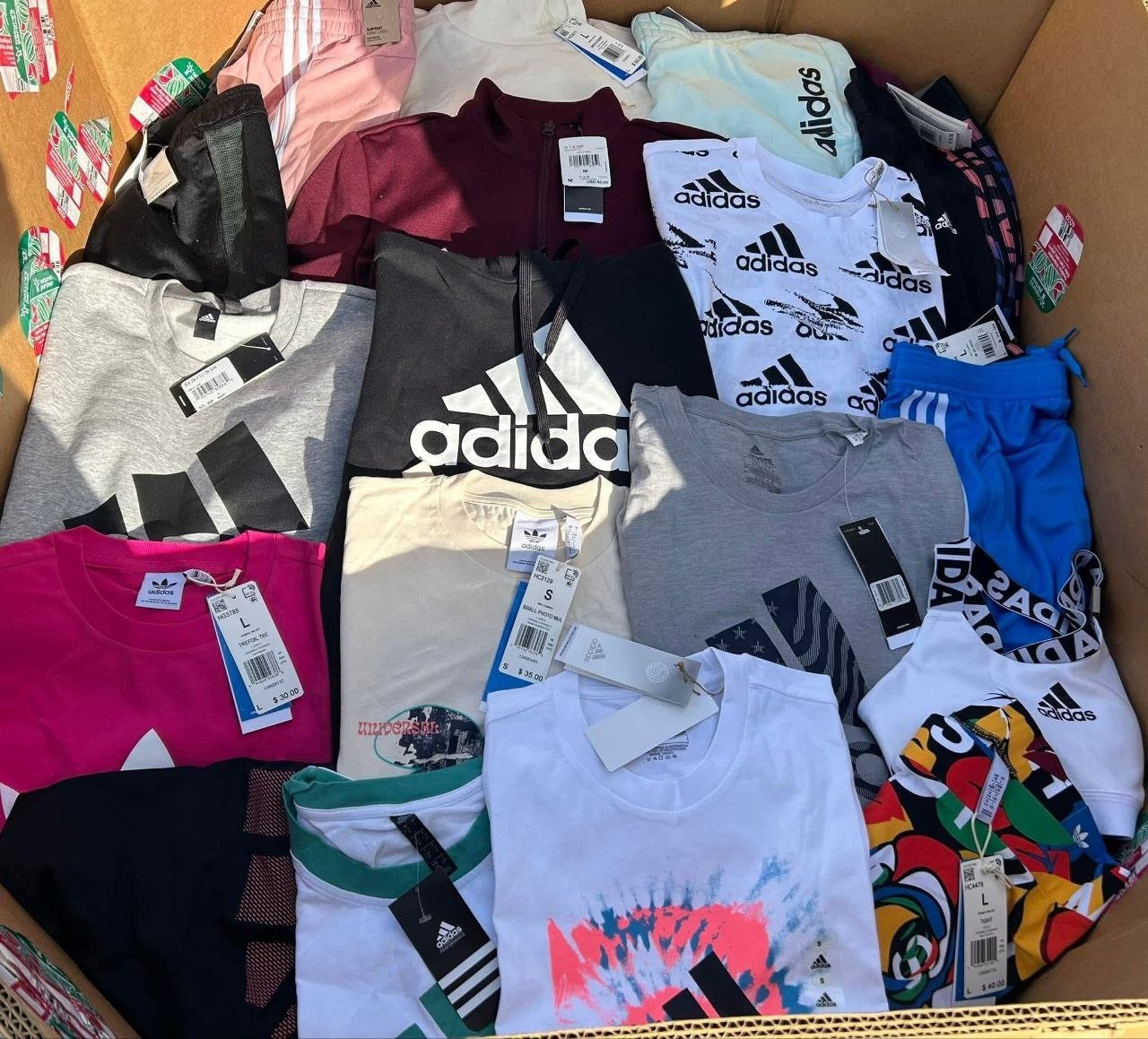
Clothing is one of the most popular categories in the entire liquidation business and also one of the easiest to get badly wrong.
On one end, clothing liquidation pallets can be an absolute goldmine. Branded apparel from recognized names sells fast, holds strong margins, and has an enormous built-in buyer base across platforms like Poshmark, eBay, and Facebook Marketplace. On the other end, a poorly chosen clothing pallet can leave you sitting on hundreds of items that nobody wants — unfamiliar brands, outdated styles, wrong sizes for your market, or condition issues that make the merchandise unsellable at any price.
The difference between these two outcomes is almost never luck. It comes down to knowing exactly what to look for before you buy, understanding which brands and categories actually move, and developing a system for evaluating clothing inventory quickly and accurately.
This guide is going to teach you everything you need to know about clothing liquidation pallets in 2026 — how to spot genuinely high value apparel, how to avoid the dead inventory trap that catches so many new resellers, what brands consistently perform best, and how to turn a pallet of mixed clothing into a profitable, fast-moving inventory stream. We will also show you where Wholesale Pallet Depot fits as your trusted source for wholesale clothing pallets at competitive prices with honest grading you can count on.
Let’s get into it.
H2: Why Clothing Liquidation Pallets Are One of the Most Popular Reseller Categories
H3: Clothing Liquidation Pallets — The Massive Scale of Apparel Returns and Overstock
Clothing is consistently one of the highest-volume categories in the entire retail liquidation market — and the reasons behind that are worth understanding before you buy your first pallet.
According to the National Retail Federation, apparel is among the most frequently returned product categories across all of retail. Customers order clothing online in multiple sizes, try items on at home, and return what does not fit or does not look the way they expected. Online apparel return rates are significantly higher than almost any other product category because buyers cannot try clothing on before purchasing.
That return volume, combined with seasonal overstock from retailers who over-ordered for a season that did not perform as expected, creates a constant and substantial supply of clothing liquidation pallets flowing through the wholesale market. For resellers, this translates into a reliable, ongoing source of inventory across every clothing category imaginable.
H3: Clothing Liquidation Pallets — Why This Category Attracts So Many Resellers
Beyond the sheer volume available, clothing liquidation pallets offer several specific advantages that make this category particularly attractive for resellers at every experience level:
Strong brand recognition drives fast sales. When a buyer sees “Adidas” or “Nike” in a listing title, that brand recognition does much of the selling work before the buyer even reads the full description. Branded apparel liquidation consistently outperforms unbranded clothing in both sell-through speed and final selling price.
Multiple dedicated resale platforms exist specifically for clothing. Poshmark, Depop, ThredUp, and Mercari were built specifically around apparel reselling, giving clothing resellers more platform options tailored to their category than almost any other liquidation niche.
Lightweight and easy to ship. Unlike power tools or appliances, clothing items are light, compact, and inexpensive to ship — which keeps your shipping costs low and your margins protected on individual sales.
Photographs well with minimal equipment. A clean background, decent lighting, and a smartphone camera are all you need to create attractive clothing listings. The barrier to professional-looking photography is lower for clothing than almost any other product category.
Seasonal variety creates ongoing opportunity. Clothing liquidation pallets rotate constantly with the seasons — winter coats, summer apparel, back to school items, holiday wear — giving resellers continuous fresh inventory opportunities throughout the year.
H2: Clothing Liquidation Pallets — How to Spot High Value Apparel Before You Buy
H3: Clothing Liquidation Pallets — The Brands That Consistently Resell Best
Not all clothing brands are created equal in the resale market. Understanding which brands command strong prices and sell quickly is the single most important skill for evaluating clothing liquidation pallets before you purchase.
Here is a breakdown of brand tiers based on resale performance in 2026:
Tier 1 — Premium Athletic and Streetwear Brands Adidas, Nike, Under Armour, Lululemon, and The North Face consistently command the strongest resale prices and fastest sell-through rates. Buyers actively search for these brands by name on every major resale platform, and condition issues are more easily forgiven for these names because the underlying brand value remains strong.
Tier 2 — Recognized Mainstream Brands Levi’s, Calvin Klein, Tommy Hilfiger, Ralph Lauren, and Columbia perform reliably well across most resale platforms. These brands have broad name recognition without quite the premium pricing power of Tier 1, but they sell consistently and predictably.
Tier 3 — Retailer Private Label Brands Target’s exclusive labels like Cat & Jack and A New Day, along with similar private label brands from other major retailers, have grown a surprisingly loyal following in the resale market. These brands sell well specifically because shoppers recognize and trust the retailer behind them even without the brand being a household name independently.
Tier 4 — Generic and Unrecognized Brands Clothing from brands that buyers have never heard of and cannot easily research represents the highest risk category in clothing liquidation pallets. These items can still sell, but typically at much lower prices and with significantly longer time on market.
H3: Clothing Liquidation Pallets — Condition Indicators That Signal High Value
Beyond brand recognition, several specific condition indicators help you evaluate whether a clothing liquidation pallet contains genuinely high value apparel:
Original tags still attached. Items with tags intact signal unworn, return-without-use merchandise that commands near-retail resale prices. This is one of the strongest positive indicators you can find when evaluating clothing liquidation pallets.
Original packaging or garment bags present. Clothing that arrives in its original retail packaging, poly bags, or garment protection signals careful handling and minimal wear — a strong positive sign for condition.
Current season styling. Clothing liquidation pallets containing styles from the current or very recent season carry significantly more resale value than outdated styles from several seasons ago. Fashion moves quickly, and last year’s silhouettes and colors can be much harder to sell at strong prices.
Common and popular sizing. A pallet heavily weighted toward medium and large sizes for adult clothing, or popular children’s sizes, will sell faster and at better average prices than a pallet skewed toward extreme sizes that represent a smaller portion of the buying population.
Seasonal timing alignment. A winter coat pallet purchased in October sells dramatically faster and at better prices than the identical pallet purchased in April. Timing your clothing liquidation pallet purchases to align with upcoming seasonal demand is a proven strategy among experienced resellers.
H2: Clothing Liquidation Pallets — How to Avoid the Dead Inventory Trap
H3: Clothing Liquidation Pallets — What Causes Dead Inventory in the First Place
Dead inventory is the nightmare scenario for any clothing reseller — boxes or bins of clothing sitting in storage for months, taking up space, and never converting into revenue. Understanding what causes dead inventory is the first step toward avoiding it entirely.
Unfamiliar or unrecognized brands are the single biggest contributor to dead inventory in clothing liquidation pallets. When buyers do not recognize a brand name, they have no reference point for quality or value, and many will simply scroll past the listing regardless of price.
Mismatched sizing for your target market. If you primarily sell to a local market with specific size preferences, or if your selling platform skews toward a particular demographic, clothing in sizes that do not match your buyer base will sit unsold regardless of brand or condition quality.
Out of season purchasing without a storage plan. Buying winter coats in January when winter is ending, without a plan to hold that inventory until the following fall, ties up your capital in merchandise that cannot generate revenue for months.
Damaged or heavily worn items beyond reasonable resale condition. Stains, tears, missing buttons, and significant wear push items below the threshold where buyers will purchase secondhand, regardless of brand. These items become dead inventory unless repurposed for textile recycling or extreme discount bundle sales.
Overly niche or trend-specific items. Clothing tied to a specific trend, character license, or moment in pop culture can become dead inventory extremely quickly once that trend passes, even if the brand itself is recognizable.
H3: Clothing Liquidation Pallets — The Pre-Purchase Evaluation Checklist
Before buying any clothing liquidation pallet, run through this evaluation checklist to dramatically reduce your risk of ending up with dead inventory:
Check the brand mix description. A trustworthy supplier will tell you what brands are represented in the pallet, even in general terms. If a listing provides zero brand information, treat that as a significant red flag rather than an exciting mystery.
Verify the size distribution if available. Ask your supplier whether the pallet skews toward particular sizes. Wholesale Pallet Depot can discuss size distribution information for clothing liquidation pallets when available — call us at (719) 321-6761 to ask before you buy.
Confirm the season and style era. Ask whether the clothing is current season merchandise or older stock. This single piece of information dramatically affects your realistic sell-through timeline and pricing expectations.
Review the condition grade carefully. Grade A clothing liquidation pallets should contain unworn or barely worn items, often with tags attached. Grade B pallets will show more wear variability. Match your purchase to your tolerance for sorting and your selling platform’s condition expectations.
Calculate your realistic sell-through rate before buying. Clothing pallets with strong brand recognition and good condition typically achieve 75 to 90 percent sell-through. Generic or mixed-brand pallets may only achieve 50 to 65 percent. Build this realistic expectation into your profit calculations before you commit to a purchase.
H2: Clothing Liquidation Pallets — How Much Should You Pay in 2026?
H3: Clothing Liquidation Pallets — Realistic Pricing for Wholesale Clothing Pallets
Pricing for clothing liquidation pallets varies significantly based on the brand tier represented, the condition grade, and the estimated item count. Here is a realistic breakdown of current market pricing:
| Pallet Type | Typical Purchase Price | Estimated Retail Value | Potential Gross Revenue |
|---|---|---|---|
| Tier 1 Brand Mix (Adidas, Nike, etc) | $400 – $850 | $1,800 – $4,500 | $900 – $3,200 |
| Tier 2 Mainstream Brand Mix | $250 – $550 | $1,200 – $2,800 | $500 – $1,800 |
| Retailer Private Label Mix | $150 – $400 | $800 – $2,000 | $350 – $1,400 |
| General Mixed Clothing | $100 – $300 | $600 – $1,500 | $250 – $900 |
| Children’s Clothing Mix | $150 – $400 | $700 – $2,200 | $350 – $1,500 |
These figures reflect general market conditions and should be treated as a planning framework rather than a guarantee. Brand mix, condition, and your selling efficiency all influence your actual results significantly.
H3: Clothing Liquidation Pallets — Calculating Your Profit Before You Buy
Use this formula before purchasing any clothing liquidation pallet to confirm the math works for your business:
Total Landed Cost = Purchase Price + Shipping Estimated Revenue = Estimated Retail Value × Your Expected Sell-Through Rate × Average Sell Price as % of Retail
Example: A Tier 1 brand mix pallet costs $600 with $150 in shipping for a total landed cost of $750. The estimated retail value is $3,000. At an 80 percent sell-through rate and an average sell price of 35 percent of retail, your estimated revenue is $840. After platform fees of roughly $85, your net profit is approximately $5 — illustrating why even strong brand pallets require careful sell-through and pricing execution to hit your target margins.
Adjust your sell-through rate assumption upward to 85 to 90 percent with strong execution and your numbers improve significantly — which is exactly why the selling skills covered later in this guide matter as much as the buying decision itself.
H2: Clothing Liquidation Pallets — Best Platforms for Selling Apparel Inventory
H3: Clothing Liquidation Pallets — Why Poshmark Is the Top Platform for Branded Apparel
Poshmark was built specifically for clothing resale and remains the single strongest platform for reselling clothing liquidation pallets in 2026. The platform’s entire audience is shopping specifically for clothing, shoes, and accessories — which means every buyer browsing Poshmark is already in a purchasing mindset for exactly what you are selling.
Poshmark’s social features, including sharing and following other closets, create organic discovery that other platforms do not replicate as effectively for apparel specifically. Branded items from Tier 1 and Tier 2 brands consistently perform best on this platform.
H3: Clothing Liquidation Pallets — Using eBay for Apparel Resale and Lot Sales
eBay remains an excellent secondary platform for clothing liquidation pallets, particularly for items that do not sell individually on Poshmark within a reasonable timeframe. eBay’s broader audience and lot listing capabilities make it ideal for bundling lower value clothing items together to move volume efficiently.
eBay also performs exceptionally well for vintage clothing, unique pieces, and items where buyers are searching for very specific styles or eras — search behavior that differs somewhat from Poshmark’s more browse-oriented audience.
H3: Clothing Liquidation Pallets — Local Selling Through Facebook Marketplace
Facebook Marketplace works well for clothing liquidation pallets when selling in bulk lots rather than individual items. Local buyers — particularly parents looking for children’s clothing bundles, or buyers seeking work uniforms and basics — respond well to lot listings priced for quick local pickup.
This platform is also effective for moving clothing that did not sell on Poshmark or eBay after a reasonable listing period, allowing you to recover at least partial value rather than letting items become true dead inventory.
H2: Clothing Liquidation Pallets — Tips for Sorting and Processing Your Pallet
H3: Clothing Liquidation Pallets — The Sorting System That Saves You Time
When your clothing liquidation pallet arrives, an organized sorting system saves enormous time and prevents the disorganization that leads to dead inventory. Here is the system experienced resellers use:
Sort by brand tier first. Separate items into Tier 1, Tier 2, retailer private label, and unrecognized brands immediately. This first sort determines your overall selling strategy and platform allocation for each item.
Sort by condition second. Within each brand tier, separate items into like-new with tags, gently used, and items needing cleaning or minor repair. This sort determines your pricing strategy and which platform each item is best suited for.
Sort by category third. Separate into tops, bottoms, outerwear, footwear, and accessories. This organizational step makes photography and listing significantly more efficient since similar items can be photographed in batches.
Photograph in batches by category. Set up your photography station once and photograph all similar items in sequence rather than constantly reconfiguring your setup. This dramatically speeds up your listing process for clothing liquidation pallets specifically because of the volume of individual pieces involved.
H3: Clothing Liquidation Pallets — Cleaning and Presentation Tips That Increase Sale Price
A small amount of preparation effort can meaningfully increase your average selling price across an entire clothing liquidation pallet:
Steam or iron wrinkled items. Wrinkled clothing photographs poorly and signals lower quality to buyers even when the underlying garment is in excellent condition. A handheld steamer is an inexpensive investment that pays for itself quickly.
Remove lint and pet hair before photographing. A simple lint roller takes seconds to use and dramatically improves how professional your listing photos appear.
Hang or fold items neatly for photos. Clothing laid flat and neatly arranged, or hung on a simple hanger against a clean background, photographs significantly better than items photographed in a wrinkled pile.
Note any care instructions or fabric content. Including this information in your listing description signals attention to detail and answers a common buyer question before it is asked.
H2: Why Wholesale Pallet Depot Is Your Best Source for Clothing Liquidation Pallets
H3: Clothing Liquidation Pallets — What Makes wholesalepalletdepot.shop the Right Supplier Choice
Wholesale Pallet Depot sources clothing liquidation pallets directly from major retail supply chains, giving resellers access to branded apparel liquidation at genuinely competitive wholesale prices. Here is what sets us apart for clothing-focused resellers specifically:
Honest brand and condition representation. We tell you what you are buying — the general brand mix, the condition grade, and the estimated retail value — with complete transparency. We do not inflate descriptions to make clothing liquidation pallets sound more exciting than the actual contents justify.
Real photos of actual clothing inventory. Every listing includes genuine photographs so you can see the actual type and style of merchandise before you commit to a purchase.
Competitive wholesale pricing through direct sourcing. By sourcing directly from major retail supply chains we eliminate unnecessary middlemen markups and pass those savings directly to you as the buyer.
Nationwide shipping for clothing pallets of every size. Whether you are ordering a smaller starter pallet or a larger volume order as your business scales, we ship clothing liquidation pallets to every state in the country with full tracking.
Real customer support to guide your first purchase. Call our team at (719) 321-6761 before you order. We can discuss available brand mixes, sizing information when available, and condition grades to help you choose the right clothing liquidation pallet for your specific selling platforms and target buyers.
H3: Clothing Liquidation Pallets — Current Inventory Available at wholesalepalletdepot.shop
Here is a look at clothing and related inventory currently available:
Wholesale Adidas Clothing Pallets — Originally $850, now $650 Premium Tier 1 branded athletic apparel with strong resale demand on Poshmark, eBay, and Facebook Marketplace. One of our most consistently popular clothing liquidation pallets. 👉 View this pallet
Soccer Boots Liquidation Pallets — Originally $1,500, now $1,100 Athletic footwear with strong value retention across popular sizes and recognized brands — an excellent complement to a clothing-focused reselling operation. 👉 View this pallet
For the most current clothing liquidation pallet availability across additional brands and categories, call our team directly at (719) 321-6761 or browse wholesalepalletdepot.shop/shop for the latest listings.
H2: FAQs About Clothing Liquidation Pallets
H3: Clothing Liquidation Pallets FAQ — What brands are most valuable in clothing liquidation pallets?
The most valuable brands in clothing liquidation pallets are premium athletic and streetwear names like Adidas, Nike, Under Armour, and Lululemon, which command the strongest resale prices and fastest sell-through rates. Mainstream recognized brands like Levi’s and Tommy Hilfiger perform reliably well as a second tier. Retailer private label brands such as Target’s Cat & Jack also maintain a loyal following despite being less independently known. Wholesale Pallet Depot regularly carries Tier 1 branded inventory including our popular wholesale Adidas clothing pallets.
H3: Clothing Liquidation Pallets FAQ — How do I avoid dead inventory when buying clothing liquidation pallets?
Avoid dead inventory by prioritizing recognized brands over unfamiliar ones, confirming the season and style era of the merchandise before buying, verifying size distribution aligns with your target buyer base, and calculating a realistic sell-through rate before committing to a purchase. Always ask your supplier specific questions about brand mix and condition before buying — call Wholesale Pallet Depot at (719) 321-6761 for honest answers about any clothing liquidation pallet you are considering.
H3: Clothing Liquidation Pallets FAQ — What is the best platform to sell clothing liquidation pallets?
Poshmark is the strongest dedicated platform for reselling clothing liquidation pallets because its entire audience is specifically shopping for apparel, shoes, and accessories. eBay works well as a secondary platform, particularly for lot sales and unique or vintage pieces. Facebook Marketplace performs well for bulk lot sales and local clothing bundle sales, especially for children’s clothing and basics.
H3: Clothing Liquidation Pallets FAQ — How much do clothing liquidation pallets typically cost?
Pricing for clothing liquidation pallets ranges significantly based on brand tier and condition. Tier 1 branded mixes from companies like Adidas typically cost $400 to $850 with estimated retail values of $1,800 to $4,500. General mixed clothing pallets without strong brand recognition typically cost $100 to $300. Always evaluate the brand mix and condition grade relative to the price before purchasing any clothing liquidation pallet.
H3: Clothing Liquidation Pallets FAQ — What condition should I expect from clothing liquidation pallets?
Condition varies based on the grade of the pallet. Grade A clothing liquidation pallets typically contain unworn or barely worn items, sometimes with original tags still attached. Grade B pallets show more wear variability with items ranging from gently used to noticeably worn. Always confirm the condition grade and ask specific questions before purchasing, particularly for higher value branded apparel liquidation.
H3: Clothing Liquidation Pallets FAQ — Are children’s clothing liquidation pallets profitable?
Yes — children’s clothing liquidation pallets can be very profitable due to consistent demand from parents seeking affordable options as children grow quickly through sizes. Facebook Marketplace performs particularly well for children’s clothing bundle sales, while Poshmark and eBay work well for individually listed branded children’s items. The relatively low individual item value makes lot and bundle selling especially effective in this category.
H3: Clothing Liquidation Pallets FAQ — How do I price clothing items from a liquidation pallet?
Research completed sales on eBay and active listings on Poshmark for similar brand, condition, and style items before setting your price. Generally, price Grade A branded apparel at 30 to 50 percent of original retail and Grade B branded apparel at 20 to 35 percent of original retail. Unbranded or generic items should typically be priced lower or sold in bundles rather than individually to maximize sell-through speed.
H3: Clothing Liquidation Pallets FAQ — What is the difference between branded apparel liquidation and general mixed clothing pallets?
Branded apparel liquidation refers specifically to clothing liquidation pallets containing recognized brand names like Adidas, Nike, or Levi’s, which command stronger resale prices and faster sell-through due to buyer brand recognition. General mixed clothing pallets contain a combination of branded and unbranded items, or primarily unfamiliar brands, typically priced lower to reflect the higher uncertainty around resale performance.
H3: Clothing Liquidation Pallets FAQ — Should beginners start with clothing liquidation pallets?
Clothing liquidation pallets can be an excellent starting category for beginners due to low shipping costs, straightforward photography requirements, and multiple dedicated resale platforms. Beginners should prioritize Tier 1 or Tier 2 branded clothing liquidation pallets over general mixed or unbranded inventory to reduce the risk of ending up with dead inventory during the learning process.
H3: Clothing Liquidation Pallets FAQ — Where can I buy trustworthy clothing liquidation pallets?
Wholesale Pallet Depot sources clothing liquidation pallets directly from major retail supply chains and provides honest brand and condition representation with real product photos on every listing. Browse our current clothing inventory at wholesalepalletdepot.shop/shop or call our team at (719) 321-6761 to discuss available brand mixes and condition grades before you buy.
Ready to Buy Your First Clothing Liquidation Pallet?
You now understand exactly what separates a profitable clothing liquidation pallet from one that ends up as dead inventory in your storage space. Brand recognition, condition quality, sizing alignment, and seasonal timing are the factors that determine your real profit potential — and now you know precisely how to evaluate every one of them before you spend a dollar.
Wholesale Pallet Depot is ready to be your trusted source for clothing liquidation pallets. Browse our current inventory, including our popular wholesale Adidas clothing pallets, and place your order today. Our team is standing by at (719) 321-6761 to help you choose the right pallet for your selling platforms and goals.
👉 Browse all liquidation pallets for sale at wholesalepalletdepot.shop
📧 Contact us: wholesalepalletdepot.shop/contact
Wholesale Pallet Depot — Your trusted national source for clothing liquidation pallets and wholesale apparel inventory. Honest grading, real customer support, and nationwide shipping for resellers at every level.